







SAN FRANCISCO — In a stinging rebuke of executive overreach, a federal judge has ruled that the Trump administration’s sweeping blacklisting of artificial intelligence developer Anthropic was both illegal and a direct violation of the First Amendment.
The decision, handed down by U.S. District Judge Rita Lin of the U.S. District Court for the Northern District of California, vacates government directives that had barred federal agencies from utilizing Anthropic’s technology and prohibited defense contractors from doing any business with the firm. Judge Lin firmly rejected the administration’s justifications, declaring that invoking national security does not grant the executive branch a "blank check" to punish companies that refuse to compromise their ethical standards or bend to government pressure.
The high-stakes legal clash highlights the intensifying friction between Silicon Valley’s ethical frameworks and the federal government’s growing appetite for artificial intelligence in military operations, intelligence gathering, and national defense.
Executive Overview
The legal battle stems from a bitter standoff between the Trump administration and Anthropic, the prominent artificial intelligence safety research lab and creator of the industry-leading Claude AI model suite. According to court records, the federal government retaliated against Anthropic after the company pushed back against Washington’s demands to lift critical safeguards on its technology. Specifically, Anthropic refused to remove ethical restrictions that barred the use of its products in lethal autonomous weapons systems and the mass surveillance of American citizens.
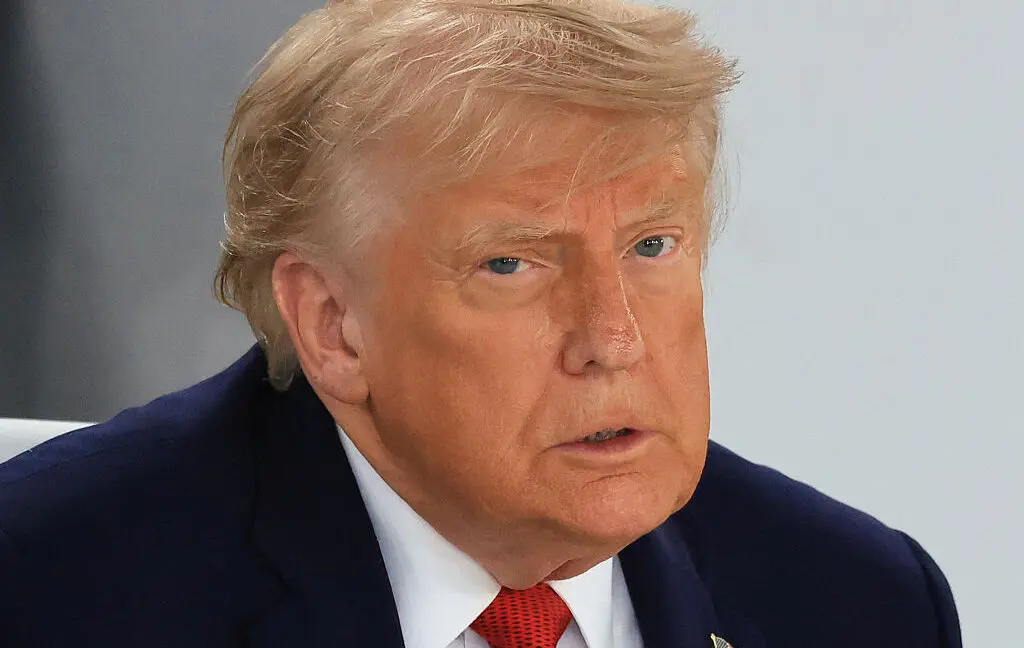
In response to this resistance, President Donald Trump and Defense Secretary Pete Hegseth moved aggressively against the company. The administration designated Anthropic a "supply-chain risk" to national security—a bureaucratic maneuver typically reserved for foreign adversaries or compromised technology hardware—and instituted sweeping bans. These directives ordered all federal agencies to purge Anthropic software and prohibited any defense contractor from maintaining a commercial relationship with the firm, even on projects entirely unrelated to national security or the military.
Judge Lin’s summary judgment ruling dismantles the administration’s actions completely. The court found that the government’s retaliation was not only a clear violation of free speech protections, but that the administration’s primary national security justifications completely collapsed during discovery. As Judge Lin noted, government lawyers ultimately conceded that Anthropic’s technology posed no inherent security risks beyond those of any other commercial artificial intelligence model, and that the company possessed no backdoor access to its deployed systems.
By vacating the directives and ordering the administration to rescind the unlawful bans, the court has delivered a major victory for corporate accountability, constitutional protections, and the independence of the private technology sector.
Detailed Chronology of the Conflict
The collision course between Anthropic and the federal government developed rapidly following the inauguration of the second Trump administration, fueled by aggressive maneuvers from defense leadership and escalating debates over the militarization of artificial intelligence.
The Rise of Ethical AI Guardrails
Since its founding, Anthropic has positioned itself as a leader in AI safety, embedding constitutional AI principles and strict safety guidelines into the architecture of its Claude models. Unlike several of its industry peers who eagerly pursued unvarnished military contracts, Anthropic maintained rigid parameters prohibiting the deployment of its models in applications involving direct lethal force without human intervention, as well as domestic mass surveillance initiatives that could infringe upon civil liberties.
For months, these guardrails formed the core of negotiations between private-sector AI developers and federal defense agencies seeking to harness cutting-edge generative models for battlefield simulation, logistics, intelligence analysis, and strategic planning. While some technology companies quietly folded their safety stipulations to secure lucrative, multi-million-dollar defense portfolios, Anthropic drew a firm line in the sand, maintaining that its safety commitments were non-negotiable.
The Retaliatory Crackdown
The administration’s response to Anthropic’s refusal was swift and punitive. Escalating tensions boiled over when senior defense officials demanded that Anthropic strip away its contractual and technical limitations on lethal autonomous warfare. Upon the company’s refusal, the administration bypassed standard regulatory frameworks to inflict maximum economic and operational damage.
In swift succession, the White House and the Department of Defense—referred to in official administrative communications as the "Department of War"—issued a series of binding directives. President Trump and Defense Secretary Pete Hegseth directed all federal departments to immediately and permanently sever ties with Anthropic. Furthermore, the administration cast a wide net designed to cripple the company commercially by banning any defense contractor—regardless of whether their federal work touched military operations—from maintaining any business relationship with Anthropic whatsoever.
Recognizing the existential threat posed by these punitive measures, Anthropic’s legal team filed an expedited lawsuit in the U.S. District Court for the Northern District of California, accusing the administration of unconstitutional viewpoint discrimination and unlawful regulatory abuse.
The Judicial Intervention
The case moved through the federal court system at an accelerated pace due to the immediate and severe impact of the government’s blacklisting on Anthropic’s business operations and standing in the enterprise technology market. During oral arguments, government attorneys struggled to substantiate the national security claims underpinning the supply-chain risk designation.
The turning point arrived when the defense conceded critical weaknesses in their risk assessment. The administration was forced to back away from its initial assertions that Anthropic retained backdoor access to its technology once integrated into secure government architectures. With the factual foundation of the government’s case dissolving, Judge Lin prepared her decisive ruling, which was formally released to the public yesterday.
Supporting Context and Metrics: The Legal and Technical Anatomy
To fully grasp the magnitude of Judge Lin’s ruling, it is essential to examine the legal precedents and technical realities that shaped the litigation.
First Amendment Protections for Corporate Entities
A central pillar of Anthropic’s legal strategy rested on the First Amendment. Under established U.S. constitutional jurisprudence, corporations enjoy protections against government retaliation for engaging in protected speech or refusing to endorse government orthodoxy.
Judge Lin’s written opinion meticulously outlines how the administration’s actions crossed the constitutional Rubicon. The court found that the government did not blacklist Anthropic because of a genuine, evidence-based supply-chain vulnerability, but rather because the company exercised its right to set commercial terms that aligned with its corporate ethos and public safety commitments.
By punishing Anthropic for refusing to assist in specific government programs—namely lethal autonomous warfare and domestic surveillance—the Trump administration engaged in textbook viewpoint discrimination. As the court observed, the "undisputed record" demonstrated an unmistakable causal link between Anthropic’s refusal to alter its AI safety guardrails and the punitive blacklisting that followed.
Demolishing the "Black Box" Defense
Technically, the litigation exposed the fragility of the government’s arguments surrounding artificial intelligence risk management. Large Language Models (LLMs) like Anthropic’s Claude are complex neural networks often described in computer science as "black boxes"—meaning that while their inputs and outputs can be observed and guided, the exact internal mathematical weightings responsible for every specific output cannot be mapped with absolute human determinism.
The Trump administration initially sought to weaponize this technical reality, arguing that the inscrutable nature of Claude posed an inherent, unmanageable national security threat, compounded by speculative claims of clandestine backdoor access. However, under judicial scrutiny, the government’s expert witnesses and counsel were forced to walk back these assertions.
The administration ultimately conceded that Anthropic maintains no such backdoor access and that Claude is inherently no riskier than any other frontier artificial intelligence model deployed across the global market. This concession obliterated the administration’s legal justification, leaving the supply-chain risk designation exposed as a transparently retaliatory tool rather than a legitimate security precaution.
Official Statements and Reactions
The release of Judge Lin’s ruling sent shockwaves through Washington, Silicon Valley, and the broader legal community, prompting a wave of reactions from stakeholders, advocacy groups, and industry observers.
Anthropic Welcomes Vindication
In an official statement released following the court’s decision, representatives for Anthropic expressed profound satisfaction with the judicial outcome, framing the ruling as a victory not only for the company, but for the integrity of technological innovation and constitutional rights.
"We are deeply gratified by the court’s decision, which reaffirms that the rule of law applies to every branch of government and every powerful official," an Anthropic spokesperson said. "From day one, our mission has been to build advanced artificial intelligence that is safe, ethical, and beneficial to humanity. We have always maintained that our technical boundaries and safety guardrails are essential to that mission. Today’s ruling proves that national security cannot be used as a smokescreen to punish companies that refuse to compromise their principles."
The Administration’s Defiant Stance
Representatives for the Department of Defense and the White House expressed strong displeasure with the ruling, signaling that the administration is weighing its appellate options. Defense Secretary Pete Hegseth’s office issued a terse statement defending the executive branch’s prerogative to dictate national defense supply chains.
"The Department of War remains steadfast in its mission to secure the American homeland and ensure our armed forces possess absolute technological superiority," a Department of Defense spokesperson stated. "We respectfully disagree with the court’s decision, which we believe misinterprets the broad executive authorities entrusted to the Commander-in-Chief in matters of national defense and supply-chain integrity. We are reviewing the court’s order and considering all available legal remedies to protect the security interests of the United States."
Legal scholars note that while the administration retains the right to appeal the decision to the Ninth Circuit Court of Appeals, the factual concessions made by government lawyers during the district court proceedings will make securing a reversal an uphill battle.
Future Outlook: The Intersection of AI, Ethics, and National Security
Judge Lin’s ruling is expected to have far-reaching implications that extend far beyond the immediate fortunes of Anthropic. As artificial intelligence becomes the defining technology of the 21st century, the relationship between private AI laboratories and the federal government is entering a complex new era.
Setting Boundaries on Executive Power
First and foremost, the decision serves as a vital judicial check on the expansion of executive authority under the guise of national security. By establishing that the executive branch cannot weaponize national security designations to settle political or philosophical disputes with corporate entities, the ruling provides a protective shield for tech companies seeking to maintain ethical boundaries in their public- and private-sector engagements.
The Future of Military-Tech Collaboration
The ruling also forces the Department of Defense and other national security agencies to recalibrate how they procure and interact with commercial AI developers. For years, military leadership has expressed frustration over Silicon Valley’s historical reluctance to engage in defense work—a phenomenon often termed the "Silicon Valley defense gap."
While initiatives during the Biden and Trump administrations aimed to bridge this gap by courting top-tier AI labs, the Anthropic controversy demonstrates the deep cultural and ethical fault lines that remain. Going forward, federal agencies may find that they cannot simply coerce frontier AI developers into abandoning their safety guardrails. Instead, defense procurement will likely need to navigate a more collaborative framework that respects corporate ethical parameters while addressing legitimate national security requirements.
Compliance, Contracts, and Market Stability
For Anthropic, the immediate operational impact of the ruling is profoundly positive. The court’s order vacating the government directives means that federal agencies and defense contractors are legally permitted to resume commercial relationships with the firm without fear of regulatory reprisal. This restores a critical revenue stream and removes a dark cloud of uncertainty that hung over the company’s enterprise growth strategy.
As the legal dust settles, the tech industry will be watching closely to see whether the Trump administration pursues an aggressive appeal or chooses to pivot toward a more constructive dialogue with AI safety pioneers. One thing is certain: Judge Rita Lin’s courtroom has established a monumental precedent ensuring that the constitutional rights of technology developers remain fully protected, even in the shadow of national security.