









Executive Overview
As artificial intelligence rapidly transitions from a novelty of text-based prompts to autonomous, goal-directed execution, the enterprise digital asset management (DAM) landscape is undergoing a profound paradigm shift. This week, the industry’s focus turns squarely to the Dutch capital for Bynder Connect Amsterdam, taking place on September 9th and 10th, 2026. Set against the industrial-chic backdrop of the SugarFactory venue just outside the city center, this year’s flagship two-day gathering serves as a critical crucible for brand leaders, marketing executives, DAM practitioners, and enterprise technology integrators.
The central theme of Bynder Connect Amsterdam 2026 is unambiguous: competing in the age of agentic AI. Unlike traditional generative AI workflows—which require constant human micro-management, prompt iteration, and manual handoffs—agentic AI introduces autonomous software agents capable of reasoning, planning, executing multi-step workflows, and optimizing digital assets with minimal human intervention. For organizations managing millions of brand assets across global channels, this technological leap promises to redefine efficiency, personalization, and creative operations.
The event’s agenda reads as a who’s who of global brand stewardship, featuring high-profile case studies and keynote presentations from enterprise heavyweights such as luxury conglomerate LVMH, fashion powerhouse Michael Kors, and gaming titan Riot Games. Furthermore, the conference introduces a dedicated experimental space, Bynder Labs, designed to give attendees hands-on exposure to next-generation intelligent automation and agentic workflows.
Adding further industry significance to the gathering, Activo, the parent organization of Digital Asset Management News, is participating directly in the proceedings as an official member of Bynder’s 2026 Partner Advisory Board. This positioning offers a unique vantage point on how vendor roadmaps intersect with real-world enterprise demands.
In this comprehensive report, we examine the core themes, enterprise case studies, technological underpinnings, and strategic implications of Bynder Connect Amsterdam 2026, exploring how the DAM community is preparing for the autonomous enterprise.
Detailed Chronology & Event Blueprint
Day One: Setting the Stage for Autonomous Operations
The opening day of Bynder Connect Amsterdam kicks off with registration and networking at the SugarFactory, drawing hundreds of digital operations leaders from across Europe, North America, and beyond. The morning keynote sets an ambitious tone, directly addressing the operational fatigue many marketing teams face in an omnichannel digital economy.
Bynder’s executive leadership team takes the stage to frame the vision for the platform’s evolution. Rather than viewing DAM systems as static repositories for images, videos, and documents, the narrative focuses on the DAM as an active participant in the enterprise marketing supply chain.
Key sessions during the first half of Day One explore:
- The Anatomy of Agentic Workflows: Breaking down the transition from reactive search-and-retrieve asset management to proactive, event-driven asset distribution powered by autonomous agents.
- Global Brand Consistency at Scale: How luxury and fast-paced retail brands maintain strict brand equity while decentralizing content creation and localization.
- The Practitioner’s Roundtable: Intimate breakout sessions where senior DAM managers debate governance, taxonomy, and metadata standards in an era where AI largely automates tagging and categorization.
Day Two: Deep Dives, Bynder Labs, and Future Horizons
The second day shifts from visionary conceptualization to tactical execution. Attendees flood the newly unveiled Bynder Labs area, a specialized interactive zone where engineers, product managers, and enterprise users test-drive experimental agentic capabilities.
Unlike standard demo environments, Bynder Labs provides a sandbox for testing how autonomous agents interact with external marketing tech stacks—connecting Customer Data Platforms (CDPs), Product Information Management (PIM) systems, and content delivery networks (CDNs) directly to the DAM.
The afternoon sessions feature compelling enterprise customer stories:
- Riot Games Case Study: Exploring the high-stakes, rapid-fire asset management required for global esports tournaments, where localized promotional assets must be deployed across dozens of channels simultaneously.
- LVMH & Michael Kors Insights: Examining how high-end fashion houses balance the irreplaceable human touch of luxury creative direction with the raw speed and scale demanded by programmatic digital advertising.
The event culminates in an evening networking gala, providing a vital forum for system integrators, technology partners, and corporate end-users to forge alliances and discuss implementation hurdles in a collaborative setting.
Supporting Context & Metrics: The Rise of Agentic DAM
To fully appreciate the gravity of Bynder Connect Amsterdam 2026, one must examine the broader macroeconomic and technological currents driving the DAM industry toward agentic workflows.
The Exponential Growth of Digital Content
According to recent industry benchmarks, enterprise digital asset libraries are expanding at a compound annual growth rate (CAGR) exceeding 30%. Organizations are no longer managing thousands of assets; they are grappling with millions of variations, personalized formats, localized video cuts, and interactive 3D files. Traditional metadata tagging—even when augmented by early-generation computer vision and basic machine learning—is no longer sufficient to prevent "digital dark matter," where valuable assets are lost or duplicated within enterprise silos.
From Generative AI to Agentic AI
While 2023 and 2024 were dominated by generative AI (capable of writing copy, generating placeholder imagery, or summarizing text), these tools remained heavily reliant on human prompts. If a marketing team wanted to localize a global campaign across 15 markets, a human operator had to initiate, monitor, and correct each step.
Agentic AI changes this dynamic entirely. An AI agent is equipped with:
- Perception: The ability to understand the state of the DAM repository, incoming briefs, and performance analytics.
- Reasoning: The capacity to break down a complex marketing objective (e.g., "Launch a localized summer footwear campaign for the European market") into discrete sub-tasks.
- Action: The autonomy to execute those tasks—such as pulling approved master assets, cropping for specific social platforms, translating metadata, routing through compliance approval workflows, and publishing to the CMS—with human oversight restricted to strategic approval gates.
The Role of Partner Ecosystems
Events like Bynder Connect underscore the vital importance of the modern enterprise software ecosystem. A DAM does not operate in a vacuum. As enterprises adopt agentic workflows, the demand for seamless API integrations with enterprise resource planning (ERP), product lifecycle management (PLM), and customer relationship management (CRM) platforms has skyrocketed. The presence of technical partners and system integrators at the SugarFactory highlights that implementing agentic AI is not merely a software upgrade; it is a structural redesign of enterprise operations.
Official Statements and Industry Perspectives
The mood surrounding the conference is encapsulated by the official community messaging released ahead of the event:
“Bynder Connect brings together the full power of the community. Leading global brands, marketing leaders, DAM and digital experts, innovators, system integrators, and technology partners. Learn how you can extend the value of your Bynder investment and compete in the age of agentic AI.”
This sentiment resonates deeply with the attendees traversing the SugarFactory floor. Speaking off-the-record, several senior enterprise DAM architects noted that while the promise of agentic AI is intoxicating, boards and CFOs are demanding clear accountability, security guarantees, and demonstrable return on investment (ROI).
Furthermore, the involvement of Activo and the DAM News team via Bynder’s 2026 Partner Advisory Board bridges the gap between independent industry analysis and vendor roadmap execution. As independent observers embedded directly in the governance discussions, Activo’s presence ensures that the voice of the practitioner—concerned with data privacy, workflow transparency, and user adoption—remains front and center as software vendors push the boundaries of automation.
Future Outlook: What Comes After Agentic DAM?
As Bynder Connect Amsterdam 2026 draws to a close, the conversations sparked in the Dutch capital will undoubtedly ripple across the broader enterprise software ecosystem for the remainder of the decade. The event marks a clear turning point: the conversation in digital asset management has officially moved past basic cloud storage and automated tagging.
Key Takeaways for Enterprise Leaders:
- Redefining Workforce Roles: As autonomous agents take over routine metadata ingestion, version control, and asset distribution, human professionals are freed to focus on high-level creative direction, strategic governance, and brand storytelling.
- The Imperative of Data Hygiene: Agentic AI is only as intelligent as the data it consumes. Enterprises attending the conference are realizing that poor taxonomy and fragmented taxonomies will cause AI agents to fail faster and at a greater scale. Consequently, master data management and robust DAM governance are receiving renewed executive attention.
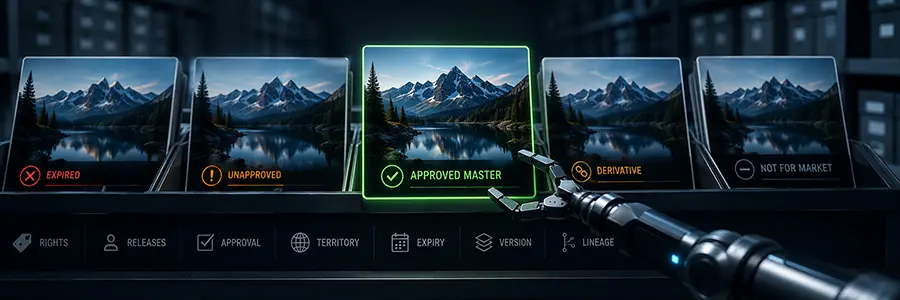
- Security and Compliance at Scale: Giving AI agents autonomy over enterprise brand assets introduces new security challenges. Ensuring that copyright restrictions, regional licensing agreements, and brand safety guardrails are hardcoded into agentic workflows will be a top priority for legal and compliance teams moving forward.
In conclusion, Bynder Connect Amsterdam 2026 has successfully positioned itself not just as a user conference, but as a strategic observatory for the future of digital work. As LVMH, Michael Kors, Riot Games, and other global innovators deploy agentic workflows into production, the lessons learned at the SugarFactory will serve as the blueprint for how brands compete, create, and connect in an increasingly automated world.
For ongoing coverage of Bynder Connect Amsterdam 2026, including exclusive interviews with enterprise practitioners and deep dives into the Bynder Labs exhibits, keep a close eye on Digital Asset Management News. Industry professionals interested in contributing event listings or joining the community can register for a free standard subscriber account via the DAM News Subscriptions portal.