








Executive Overview
In the high-stakes theater of information security compliance, achieving and maintaining ISO 27001 certification is often viewed as the ultimate validation of an organization’s cyber maturity. Yet, beneath the polished veneer of corporate policy manuals and state-of-the-art technical controls lies a fragile mechanism that frequently unravels under the scrutiny of an auditor: the risk assessment.
At its core, an ISO 27001 risk assessment is not a bureaucratic hurdle; it is the intellectual engine of an Information Security Management System (ISMS). It must articulate a seamless, defensible chain of custody for every security decision—showing precisely how a cross-functional team identified a threat, quantified its likelihood and impact, and engineered a pragmatic treatment strategy. When that logical chain breaks down, even the most robust technological defenses can appear improvised, exposing the organization to critical audit findings, regulatory fines, and operational vulnerabilities.
Too often, organizations approach this foundational requirement as a static compliance checkbox rather than a dynamic enterprise risk management function. This myopic view invites complacency, cognitive bias, and systematic misalignments between technical implementation and business objectives.
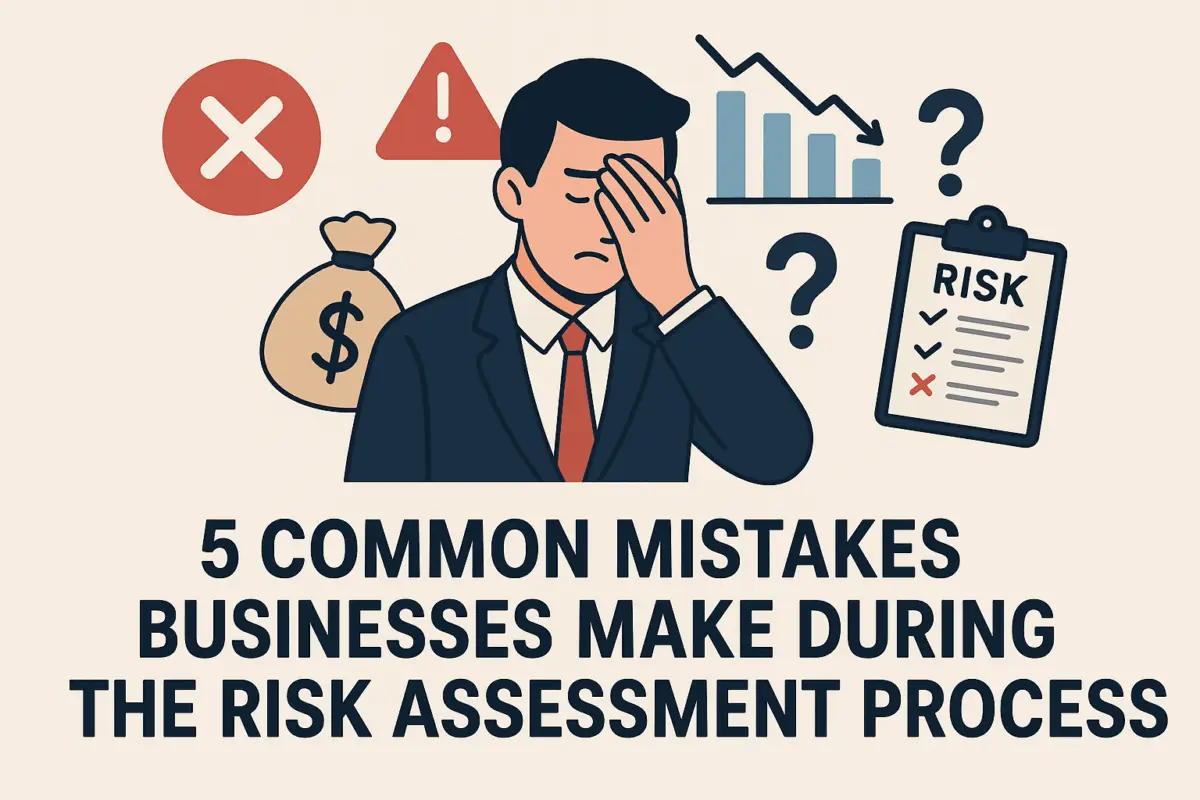
This investigative report examines the five most pervasive and damaging missteps organizations make during their ISO 27001 risk assessments. By dissecting these operational pitfalls—ranging from the perils of treating assessments as one-off projects to the dangers of reverse-engineering outcomes to justify predetermined budgets—this article provides security leaders, CISOs, and compliance officers with the strategic clarity needed to build a resilient, defensible, and genuinely protective risk framework.
Detailed Chronology: The Lifecycle of an ISO 27001 Risk Assessment
To understand where risk assessments fail, one must first examine how they are mapped across the lifecycle of an ISMS. The standard, under Clause 6.1.2, establishes a continuous feedback loop that demands rigorous planning, iterative execution, and ongoing maintenance. However, organizations frequently distort this chronology, transforming a living operational process into a brittle historical artifact.
Phase 1: The Initial Baseline (Pre-Certification)
During the initial implementation phase, organizations typically mobilize a task force to inventory assets, catalog threats, and evaluate vulnerabilities. This initial baseline is often executed with meticulous care because the looming shadow of the Stage 1 and Stage 2 audits focuses executive attention.
However, the chronological failure often begins immediately after the ink dries on the initial certification certificate. Rather than integrating the risk register into daily operational workflows, teams archive the documentation, assuming the system is self-sustaining until the first annual surveillance audit forces a frantic, last-minute dusting-off of spreadsheets.
Phase 2: The Inter-Audit Drift (Operational Blind Spots)
As months pass, the business environment evolves at breakneck speed. Infrastructure is migrated to the cloud, new third-party software vendors are onboarded, corporate mergers occur, and remote-work policies shift the perimeter.
Under Clause 6.1.2, reassessments are required not only at planned intervals but whenever significant changes occur. Yet, many organizations rely on arbitrary timelines—such as reviewing the risk register every 18 months simply because an external auditor arrives every September. This chronological disconnect means that critical operational shifts go unrecorded, leaving the organization’s formal risk profile entirely divorced from its actual attack surface.
Phase 3: The Audit Crucible (The Verification of the Statement of Applicability)
When the external auditor arrives for a surveillance or recertification audit, the chronological narrative of the ISMS faces its ultimate test. The auditor reviews the Statement of Applicability (SoA) and attempts to trace every single Annex A control back to its origin in the risk register.
If an organization has treated the risk assessment as an isolated project, the chronological link between risk identification, treatment selection, and control implementation shatters. The auditor is left staring at a static spreadsheet where scores appear arbitrary, treatments lack accountability, and exclusions look less like strategic risk acceptances and more like convenient omissions.
Supporting Context & Metrics: The Cost of Complacency
To frame these procedural failures within the broader economic realities of modern enterprise, one must look beyond the immediate compliance friction and examine the catastrophic financial implications of unmanaged risk.
Security leaders frequently struggle to secure executive buy-in for continuous risk management resources because compliance is mistakenly viewed as a cost center rather than a risk mitigation engine. However, empirical data underscores the high stakes of operationalizing security only when an audit approaches.
The Financial Magnitude of Data Breaches
According to IBM’s comprehensive Cost of a Data Breach Report, the global average cost of a data breach has climbed to a staggering $4.99 million. This figure encompasses not only immediate remediation expenses, forensic investigations, and legal fees, but also long-term brand erosion, customer churn, and regulatory penalties under frameworks like GDPR, HIPAA, and emerging state-level privacy laws.
When organizations treat ISO 27001 risk assessments as mere certification checkboxes, they systematically blind themselves to the specific vulnerabilities that frequently precipitate these multi-million-dollar incidents. A current, well-scoped risk register provides leadership with the analytical clarity required to spot, fund, and track material risks before they manifest as catastrophic breaches.
The Anatomy of the Five Core Missteps
To achieve true operational resilience, security teams must systematically eradicate the five most common errors that weaken the risk assessment process:
1. Treating Risk Assessment as a One-Off Project
As established, completing a risk assessment solely to pass an initial audit and shelving it until recertification is a direct violation of the spirit and letter of Clause 6.1.2.
- The Symptom: An unchanging risk register across multiple audit cycles.
- The Auditor’s Perspective: An auditor will rightly view a static register as a "dead document"—a bureaucratic fiction rather than an active management tool.
- The Correction: Embed recurring review milestones into the corporate calendar (ideally on a quarterly basis). Furthermore, establish automated triggers that mandate an ad-hoc risk review whenever core business operations pivot: the launch of a new product line, the integration of new cloud infrastructure, or the onboarding of a vendor processing sensitive customer data.
2. Overengineering the Scoring Matrix
In an effort to achieve absolute scientific precision, well-meaning risk committees frequently transform simple, intuitive evaluation models into unwieldy monstrosities. A standard 3×3 or 5×5 likelihood-and-impact matrix is needlessly expanded into a 9×9 or even a granular 10×10 grid because a stakeholder demands greater analytical granularity.
- The Symptom: Decision-makers spend hours locked in circular debates over whether a risk scores a 42 versus a 44 on a scale of 100, typically because participants lack shared, objective definitions for what constitutes "high likelihood" or "moderate impact."
- The Auditor’s Perspective: Overly complex matrices obscure accountability. When a matrix has more than 100 potential permutations, it ceases to be a communication tool and becomes an administrative barrier.
- The Correction: Keep the scoring matrix ruthlessly simple. A 3×3 or 5×5 scale, underpinned by crystal-clear, written definitions for every scoring tier, is infinitely more valuable than a hyper-complex model that internal stakeholders do not trust or understand. As guidance frameworks like the National Institute of Standards and Technology (NIST) emphasize, risk assessment must be a practical, repeatable process of preparation, conduct, and maintenance—not an abstract mathematical exercise. Teams must also actively combat cognitive biases; for instance, a recent corporate outage may cause stakeholders to drastically overstate the likelihood of a localized glitch, while institutional familiarity with an insecure legacy process can lead them to dangerously understate the impact of a data breach.
3. Writing Treatment Plans with No Owner and No Budget
A risk register that identifies a critical threat but pairs it with a vague remediation statement—such as "improve firewall monitoring"—is fundamentally incomplete.
- The Symptom: Treatment plans that list mitigation actions without designating a specific human owner, a concrete completion deadline, or an allocated budget.
- The Auditor’s Perspective: Auditors examining the Statement of Applicability will probe deeply into why specific Annex A controls were included or excluded. If an included control has no traceable treatment plan, or if an excluded control lacks a documented risk acceptance rationale, the entire ISMS credibility collapses.
- The Correction: Transform wish lists into accountable project plans. Every risk treatment must be assigned to a named individual (the risk owner), backed by a definitive timeline, and supported by a verified resource allocation. If a risk is formally accepted rather than mitigated, that decision must be explicitly approved by executive leadership, documenting the residual risk for audit validation.
4. Using the Assessment to Justify a Predetermined Outcome
One of the most insidious anti-patterns in compliance management is the practice of working backward. Some organizations conduct a risk assessment simply to rubber-stamp the implementation of every single Annex A control, preferring to spend capital on unnecessary tools rather than taking the time to justify an exclusion. Conversely, others determine that certain security controls are too expensive or operationally disruptive, forcing risk owners to invent post-hoc justifications that rationalize their removal.
- The Symptom: A risk profile that perfectly mirrors the default ISO 27001 annex list, or conversely, a suspiciously bare risk register that conveniently bypasses all costly technical safeguards.
- The Auditor’s Perspective: Experienced auditors can easily spot reverse-engineered logic. When risk scores are manipulated to match a pre-existing budgetary agenda, the evidence trail shatters.
- The Correction: Allow the objective findings of the risk assessment to dictate control selection. If a control is excluded from the Statement of Applicability, the decision must be anchored in a legitimate risk evaluation where the business consciously accepts the residual risk. Honesty in risk appraisal is the bedrock of credible security governance.
5. Treating the Whole Thing as a Certification Checklist
Underlying all operational missteps is a foundational philosophical error: viewing the ISO 27001 risk assessment as a compliance ritual performed solely to satisfy an external auditor.
- The Symptom: Risk assessments that are rushed, outsourced blindly to junior staff without context, or executed in panicked silos weeks before an audit window.
- The Auditor’s Perspective: While an auditor may occasionally issue a certificate to a technically compliant checkbox organization, the true cost of this mindset is realized when a genuine cyber incident occurs.
- The Correction: Shift the paradigm. Integrate the risk register into broader enterprise data management and risk governance strategies. Conduct rigorous internal gap analyses long before the certification cycle begins, and leverage executive management reviews to aggressively challenge overdue remediation projects, shifting threat landscapes, and internal security biases.
Official Statements and Industry Insights
To contextualize the evolving regulatory and operational expectations surrounding ISO 27001 risk management, industry leaders and standards bodies continue to refine their guidance.
"An Information Security Management System cannot function as a static monument to a single point in time," notes a prominent lead ISMS auditor and compliance strategist. "When an organization hands me a risk register that has remained unmodified for twelve months while their software development lifecycle, cloud architecture, and workforce footprint have entirely transformed, they are not demonstrating security—they are demonstrating administrative negligence. The risk assessment must breathe with the enterprise."
Furthermore, risk management authorities emphasize that the transition toward automated, continuous compliance models is rendering annual spreadsheet-based audits obsolete. Organizations that fail to institutionalize real-time risk tracking find themselves increasingly vulnerable not only to sophisticated cyber threats, but also to heightened regulatory scrutiny. Regulatory bodies and international standards organizations are progressively raising the bar, demanding that governance models demonstrate active, empirical risk ownership rather than passive adherence to static control lists.
Future Outlook: The Evolution of Risk-Driven Security
As organizations look toward the future of information security governance, the mandate for ISO 27001 compliance is shifting. The anticipated maturation of automated risk-monitoring tools, artificial intelligence-driven threat modeling, and continuous control monitoring (CCM) means that the traditional, static risk register is rapidly approaching obsolescence.
In the coming years, successful enterprises will move away from periodic, manual spreadsheet reviews and transition toward integrated risk platforms that dynamically update risk scores based on real-time telemetry from endpoint detection, vulnerability scanners, and cloud posture management tools. In this evolving landscape, the role of the CISO and the compliance officer will evolve from administrative auditors of historical data into strategic architects of dynamic risk velocity.
For organizations embarking on or refreshing their ISO 27001 journey, the path forward is clear. By abandoning the checkbox mentality, simplifying evaluation matrices, anchoring treatment plans in rigorous operational accountability, and ensuring that risk assessments drive—rather than justify—business decisions, companies can transform compliance from an administrative burden into a formidable competitive advantage. Ultimately, a resilient risk assessment process does more than satisfy an auditor; it secures the enterprise’s digital future against an increasingly hostile threat landscape.