








By Shane Snider
Senior News Writer, Data Center Knowledge
August 25, 2026
Executive Overview
The race to power the artificial intelligence revolution has collided head-on with the physical realities of America’s aging electrical grid. In a decisive move underscoring the severity of the crisis, the U.S. Department of Energy (DOE) issued a federal order requiring PJM Interconnection and Constellation Energy to keep 760 megawatts (MW) of generation capacity at Pennsylvania’s Eddystone Generating Station online through November 20, 2026.
This latest directive marks the sixth consecutive time federal authorities have intervened to prevent the dual-fuel facility from shutting down since its original retirement date of May 31, 2025. At the heart of the crisis is a severe timing mismatch: electricity demand driven by hyperscale data centers and artificial intelligence infrastructure is arriving on the grid far faster than replacement generation and transmission upgrades can be built.
The DOE’s reliability analysis reveals a daunting macro picture for the PJM grid operator, which manages power across 13 states and the District of Columbia. The region faces roughly 25 gigawatts (GW) of projected load growth—with data centers alone accounting for 15 GW—against approximately 17 GW of announced fossil-fuel plant retirements. As emergency directives morph from short-term fixes into structural crutches, industry experts, consumer advocates, and policymakers are left asking a fundamental question: When does an emergency measure stop being a temporary bridge and simply become the new baseline of resource planning?
Detailed Chronology: Anatomy of a Retiring Plant’s Purgatory
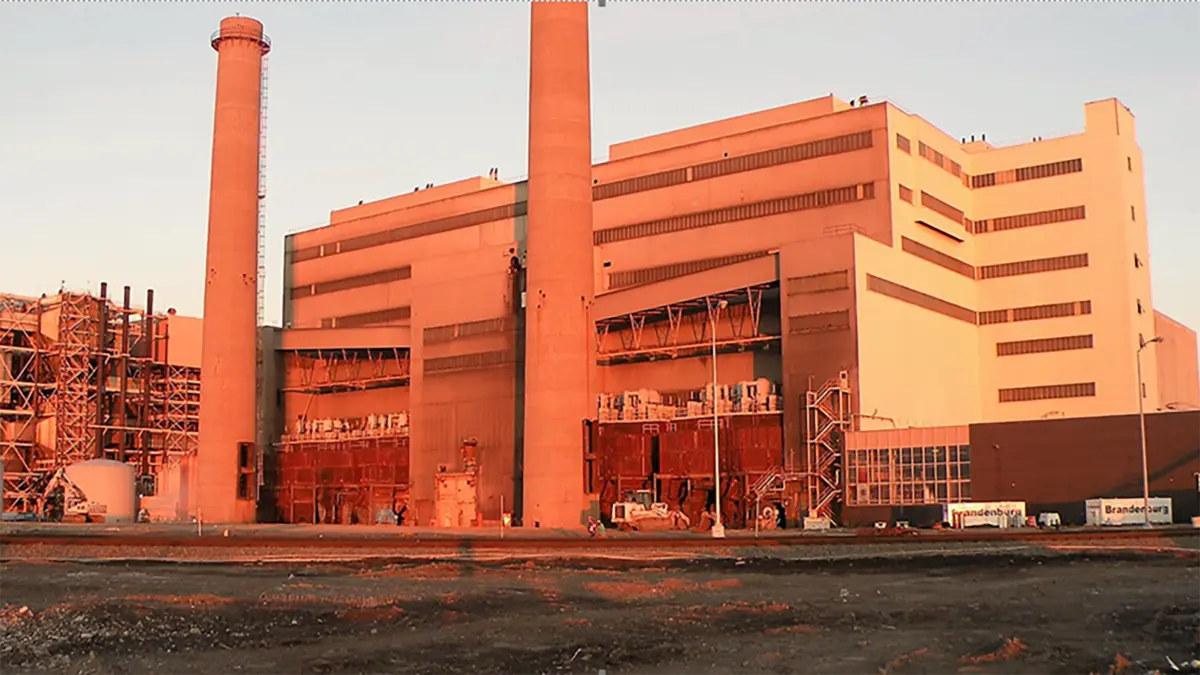
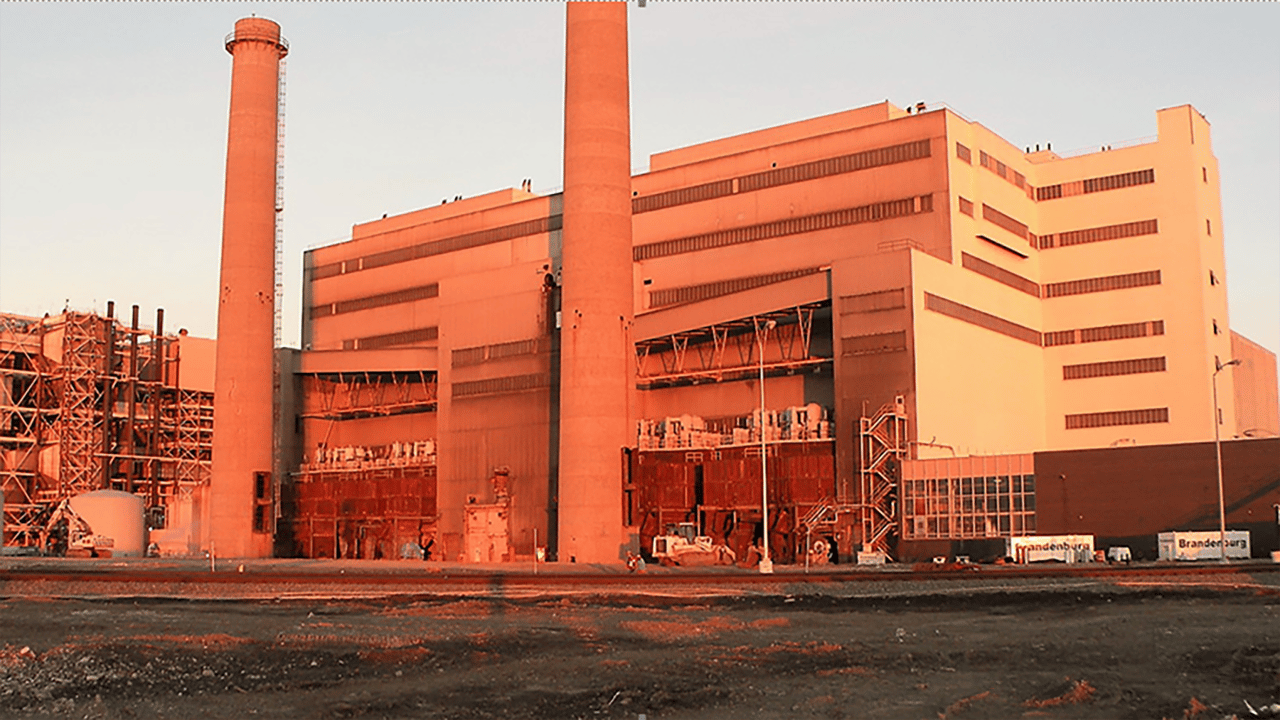
The trajectory of the Eddystone Generating Station illustrates the unprecedented pressure current power markets are under. Located near Philadelphia, Eddystone Units 3 and 4 are 380-MW units capable of running on natural gas or fuel oil. Under normal market conditions, they were slated for a standard, planned retirement in mid-2025, allowing plant operators to phase out older, less efficient assets while transitioning toward cleaner generation portfolios.
However, rapid shifts in regional load forecasts threw those plans into disarray.
- May 31, 2025: Eddystone Units 3 and 4 reach their scheduled retirement date. However, due to immediate reliability concerns flagged by grid operators, they are kept online.
- Late 2025 – Mid-2026: Through a succession of emergency orders under Section 202(c) of the Federal Power Act, the DOE repeatedly directs PJM and Constellation Energy to preserve the plant’s availability.
- August 21, 2026: The DOE issues its latest mandate (DOE Order No. 202-26-40), extending the emergency availability requirement through November 20, 2026.
Crucially, the August 21 order mandates that PJM economically dispatch Eddystone Units 3 and 4 only when strictly necessary for grid reliability, explicitly stipulating that the units “shall not be considered a capacity resource.” This legal distinction prevents the plant from skewing standard capacity market pricing while acknowledging its critical physical utility as an emergency safety net.
“The core problem is timing: load is arriving faster than replacement generation, and transmission can become executable,” explains Neil Osnato, founder of Persistence Analytics Group.
Supporting Context & Metrics: The Math Behind the Grid Strain
To understand why federal regulators continue to intervene in regional power markets, one must examine the staggering metrics governing modern grid planning.
According to federal modeling data, average weather conditions in the PJM footprint could yield approximately 430 loss-of-load hours. Under worst-case meteorological scenarios combined with maximum unserved load projections, that figure skyrockets to 1,052 hours, with unserved load reaching an alarming 21.3 GW. While energy analysts view these metrics as worst-case stress tests rather than deterministic forecasts, they vividly outline why the DOE treats the convergence of surging demand and rapid retirements as an existential reliability threat.
The numbers tell a stark story:
- 25 GW: Projected total load growth across the PJM footprint.
- 15 GW: Share of projected load growth driven exclusively by the data center and AI sector (representing 60% of total anticipated growth).
- 17 GW: Total volume of scheduled and announced fossil-fuel generation retirements.
- 760 MW: The total capacity preserved by keeping Eddystone Units 3 and 4 online.
This data highlights a deep asymmetry in grid forecasting. As Osnato points out, generator retirements are binary events—a power plant either shuts down on a specific date, or it does not. Conversely, a 15-GW multi-year forecast for data center demand is inherently fluid. Developers frequently negotiate concurrently with multiple utilities (such as PECO and PPL in Pennsylvania) while evaluating sites. This dynamic can introduce a severe "double-counting" problem into utility forecasts, artificially inflating projected load figures as the same prospective campus appears on multiple regional books before settling on a single grid connection.
Official Statements and Industry Perspectives
The reliance on emergency federal interventions has triggered intense debate among consumer advocates, market analysts, and legal experts regarding the long-term health of U.S. power markets.
The Consumer Advocate View
Darryl Lawrence, Pennsylvania’s consumer advocate and head of the state’s Office of Consumer Advocate, notes that PJM’s historical reliability margins have eroded to an unprecedented degree.
“During extreme weather conditions, PJM’s system is fragile,” Lawrence stated. “And this is not something that we’ve seen in my time in the business, which is 20-plus years.”
Lawrence compares the current digital infrastructure boom to historical industrial expansions, noting that the region has not experienced this velocity of forecasted demand since the era of heavy steel mill construction. Yet, unlike heavy manufacturing, which was geographically concentrated and relatively predictable, modern AI compute demands can scale rapidly and concentrate unpredictably.
The Evolution of Emergency Authorities
Elizabeth Whitney, managing principal at Meguire Whitney, points out that Section 202(c) of the Federal Power Act was historically designed as a short-term, surgical tool for acute, unforeseen crises—such as severe weather events or sudden fuel supply disruptions. However, the federal government’s broader declarations of national energy emergencies have created a framework that normalizes repeated, extended usage.
“If there is a statutory benefit to being in an emergency situation, then there’s going to be political pressure to find an emergency to justify that use,” Whitney told Data Center Knowledge in a phone interview.
While Whitney emphasizes that these specific orders may be objectively necessary to prevent blackouts, she questions the policy implications of turning an emergency stopgap into a permanent planning mechanism. “How long can an emergency measure remain in effect before it effectively becomes part of normal resource planning?” she asks.
Market Mechanics and Cost Allocation
A lingering issue centers on who ultimately foots the bill for keeping uneconomical fossil-fuel assets operational. While the DOE order directs PJM to use economic dispatch to minimize immediate impacts on ratepayers, costs associated with maintaining standby units inevitably flow through regional power markets.
This dynamic reignites debates over whether hyperscale operators and AI data center developers should bear a higher direct cost for the reliability resources they necessitate. While Pennsylvania utilizes a "but-for" test for large-load tariffs—meaning if infrastructure would not be built but for a specific customer, that customer should pay—tracing electrons directly from a specific data center to a specific retiring coal plant remains practically impossible.
PJM’s recent large-load reforms attempt to bridge this gap by requiring incoming data centers to bring their own behind-the-meter or firm capacity to the table before securing service. However, experts note these reforms address the demand-entry side of the future equation, leaving the immediate supply-side timing gap wide open.
Future Outlook: A Bridge, Not a Design
As lawmakers return from congressional recesses, pressure is mounting in Washington to establish a comprehensive legislative framework addressing the resource strains of the AI infrastructure buildout. Analysts expect renewed attempts to pass federal policy addressing power procurement, transmission corridor streamlining, and cost-sharing mechanisms between tech giants and local ratepayers.
In the near term, however, facilities like the Eddystone Generating Station will remain central to the survival of regional grids.
PJM continues to navigate its multi-year strategy to integrate data center growth while safeguarding baseline reliability. Yet, until new generation, advanced energy storage, and high-voltage transmission lines can be permitted, financed, and constructed at scale, emergency measures will remain the order of the day.
As Osnato aptly summarizes:
“That’s why I see [Section] 202(c) as emergency reliability insurance. It is a bridge, not a design.”