








Executive Overview
In an aggressive push to modernize its advertising infrastructure and cater to the shifting workflows of modern marketers, X (formerly Twitter) officially launched its X Ads Model Context Protocol (MCP) server. Released on Friday, this cutting-edge integration is designed to bridge the gap between X’s proprietary advertising ecosystem and the external artificial intelligence assistants that modern marketing teams increasingly rely on.
For years, advertisers managing budgets across major social networks have been forced to navigate siloed, platform-specific ad managers. While these native dashboards offer deep insights, they often isolate data, making it difficult for marketers to maintain a unified AI-driven strategy. X’s new MCP server fundamentally changes this paradigm. By leveraging the Model Context Protocol, the platform now allows advertisers to seamlessly connect their X ad campaigns, performance analytics, and account data directly to third-party AI models of their choice—ranging from industry heavyweights like Anthropic’s Claude and OpenAI’s ChatGPT to X’s native Grok and bespoke, developer-built AI agents.
This development marks a significant philosophical shift for the platform. Rather than attempting to trap users within a walled garden, X is embracing interoperability. Advertisers can now use natural language queries within their preferred AI environments to build, analyze, and refine their X ad strategies.
The launch does not happen in a vacuum. It represents the latest salvo in a broader industry-wide race toward open, AI-agent-friendly advertising architectures. Competitors such as Meta, TikTok, Pinterest, and Snapchat have all rolled out or announced similar MCP-based integrations over the past year. As the digital advertising landscape pivots toward agentic AI workflows—where autonomous and semi-autonomous software agents execute complex multi-step tasks—X’s new protocol ensures that its platform remains a viable, frictionless option for sophisticated, multi-channel media buyers.
Detailed Chronology: The Evolution of X’s AI-Driven Advertising
To understand the weight of the X Ads MCP server launch, it is essential to trace the technical and strategic milestones that led to this point. The integration of advanced artificial intelligence into digital advertising has evolved rapidly over the past half-decade, transforming from simple predictive bidding algorithms into complex generative and analytical systems.
Phase 1: The Walled Garden Era and Native AI (2021–2023)
For much of the early 2020s, major social media platforms treated their advertising infrastructures as closed ecosystems. Advertisers had to log into platform-specific dashboards—such as Meta Ads Manager, TikTok Ads Manager, or X’s native ad portal—to create campaigns, set targeting parameters, and review performance metrics.
When generative AI began to sweep through the tech sector in late 2022, social media companies rushed to build proprietary, native AI tools within these walled gardens. Platforms introduced automated copywriting assistants, algorithmic budget allocation, and predictive audience generation tools. However, these tools were entirely self-contained. An enterprise marketer utilizing OpenAI’s ecosystem for overarching brand strategy could not easily bridge that intelligence with the granular mechanics of a live social media ad campaign without manual data export and import processes.
Phase 2: The Rise of the Model Context Protocol (2024–Early 2025)
The introduction of open standards like the Model Context Protocol revolutionized how software applications interact with large language models (LLMs). Developed to solve the "context problem"—the difficulty of feeding real-time, proprietary corporate data into generalized AI models securely and efficiently—MCP established a universal standard for connecting data sources to AI clients.
Recognizing the utility of this architecture, technology giants began experimenting with open integrations. Rather than forcing users to adopt a single corporate chatbot, forward-thinking platforms realized that allowing external developers and marketers to query platform databases via secure MCP connections would drive higher platform engagement and ad spend.
Phase 3: Meta’s Pioneering Move and the Domino Effect (April 2025)
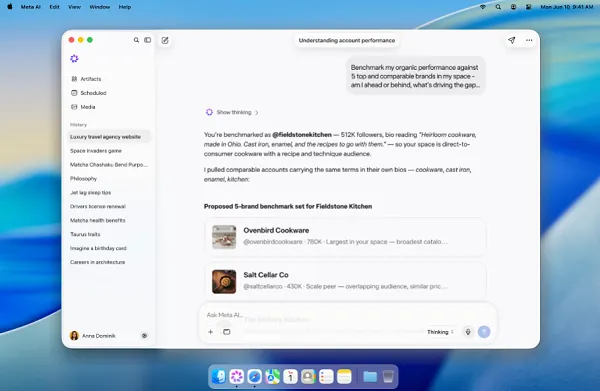
The dam broke in April 2025 when Meta launched its pioneering AI ad connectors, establishing a precedent that third-party chatbots could directly interface with campaign creation and analytics flows. This move put immense pressure on rival platforms.
Throughout the remainder of 2025 and into early 2026, a cascading series of announcements reshaped the digital marketing landscape:
- TikTok rolled out advanced third-party AI tooling integrations at its annual developer and brand summits.
- Pinterest integrated visual and text-based shopping and ad tools with external AI models to streamline consumer discovery paths.
- Snapchat introduced flexible third-party AI integrations aimed at its younger, mobile-first demographic of brand partners.
Phase 4: The Launch of the X Ads MCP Server (Friday)
Culminating this industry-wide transformation, X officially launched its Ads MCP server on Friday. Announced via X’s official business handles and backed by comprehensive developer documentation, the system immediately opened the door for marketers to plug their X campaign metrics directly into tools like Claude, ChatGPT, Grok, and custom SDK-built agents. This milestone signals that open, cross-platform AI management is no longer an experimental niche, but the baseline expectation for modern digital advertising infrastructure.
Supporting Context & Metrics: How the X Ads MCP Works
To fully appreciate the practical implications of X’s new offering, one must examine the underlying mechanics of the technology. The Model Context Protocol acts as a standardized universal translator between AI applications (clients) and data repositories (servers).
Breaking Down the Architecture
Under the traditional model, if a media buyer wanted to optimize an ad campaign on X using insights from an external AI like Claude, they would have to:
- Export performance CSVs from X Ads Manager.
- Clean and format the data.
- Upload the files into the chat interface.
- Prompt the AI for analysis.
- Manually translate those recommendations back into changes within the X ad dashboard.
This manual loop was time-consuming, error-prone, and incapable of real-time optimization.
With the X Ads MCP server, this friction is eliminated. The architecture operates through secure, authorized server-client connections:
- The Server: X’s newly deployed Ads MCP server, which securely hosts and gates access to campaign metadata, audience analytics, spend histories, and performance metrics.
- The Client: Any MCP-compatible AI application chosen by the marketer—ranging from consumer-facing models like ChatGPT to enterprise developer environments like Claude Code or proprietary internal agency agents.
- The Interface: Natural language processing. Marketers no longer need to navigate complex nested menus or build manual reports; they simply converse with their AI assistant using plain English (or other supported languages) to extract insights.
Compatibility and Flexibility
X has structured its MCP server to be platform-agnostic within the bounds of the protocol. According to official documentation, the server is fully compatible with:
- Grok: X’s native generative AI assistant, ensuring that users loyal to the platform’s ecosystem retain deep, frictionless integration.
- Claude & Claude Code: High-end analytical and coding assistants popular among technical marketers and enterprise analytics teams.
- Custom AI Agents: Proprietary agents built by enterprise brands or media agencies utilizing the MCP Software Development Kits (SDKs).
What Data Can Be Queried?
Through natural language queries executed in the chosen platform, marketers can tap into a wealth of operational data:
- Campaign Performance Metrics: Real-time impressions, click-through rates (CTR), conversion tracking data, and cost-per-click (CPC) metrics.
- Audience Insights: Demographic breakdowns, engagement patterns, and behavioral segments interacting with specific ad creatives.
- Budget and Spend Analytics: Historical pacing data, daily burn rates, and algorithmic efficiency recommendations.
- Creative Iteration Guidance: AI-driven suggestions for refining ad copy, adjusting call-to-actions, and reallocating funds across active ad sets based on live performance feeds.
Official Statements and Industry Perspectives
The release of the X Ads MCP server has drawn immediate commentary from digital marketing analysts, agency executives, and technology observers. While the overarching sentiment is overwhelmingly positive regarding the push toward interoperability, experts are also weighing the strategic implications for platform dominance and data security.
The Shift Toward Agentic Workflows
Industry analysts point out that the launch reflects a fundamental evolution in how humans interact with enterprise software. "We are moving away from the era of graphical user interfaces as the primary point of control," notes a prominent digital marketing technologist. "The future belongs to agentic workflows. Marketers won’t click buttons in an ad manager; they will direct an army of specialized AI agents to execute campaigns across Meta, X, TikTok, and Google simultaneously. X’s MCP server is a mandatory ticket to play in this new arena."
Empowering Independent Agencies and Brands
For smaller agencies and mid-sized enterprises that lack the massive engineering budgets required to build bespoke internal APIs, the integration represents a democratization of enterprise-grade tooling. By allowing marketers to use their preferred AI tools—many of which they already use for general business operations, legal drafting, and creative brainstorming—X is lowering the cognitive barrier to entry for running sophisticated ad campaigns on its platform.
Privacy and Security Considerations
Naturally, the integration of third-party AI tools into proprietary advertising databases raises valid questions regarding data privacy and intellectual property. X’s documentation emphasizes that MCP connections operate under strict authorization protocols, ensuring that advertisers maintain control over which applications have access to their sensitive campaign data and financial metrics. However, enterprise compliance officers will still need to vet how third-party AI clients handle ingested campaign data, ensuring compliance with global privacy regulations such as GDPR and CCPA.
Future Outlook: The Road Ahead for AI-Driven Advertising
As the digital advertising industry digests the rapid succession of MCP rollouts from Meta, TikTok, Pinterest, Snapchat, and now X, industry watchers are looking ahead to what the next five years will hold for media buying and platform economics.
1. Standardization and Ubiquity
It is widely anticipated that within the next 24 to 36 months, third-party connection options and custom AI-powered management will cease to be a competitive differentiator and instead become a baseline utility. Every major digital platform—regardless of whether its primary focus is social networking, search, or commerce—will be expected to provide open APIs or MCP servers. Platforms that stubbornly maintain closed, walled-garden architectures risk alienating sophisticated enterprise buyers who demand centralized, AI-driven workflow orchestration.
2. Multi-Platform Agent Orchestration
The ultimate destination of this technological shift is the rise of unified cross-platform command centers. Imagine a future where a marketing director opens a single custom AI agent interface and issues a command: "Analyze our product launch campaign across X, Meta, and TikTok, reallocate 15% of underperforming budgets toward top-performing creative variations on X, and draft new localized copy for the European market."
With X’s Ads MCP server now online, the technical plumbing required to make such cross-platform orchestration a reality is rapidly falling into place.
3. The Redefinition of the Media Buyer’s Role
As routine tasks—such as bid adjustments, performance reporting, and basic A/B test setup—are increasingly delegated to AI agents via protocols like MCP, the role of the human digital marketer will undergo a profound transformation. Media buyers will transition from tactical operators clicking buttons inside ad managers to strategic directors, prompt engineers, and brand governors who oversee and audit the decisions made by autonomous AI systems.
Conclusion
X’s introduction of the Ads MCP server is far more than a routine software update; it is a strategic acknowledgment of where the future of digital marketing lies. By tearing down artificial barriers between its ad server models and external AI powerhouses, X has positioned itself as an open, flexible, and forward-thinking partner for advertisers navigating an increasingly complex, AI-dominated digital universe. As brands and agencies begin wiring their favorite AI assistants directly into their X campaign data, the rules of media buying are being rewritten in real-time.