Executive Overview
If you have ever been woken up at 2 a.m. by a cascading service degradation that you do not immediately recognize, you already understand the true bottleneck of modern incident response. It is rarely writing the code fix or executing the remediation script. Instead, the overwhelming majority of an on-call engineer’s time is lost on a far more fundamental question: Has anyone seen this before?
According to industry metrics, between 35% and 55% of total incident-resolution time is spent entirely on knowledge retrieval. Engineers scramble across a fragmented landscape of runbooks, aging JIRA tickets, postmortem archives, and internal wiki pages, usually emerging with only partial answers or outdated guidance. Far from a simple tooling gap, this is a search problem wearing an incident-management costume.
To close this operational gap, a team of engineering researchers spent the past several months building a specialized retrieval-augmented generation (RAG) system tailored specifically for technical operations. The results of this project were robust enough to be accepted as a peer-reviewed paper at IEEE GAISS 2026. This article offers the practitioner version of that research: a deep dive into what was built, the unexpected performance hurdles encountered along the way, and practical lessons for any engineering organization considering a similar deployment.
Detailed Chronology: From Concept to IEEE GAISS 2026
The genesis of the framework began out of sheer operational fatigue. Traditional AIOps (Artificial Intelligence for IT Operations) tooling has historically focused on a narrow scope of responsibilities: anomaly detection, log clustering, and numerical alert correlation. While these capabilities are vital for recognizing that a system is failing, they operate almost exclusively on numerical or structured telemetry. Metrics, traces, and aggregate log volumes are exceptionally good at pointing out a spike in latency or a drop in throughput, but they fail to capture institutional knowledge.
When an engineer needs to know that a specific failure mode occurred eighteen months ago and was resolved by tweaking a hidden connection pool setting rather than initiating a full redeployment, that context lives in plain English inside closed tickets or historical postmortems—far outside the reach of a Prometheus time-series database.
Recognizing this limitation, the team rejected the notion of deploying a standalone Large Language Model (LLM) to diagnose production issues out of the box. Unbounded LLMs are notoriously prone to generating plausible-sounding root causes that bear zero resemblance to an organization’s actual infrastructure, improvising confidently when faced with unfamiliar environments.
The core bet of the project was simple: integrate Retrieval-Augmented Generation (RAG) to anchor the LLM’s output in verified, retrieved organizational knowledge. Over several iterations, the team designed and implemented a specialized five-layer framework, prioritizing robust data ingestion, semantic chunking, precise metadata filtering, cross-encoder re-ranking, and continuous human-in-the-loop feedback loops. Following rigorous testing and cross-validation against synthetic and historical datasets, the research was submitted to and accepted by IEEE GAISS 2026, validating both the architectural choices and the practical outcomes.
Supporting Context & Metrics: Putting RAG to the Test
To evaluate the efficacy of the system against existing alternatives, the research team constructed a rigorous testing environment comprising 2,400 annotated incident scenarios. This dataset balanced real-world historical incidents from a midsized financial services organization (carefully anonymized for the study) with the public DeathStarBench microservice benchmark injected with artificial faults, alongside synthetic edge cases designed to trigger cascading system failures.
Performance Breakdown
The custom RAG framework was pitted against four distinct baselines: a standalone LLM, a traditional BM25 keyword-retrieval system paired with an LLM, a supervised machine learning classifier, and a rule-based expert system. The performance disparity was stark:
- Root-Cause Identification Accuracy: The RAG framework achieved 87.3% accuracy, outperforming the next-best approach (BM25 combined with an LLM) at 71.8%.
- Mean Diagnosis Time: Overall diagnosis times dropped by 59%.
- P1 Critical Incidents: The most dramatic improvements surfaced during high-stakes outages. Mean resolution time for P1 critical incidents plummeted from an average of 48.2 minutes of manual searching down to just 19.8 minutes.
The Surprising Findings of the Ablation Study
While the overall performance gains aligned with expectations, an ablation study—systematically removing individual components one by one to measure their impact—revealed counterintuitive insights about where engineering effort should be directed.

Pulling the cross-encoder re-ranking step out of the pipeline resulted in a performance drop of 7.7 percentage points. Even more striking, removing the custom semantic chunking strategy cost 10.9 percentage points of accuracy—representing the single largest performance drop recorded in the study, outweighing the impact of swapping out the underlying frontier LLM entirely. Metadata filtering and feedback loops each contributed several points of accuracy on their own.
These findings carry a clear message for engineering leaders: the unglamorous plumbing of data engineering—specifically how you segment documents and how you re-rank retrieved results—matters significantly more to the end-to-end outcome than which proprietary LLM handles the final reasoning. Teams debating where to allocate development hours should avoid getting bogged down in debates over frontier model selection and instead focus heavily on data preparation pipelines.
Latency and Usability Metrics
For interactive incident response, speed is non-negotiable. If a diagnostic tool is slower than simply paging a colleague, engineers will abandon it. The architecture achieved an end-to-end p95 latency of 3.5 seconds, with the LLM generation phase serving as the primary latency driver. Vector search remained remarkably fast, registering a p95 of 142ms even when scaling across indices exceeding 10,000 documents.
Furthermore, a satisfaction survey administered to site reliability engineers (SREs) who utilized the tool yielded an impressive rating of 4.6 out of 5. Qualitative feedback highlighted a specific feature: engineers expressed significantly higher trust in the system because they could click through to view the exact source documents and historical tickets cited by the model. This highlights a critical design principle for high-stakes operational tools—explainability is not merely a compliance checkbox; it is the primary driver of user adoption.
Official Statements and Architecture Breakdown
To understand how the system achieves these results, it is helpful to look under the hood at its structural composition.
The Five-Layer Framework
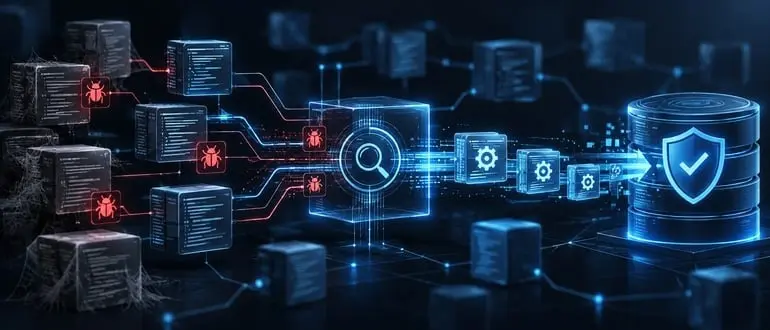
- Ingestion & Connectors: Automated pipelines pulling raw documentation from JIRA, GitHub, Confluence, and postmortem archives.
- Semantic Chunking: Specialized text-splitting algorithms that preserve code blocks, error logs, and contextual narrative structures rather than arbitrarily cutting text at fixed character lengths.
- Vector Indexing & Metadata Filtering: Storing embeddings alongside contextual metadata (e.g., service ownership, environment type, technology stack) to narrow search spaces before similarity matching.
- Cross-Encoder Re-Ranking: Elevating the contextual precision of retrieved snippets by scoring their deep semantic relevance to the active incident query.
- Generation & Provenance Linking: Synthesizing the final diagnostic recommendation while explicitly attaching clickable source links back to the original organizational knowledge base.
"If you are designing AI-assisted tools for high-stakes environments, the explainability layer is doing more heavy lifting than raw model accuracy," noted the lead researchers in their post-study review. "Engineers will not trust a black box at 2 a.m. When you give them a direct line of sight to the historical ticket where the exact same bug was solved two years ago, engagement transforms overnight."
Limitations: Where the Numbers Fall Short
Despite its high accuracy and strong user adoption, the research team remains candid about the system’s current limitations and failure modes:
- Handling Novel Outages: RAG is inherently backward-looking. If an incident represents a truly novel failure mode with zero historical footprint in the organization’s documentation or postmortems, the retrieval engine cannot surface relevant past solutions. In such cases, the system defaults to general foundational knowledge, increasing the risk of hallucination.
- The Problem of Stale Knowledge: A neglected knowledge base degrades silently. As organizations deprecate old services, alter microservice architectures, and shift paradigms, an un-audited index will confidently retrieve outdated, hazardous advice. While feedback loops help mitigate this, they cannot replace human ownership and periodic audits of the underlying vector database.
- Complex Multi-Service Cascades: While single-system faults are diagnosed with high fidelity, highly distributed cascading failures spanning dozens of distinct repositories can overwhelm the context window, requiring more advanced multi-hop reasoning agents than standard single-turn RAG pipelines provide.
Future Outlook & Recommendations
As engineering organizations look toward the future of AIOps and generative infrastructure management, several clear takeaways emerge from this research:
- Prioritize Data Plumbing Over Model Chasing: Spend engineering cycles perfecting document chunking strategies and re-ranking mechanisms rather than endlessly benchmarking expensive foundation models.
- Embed Provenance and Audit Trails: Always provide human operators with direct links to primary source material. Trust is earned through transparency.
- Establish Knowledge Maintenance Ownership: Treat the vector index and runbook repository as living infrastructure that requires continuous curation, automated staleness checks, and active pruning.
Looking ahead, the development team is actively expanding the framework to ingest real-time observability signals—such as live metric time-series data and distributed trace graphs—as additional multi-modal retrieval inputs, moving beyond text alone. Furthermore, they are tightening hallucination mitigation protocols through claim-level verification against retrieved sources, ensuring even stricter guardrails for mission-critical environments.
For teams looking to explore this architecture firsthand, a complete reference implementation—including ingestion connectors, chunking pipelines, re-ranking logic, and the evaluation harness used in the IEEE study—has been made publicly available on GitHub under the MIT license.