Executive Overview
Few entertainment properties command the cultural bandwidth or corporate protection measures of Grand Theft Auto VI. Slated for a major console launch this autumn, Rockstar Games and its parent company, Take-Two Interactive, have maintained a notoriously tight grip on the title’s promotional pipeline. While official marketing milestones—such as a heavily anticipated "Extended Look" gameplay premiere slated for Netflix—are orchestrated with military precision, the publisher’s security perimeter was recently breached. On August 18, an anonymous entity operating under the moniker "Cyberleek" flooded the internet with unreleased gameplay footage, accompanied by a biting manifesto decrying the industry’s shift away from physical media and plastered with promotional watermarks for a speculative Solana-based cryptocurrency token.
The reaction from Take-Two Interactive was swift, aggressive, and legally comprehensive. Utilizing Section 512(h) of the Digital Millennium Copyright Act (DMCA), Take-Two’s legal representatives initiated a series of aggressive multi-platform subpoenas targeting Discord, Microsoft, X Corp. (formerly Twitter), and Google/YouTube.
What makes this ongoing legal offensive particularly noteworthy—and deeply alarming to digital privacy advocates—is the breathtaking scope of the information demanded. Rather than focusing exclusively on the primary source of the leak, Take-Two’s legal filings have cast a wide net, requesting user logs, IP addresses, device identifiers, and personal communications histories that sweep up potentially thousands of innocent bystanders, casual community members, and unrelated account holders. This investigative deep-dive explores the anatomy of the Grand Theft Auto VI leak, the mechanics of Take-Two’s unprecedented legal dragnet, the tension between intellectual property enforcement and digital privacy, and the broader implications for the gaming industry at large.

Detailed Chronology: From the Breach to the Courts
The August 18 Breach and the "Cyberleek" Manifestos
The leak materialized in the middle of August, catching Rockstar Games off-guard as clips of unpolished, highly confidential gameplay circulated across multiple social media channels. The leaks were distinct not just for their content, but for their delivery mechanism. The individual or group styling themselves as "Cyberleek" coupled the leaked footage with a direct ideological critique aimed at Take-Two’s business practices, specifically targeting the video game industry’s gradual abandonment of physical game discs in favor of purely digital distribution.
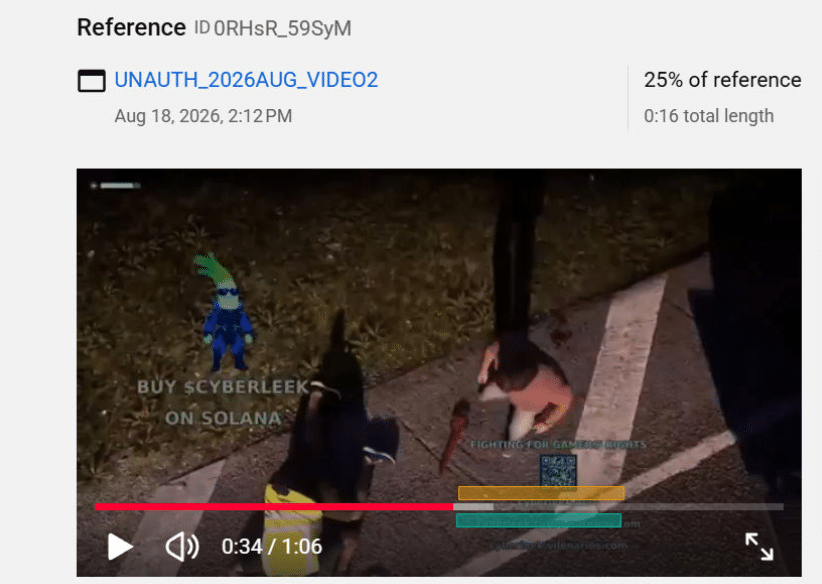
Compounding the violation was a commercial angle: the leaked files were heavily watermarked with promotional tags urging viewers to purchase a Solana-based meme token bearing the name "$CYBERLEEK." This hybrid approach—combining industrial sabotage, anti-corporate messaging, and decentralized finance shilling—turned what is typically a standard corporate leak into a multi-layered headache for Rockstar’s security teams.
The Kirkland & Ellis Filings: Discord and Microsoft in the Crosshairs
Realizing that the initial wave of manual takedowns and DMCA notices would not staunch the digital bleeding, Take-Two engaged the high-powered legal firm Kirkland & Ellis to file swift legal actions in the U.S. District Court for the Southern District of New York.
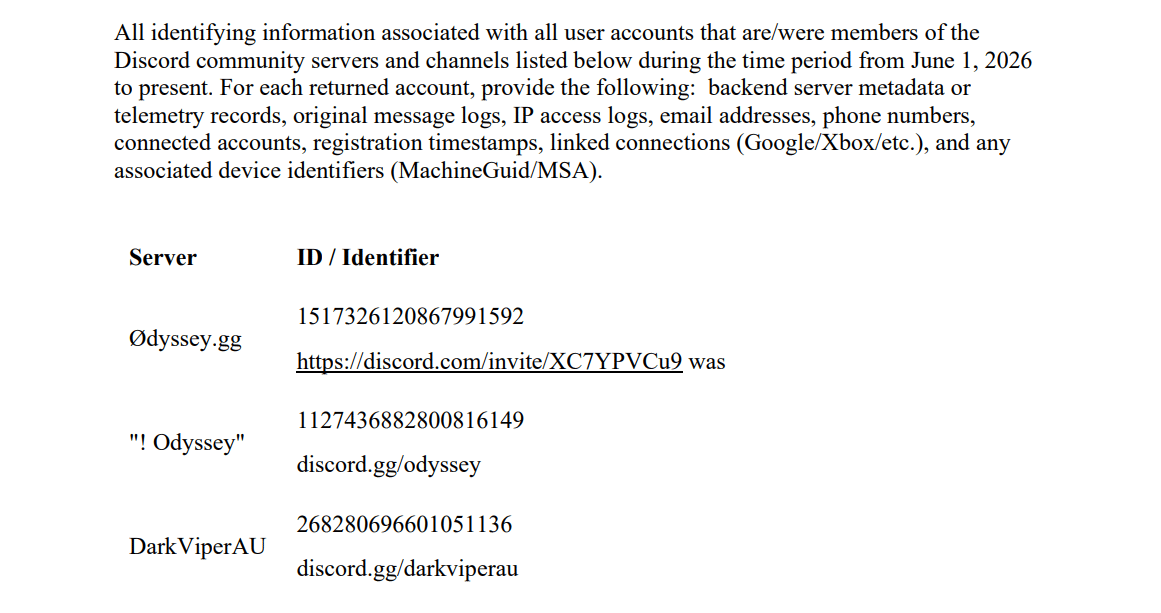
The first major legal salvo targeted Microsoft and Discord. Filed on behalf of Take-Two, the subpoena requested extensive data logs, including internal cybersecurity investigative files, device identifiers, IP logs, and OneDrive data from Microsoft. Simultaneously, the Discord subpoena demanded identifying details for every single user account that communicated within three specific Discord servers since June 1—regardless of whether those individual users had any connection to the distribution or creation of the leaked gameplay assets.
Legal experts and civil liberties advocates quickly flagged this request as an overbroad fishing expedition. By demanding the digital credentials and personal identifiers of entire community servers, Take-Two’s legal strategy crossed the line from targeting active infringers to sweeping up thousands of ordinary gamers whose only "offense" was congregating in the wrong digital room.
The Ruttenberg IP Law Actions: Narrowing Focus on X and YouTube
Following the sweeping Discord and Microsoft filings, Take-Two engaged a second legal team, Ruttenberg IP Law, to target X Corp. and Google. Filed just a day after the initial applications, these subsequent subpoenas demonstrated a slightly more focused, albeit still aggressive, approach.
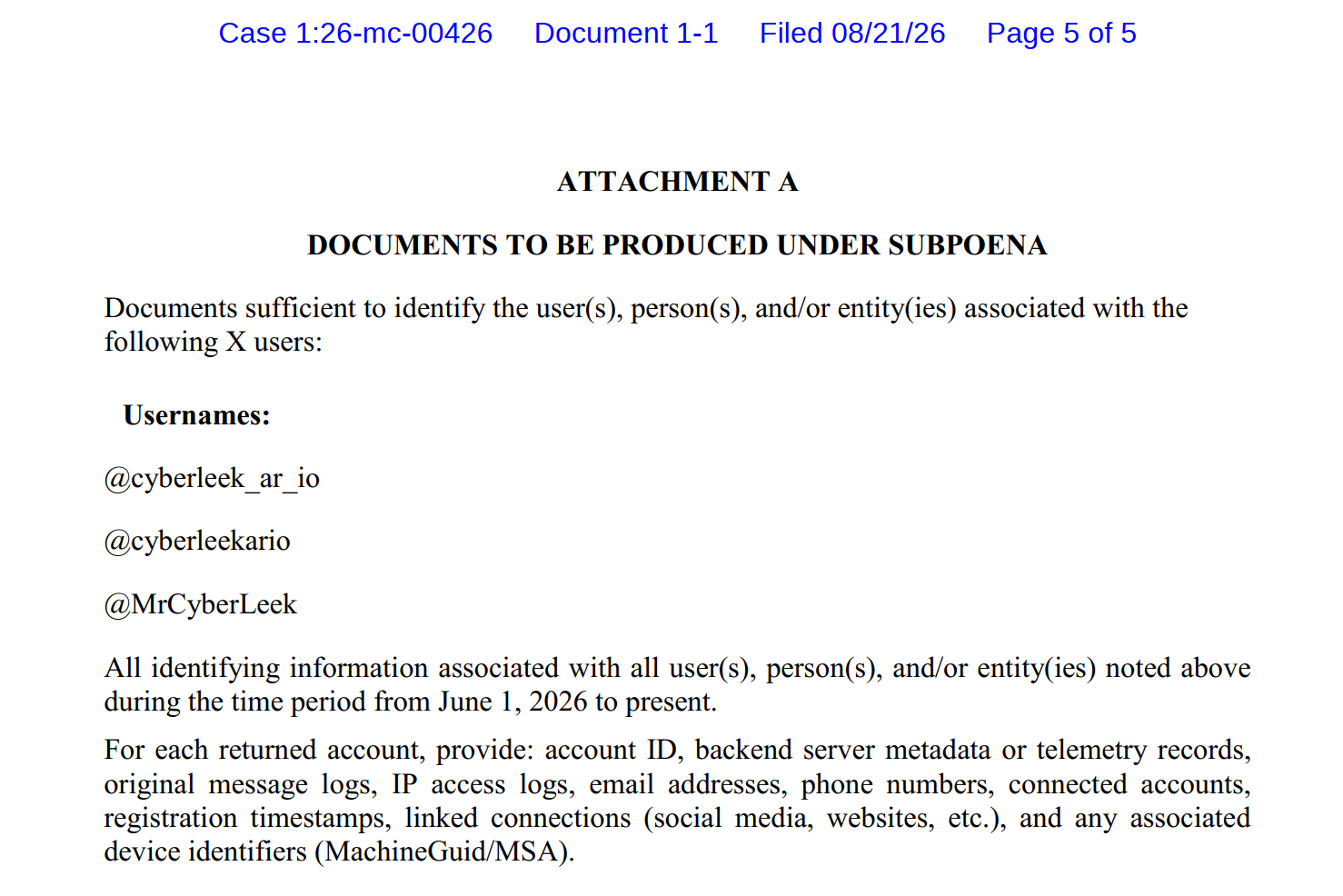
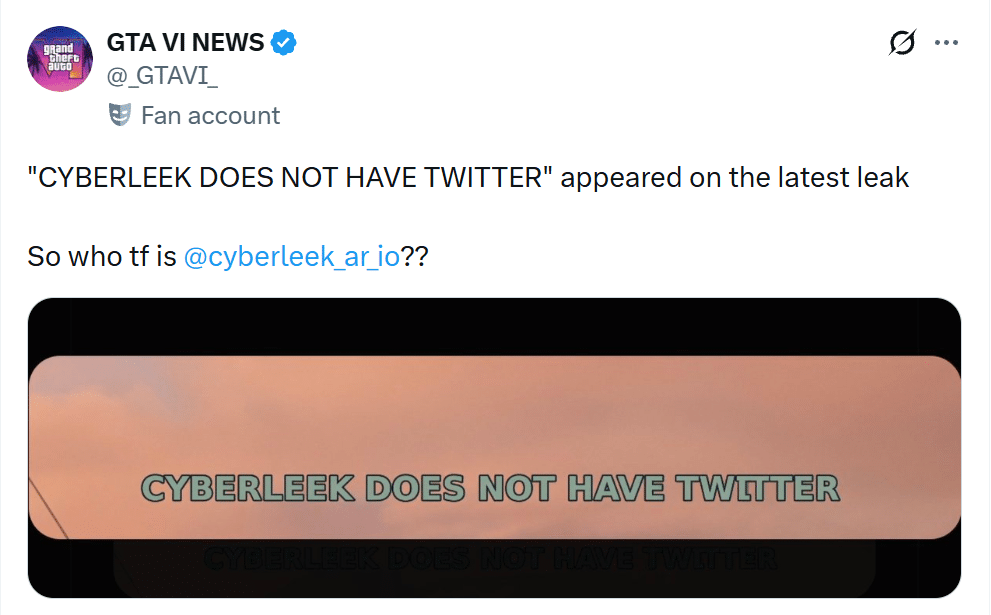
The application directed at X Corp. zeroed in on three specific user accounts: @cyberleek_ar_io, @cyberleekario, and @MrCyberLeek. For each of these handles, Take-Two demanded account IDs, registration emails, IP access logs, phone numbers, connected accounts, and device identifiers spanning from June 1 onward. Interestingly, this move presented a tactical contradiction: prominent members of the Grand Theft Auto fan community had previously identified these specific X accounts as impostors riding the coattails of the original leak, and Cyberleek itself had watermarked later videos with the explicit disclaimer: "CYBERLEEK DOES NOT HAVE TWITTER." Whether Take-Two viewed these accounts as masterminds or mere copycats remains ambiguous in the public court filings.
Concurrently, the Google/YouTube subpoena targeted a single specific video file logged by Rockstar’s automated systems as UNAUTH_2026AUG_VIDEO2, alongside three associated channels: CyberLeeks, Surfer24k, and cyberleek_ar_io. Because the user "Surfer24k" also appeared in the cross-hairs of the Discord subpoena, Take-Two positioned itself to cross-reference personal records across multiple tech platforms to verify identities.
Supporting Context & Legal Mechanics: Demystifying DMCA Subpoenas
To understand the current legal battleground, it is essential to parse the specific legal instrument being deployed. Take-Two is not currently filing a massive civil lawsuit for damages against individual users. Instead, they are utilizing Section 512(h) of the Digital Millennium Copyright Act.
How Section 512(h) Operates
Under the DMCA, copyright holders can request a subpoena directly from a federal court clerk to compel internet service providers (ISPs) and platform operators to reveal the identities of alleged copyright infringers. Crucially, this mechanism is designed to bypass the traditional litigation hurdles of filing a formal "John Doe" lawsuit.
- No Merits Review Required: A DMCA subpoena does not require a federal judge to evaluate the underlying merits of a copyright infringement claim. As long as the statutory administrative requirements are met, the court clerk issues the order.
- Clerical Bottlenecks: In Take-Two’s case, media reports initially suggested the subpoenas had already been fully issued. However, the court docket tells a more nuanced story. While federal judges Andrew L. Carter Jr. and Jennifer L. Rochon signed orders directing the court clerk to act, the physical issuance of the subpoenas was delayed, meaning no user data has yet been transferred to Take-Two’s legal teams.
- The Scope Debate: The central point of legal contention hinges on whether Section 512(h) permits a copyright holder to demand the records of thousands of users in a Discord channel who did not upload or share the copyrighted material.
Intermediary Pushback and the Right to Quash
While Take-Two’s legal representation has firmly asserted that the collected data will be used exclusively to protect the company’s intellectual property rights—potentially laying the groundwork for future civil litigation—the digital ecosystem rarely takes such dragnets lying down.
- Motions to Quash: Service providers like Discord, Microsoft, Google, and X regularly push back against subpoenas they deem overly broad or unduly burdensome.
- User Advocacy: Affected users also retain the legal right to file motions to quash these subpoenas, arguing that the compelled turnover of personal data violates statutory boundaries and constitutional privacy protections.
Official Statements and Industry Impact
While Rockstar Games has maintained a stoic public silence regarding the operational disruption caused by the leaks, the collateral damage to the gaming community has sparked intense debate across industry forums.
Major gaming publications and legal analysts have increasingly scrutinized Take-Two’s heavy-handed tactics. Outlets such as Tom’s Hardware and Kotaku highlighted the sheer audacity of demanding Windows device IDs and chat logs for every participant in targeted Discord servers. This creates a chilling effect on digital spaces where gamers gather to discuss unreleased titles. When participating in a fan community risks exposing one’s personal Microsoft account data and IP logs to a litigious multi-national corporation simply because a rogue user dropped a stolen video file into a chat channel, the health of online fandoms is severely compromised.
Furthermore, the integration of the Solana token scam into the leak underscores a growing convergence between traditional cyber-piracy and modern crypto-opportunism. Bad actors increasingly realize that high-profile entertainment properties like Grand Theft Auto VI generate massive, hyper-focused web traffic, making them prime vehicles for coordinated pump-and-dump cryptocurrency schemes. Take-Two’s aggressive legal response is designed not only to protect its trade secrets and copyright assets, but also to signal zero tolerance for bad actors attempting to monetize stolen intellectual property via decentralized financial networks.
Future Outlook: What Lies Ahead for Take-Two and the Leakers
As the judicial clock ticks forward in the U.S. District Court for the Southern District of New York, several critical questions remain unanswered:
- Will the Court Curtail the Dragnet?
When the court clerk officially processes the remaining paperwork, tech giants like Microsoft and Discord are positioned to challenge the overbreadth of the data requests. Judges may be forced to draw a hard legal line separating active, malicious uploaders from passive community members caught in the digital crossfire. - The Identity of Cyberleek:
Despite Take-Two’s exhaustive subpoenas targeting X accounts, YouTube channels, and Discord servers, the true identity of the primary leak source remains unverified. If the targeted accounts prove to be red herrings or impersonators—as fan communities have argued—Take-Two’s dragnet may yield a trove of useless data while leaving the actual perpetrators hidden behind sophisticated operational security measures. - The Shadow of Future Litigation:
Should Take-Two successfully extract identifying data from Google, Microsoft, Discord, and X, the company will face a strategic choice. They can pursue aggressive financial settlements, launch high-profile civil lawsuits to set a deterrent example, or quietly hand over dossiers to federal law enforcement agencies if criminal trade secret theft statutes were violated.
For the millions of gamers eagerly awaiting the fall release of Grand Theft Auto VI, the incident serves as a stark reminder of the immense corporate machinery operating behind the scenes. As the lines between digital privacy, intellectual property enforcement, and open online communities continue to blur, the outcome of Take-Two’s subpoena blitz will likely set a major legal precedent for how the video game industry combats leaks in the digital age.