








Executive Overview
The landscape of modern sports is undergoing a seismic, long-overdue transformation. For decades, traditional sports marketing, multi-million-dollar sponsorship hierarchies, and prime-time broadcasting slots have been dominated by men’s leagues. However, a profound cultural and commercial shift is violently disrupting the status quo. Women’s sports are no longer viewed merely as a developing vertical or a corporate social responsibility checkbox; they have firmly established themselves as a powerhouse economic engine experiencing explosive, multi-faceted growth.
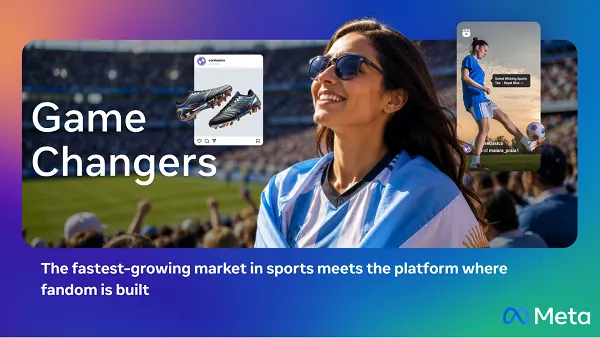
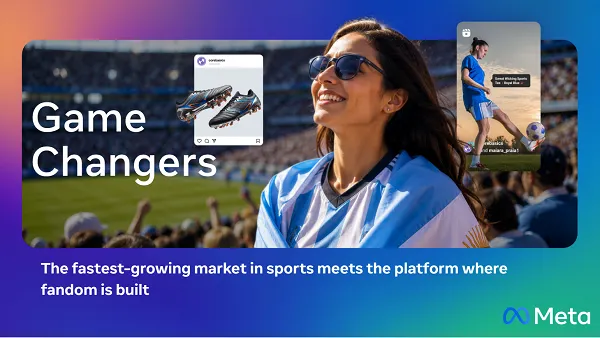
This paradigm shift has been meticulously captured and analyzed in a comprehensive new report released by tech titan Meta. Titled "Game Changers," Meta’s latest market analysis explores the rapidly rising opportunities for user engagement with women’s sports across its vast ecosystem of apps, including Facebook, Instagram, and Threads. According to the tech conglomerate, women’s sports currently represent a booming $3 billion industry expanding at a staggering rate—growing 4.5 times faster than men’s sports.
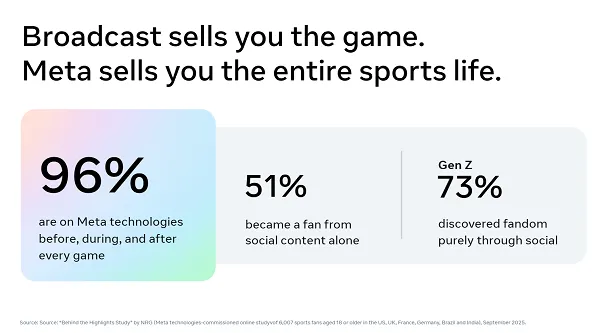
Even more compelling for brand strategists and digital marketers is how this audience consumes content. Unlike traditional sports fanbases that concentrate their attention strictly around scheduled game days, women’s sports enthusiasts are characterized as "social-first, always-on, and commercially active." Fans of women’s leagues and athletes forge deep, personal connections with individual competitors rather than just team franchises. They show up digitally 365 days a year, creating an unbroken chain of consumer engagement that modern brands can leverage.
For forward-thinking companies, this moment represents a once-in-a-generation window. While legacy sports markets are saturated with rigid hierarchies and firmly entrenched corporate partnerships, women’s sports offer a wide-open canvas. Brands entering this space today are not simply purchasing ad space; they are actively shaping the foundational culture, values, and expectations of a maturing global industry. This in-depth report explores Meta’s findings, examines the mechanics of this unprecedented digital migration, and outlines a definitive roadmap for brands looking to capitalize on the women’s sports revolution.
Detailed Chronology: The Ascent of Digital-First Women’s Sports
To understand how we arrived at this pivotal digital watershed, it is necessary to examine the trajectory that brought women’s athletics to the forefront of global media consumption.
The Pre-Digital Era: Underserved and Under-Resourced
Historically, women’s sports struggled against structural barriers erected by traditional broadcast media. Television executives operated under the self-fulfilling prophecy that audiences simply did not care to watch women compete, leading to abysmal broadcast coverage, paltry prize pools, and minimal commercial sponsorship. Brands rarely invested because the audience metrics were unmeasured or inaccessible. Athletes were forced to balance professional athletic careers with secondary jobs, and fan communities remained fragmented, localized, and largely invisible to corporate decision-makers.
The Social Media Disruption (Late 2010s to 2020)
The democratization of content creation via social media platforms fundamentally cracked open the monopoly held by traditional broadcasting networks. Platforms like Instagram and Facebook allowed female athletes to bypass traditional media gatekeepers entirely. For the first time, athletes could curate their own narratives, showcase their daily training routines, share personal insights, and build direct, unfiltered relationships with their fans.
During this period, early digital communities began to coalesce. Fans of leagues like the WNBA and collegiate softball, gymnastics, and soccer discovered one another online, forming passionate micro-communities. These digital spaces proved that the demand for women’s sports content was not nonexistent—it was merely starved of distribution.
The Pandemic Catalyst and the Rise of the Creator Economy (2020–2022)
The global pandemic served as an unexpected accelerator for digital sports consumption. With live stadiums empty, fans turned to digital platforms to stay connected to sports. Female athletes leaned heavily into short-form video, behind-the-scenes content, and interactive live streams, cultivating massive follower counts.
Simultaneously, the maturation of Name, Image, and Likeness (NIL) legislation in collegiate sports—particularly in the United States—empowered college athletes to monetize their personal brands before even turning professional. This injected a massive wave of young, digitally savvy talent into the ecosystem, accustomed to creating content and engaging with followers daily.
The Mainstream Tipping Point and Meta’s "Game Changers" (2023–Present)
Today, we are witnessing the apex of this evolution. Record-breaking attendance figures for women’s collegiate basketball tournaments, packed soccer stadiums across Europe and the Americas, and historic television ratings for professional leagues have proven that women’s sports are a premier entertainment product.
Enter Meta’s "Game Changers" report. Released to decode this exact moment in cultural history, the report consolidates qualitative and quantitative data to prove that the growth of women’s sports is not a temporary trend or a viral anomaly. It is a permanent structural shift in how global audiences consume athletic entertainment. By synthesizing metrics from millions of digital interactions, Meta has provided the commercial validation that media buyers and brand executives have demanded for years, firmly establishing that the future of sports marketing is female, digital, and community-driven.
Supporting Context & Metrics: Decoding the $3 Billion Phenomenon
The numbers underpinning Meta’s report reveal an industry experiencing hyper-growth across multiple vectors. To fully grasp the magnitude of this market, one must analyze the specific metrics driving the commercial viability of women’s sports on digital platforms.
The Financial and Growth Velocity
- A $3 Billion Global Industry: Women’s sports have transcended niche status, officially cementing a multi-billion-dollar valuation characterized by escalating media rights deals, surging ticket sales, and lucrative corporate sponsorships.
- 4.5x Growth Rate: The sector is growing at a velocity 4.5 times faster than men’s sports. This exponential acceleration signifies that capital and attention are migrating toward women’s athletics at an unprecedented pace.
- Simultaneous Global Acceleration: Unlike past sports booms that may have been isolated to a single geography or league (such as U.S. women’s soccer), this growth is accelerating simultaneously across multiple leagues, sports, and international markets.
The Social-First Sports Fan
A critical finding within Meta’s research is the emergence of the "social-first" sports fan. Traditional sports consumption relied heavily on linear television viewing—tuning in for a two-hour game window once a week. In contrast, modern sports consumption is continuous and platform-agnostic.
According to Meta’s global audience insights, an astonishing 445 million sports fans actively engage with brands on Meta’s family of apps every month. This massive, built-in audience treats social media as their primary stadium. They do not just watch highlights; they consume training vlogs, pre-game fashion content, post-game analysis, and lifestyle updates directly from the athletes they admire.
Athlete-Centric vs. Team-Centric Loyalty
In traditional men’s sports, fan loyalty has historically been tied to the franchise or team logo (e.g., fans supporting Manchester United or the New York Yankees regardless of who is on the roster). Women’s sports operate on a fundamentally different psychological framework: fans follow athletes, not just teams.

This distinction is monumental for brand partnerships. When a fan forms a parasocial, highly engaged bond with an individual athlete, their trust and affinity transfer directly to the brands that athlete endorses. Because female athletes have historically relied on building their personal brands outside of massive institutional marketing budgets, they tend to cultivate deeply authentic, highly responsive follower communities. This authenticity translates directly into higher conversion rates, deeper brand sentiment, and sustained consumer loyalty.
Official Statements: Insights from Meta’s Leadership
Meta’s executive team has underscored the commercial urgency of these findings through a series of detailed video presentations and announcements accompanying the "Game Changers" report.
Nicola Mendelsohn, Head of Meta’s Global Business Group, emphasized the unique behavioral patterns driving this economic surge:
"What makes this audience different from any other growth story in sports is how it engages: social-first, always-on, and commercially active. Fans follow athletes, not just teams. They show up daily, not just on game day."
Mendelsohn’s remarks highlight the continuous nature of the consumer relationship. For brands accustomed to episodic advertising (buying spots during the Super Bowl or the NBA Finals), the women’s sports ecosystem requires a shift toward always-on digital storytelling that mirrors the daily lives of the athletes.
Judy Toland, Vice President of Global Audience at Meta, reinforced the immense scale of the platform’s sports-adjacent audience:
"With 445 million sports fans engaging with brands on Meta every month, the infrastructure is already fully mature and waiting. Brands do not need to build an audience from scratch; they simply need to align their messaging with the communities already vibrant and active across Facebook, Instagram, and Threads."
Furthermore, Nicole von Kaenel, Meta’s Director of Global Partnerships, addressed the strategic imperative for brands seeking long-term relevance. In a dedicated partnership breakdown, von Kaenel pointed out that the traditional playbook of sports sponsorship—characterized by exorbitant bidding wars for mature men’s leagues—is no longer the most efficient path to high-ROI consumer impact. Instead, partnering directly with rising women athletes offers an exceptional entry point into a market brimming with untapped, highly receptive consumer segments.
Future Outlook: Why Brands Must Act Now to Shape the Hierarchy
As the dust settles on legacy media models, the message from Meta’s "Game Changers" report is clear: the window of opportunity to establish foundational brand equity in women’s sports is wide open, but it will not remain so forever.
The Danger of Late Adoption in Saturated Markets
In her analysis of the report, Meta drew a sharp contrast between legacy sports categories and the burgeoning women’s sports landscape:
"In most sports categories, brand positioning was settled years ago. The partnerships are locked, the associations are built, and new entrants compete on price for diminishing returns. Women’s sports is the rare category where position is still being claimed. The brands entering now aren’t buying into an existing hierarchy. They’re creating it."
In mature markets like the NFL, Premier League, or NBA, the dominant corporate sponsors are deeply entrenched. New brands entering these spaces often struggle to carve out meaningful differentiation, frequently relegated to minor, low-impact designations while spending exorbitant sums.
Conversely, brands that invest in women’s sports today are not buying into someone else’s legacy; they are authoring it. By supporting female leagues, tournaments, and individual athletes at this critical junction, companies have the rare opportunity to become permanently synonymous with the sport itself. Early brand entrants will define what modern partnerships look like, establish the benchmarks for fan expectations, and secure deeply loyal customer bases that will endure for decades as the sport matures.
Strategic Recommendations for Marketers
To successfully capture value within this space, brands should consider the following strategic imperatives based on Meta’s insights:
- Prioritize Athlete-Centric Partnerships: Shift budget away from broad, generic team sponsorships toward authentic collaborations with individual female athletes. Empower these athletes as creative partners rather than passive billboards.
- Adopt an "Always-On" Mindset: Recognize that engagement in women’s sports does not peak for three hours on a weekend. Build continuous, year-round digital content strategies that leverage Meta’s ecosystem (Reels, Stories, and Threads) to maintain brand visibility.
- Co-Create Culture: Lean into the progressive, community-driven ethos of women’s sports fandom. Brands that align with values of inclusivity, empowerment, and authenticity will resonate far more deeply than those applying traditional, transactional advertising models.
- Leverage Platform-Specific Tools: Utilize Meta’s advanced targeting and engagement features to tap into the 445 million monthly sports enthusiasts active across its applications, ensuring messaging reaches hyper-targeted, passionate micro-communities.
Conclusion
The narrative surrounding women’s sports has officially transitioned from a conversation about equity to a masterclass in economic opportunity. Backed by compelling data from Meta’s "Game Changers" report, it is evident that the explosive growth of women’s athletics represents one of the most lucrative frontiers in modern marketing history. For brands willing to look beyond legacy playbooks and embrace a social-first, athlete-driven future, the rewards extend far beyond immediate campaign metrics—offering the chance to shape the very foundation of modern sports culture.