Deploying thousands of advanced Graphics Processing Units (GPUs) into a modern data center can easily turn into a multi-billion-dollar miscalculation if the underlying network fabric cannot keep pace. Industry experts often liken this mismatch to pairing a cutting-edge, resource-intensive workstation with a legacy 28k or 56k dial-up modem: the throughput ceilings and persistent latency constraints will inevitably dictate overall system performance.
As artificial intelligence models grow exponentially in parameter size and computational complexity, traditional enterprise networking paradigms are buckling under the pressure. AI clusters depend heavily on predictable bandwidth and remarkably low tail latency to process massive, bursty collective traffic flows within and across data centers. To resolve this structural limitation, major networking and silicon vendors—including Cisco, Broadcom, and Nvidia—are aggressively converging on a new class of 51.2 Tbps to 102.4 Tbps Ethernet switching silicon. These advanced chips feature deeper buffering capacities, real-time telemetry, and sophisticated load-balancing strategies designed to keep expensive GPU clusters operating at peak utilization while minimizing job completion times.
"In AI data centers, the network is becoming a primary determinant of cluster efficiency," explains Sameh Boujelbene, Vice President of Research at Dell’Oro Group. "A company can spend billions of dollars on GPUs, but if the fabric cannot deliver predictable bandwidth and low latency, they did not buy an AI supercomputer; they bought an expensive collection of stranded chips."
This paradigm shift has transformed network silicon from a routine infrastructure utility into the absolute critical path of artificial intelligence architecture. As rack power densities soar past 100 kW and hyperscalers race to build gigascale AI factories, the industry is entering a definitive network supercycle.
Detailed Chronology of the AI Networking Evolution
The transformation of data center networking from a peripheral concern to the cornerstone of AI infrastructure did not happen overnight. It is the result of a rapid, highly accelerated engineering cycle driven by the explosive demands of generative AI, large language models (LLMs), and real-time agentic workloads.
Early Generation AI Clusters (2020–2022): Initially, early AI infrastructure relied heavily on standard enterprise datacenter fabrics or proprietary solutions like InfiniBand. However, as model sizes exploded following the mainstream adoption of transformers, traditional Ethernet architectures began showing severe bottlenecks during synchronization and collective communication phases.
The 51.2 Tbps Breakthrough (2023–2024): The industry made its first major leap with the introduction of 51.2 Tbps switching silicon. These chips provided the initial headroom required to connect larger arrays of GPUs, though they still struggled with extreme traffic bursts and deep wide-area buffering requirements.
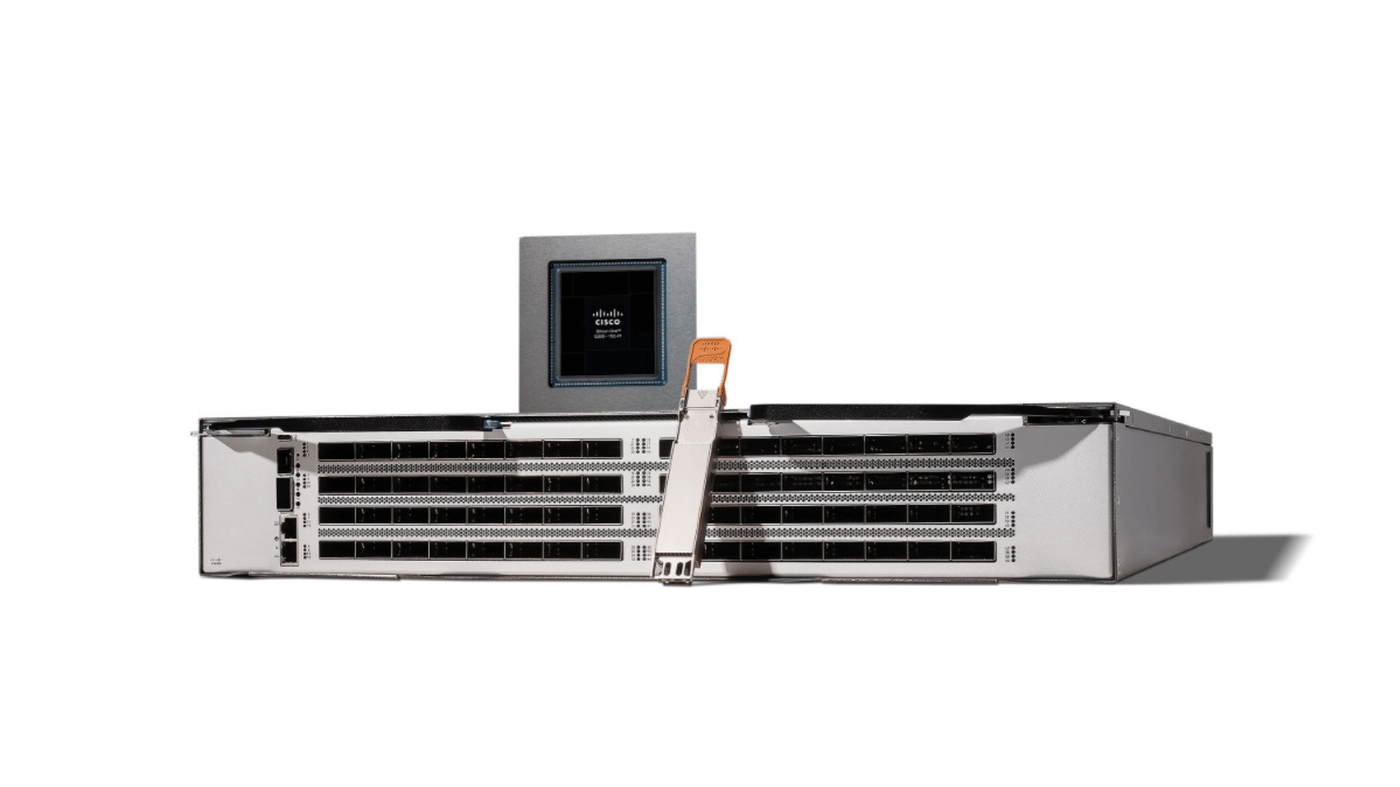
February 2026: Cisco formally shakes up the competitive landscape by announcing its new Silicon One G300 architecture, targeting the massive scale-out demands of modern AI data centers. This move signals a broader industry consensus that standard merchant silicon must evolve specifically to support synchronized, collective-heavy AI traffic patterns.
June 2026 (Cisco Live): Cisco builds on its earlier announcements by outlining the concrete commercial availability and deployment timeline for its expanded Silicon One family, assuring that enterprise customers and hyperscalers will see broad hardware availability before the close of the year.
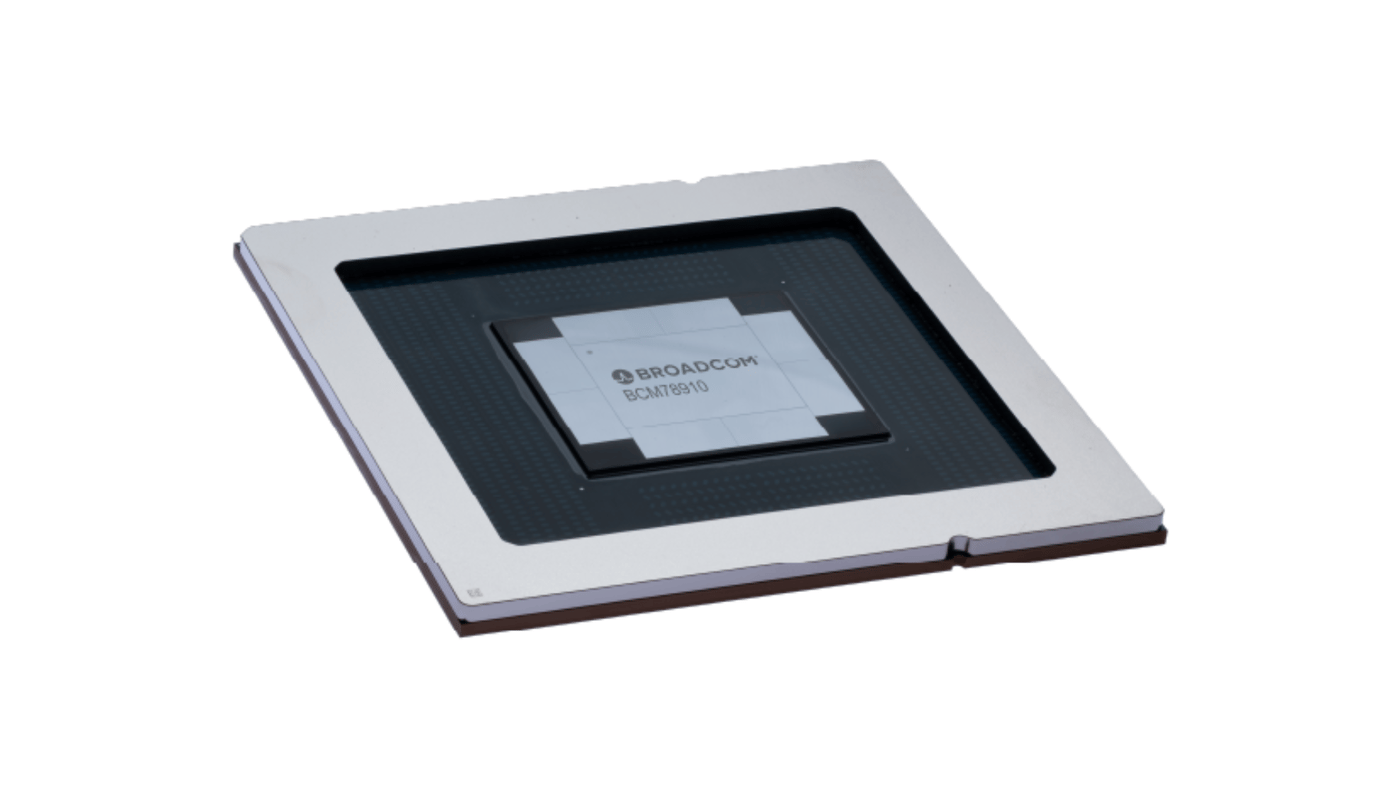
Q3 2026 and Beyond: Competing platforms reach commercial maturity. Broadcom pushes forward with the high-density Tomahawk 6 (BCM78910 series), while Nvidia accelerates the deployment of its Spectrum-6 ASIC as part of the holistic Spectrum-X Ethernet platform, setting the stage for widespread 102.4 Tbps adoption across hyper-scale and neocloud environments.
How AI Infrastructure Scales: Up, Out, and Across
To fully comprehend the engineering hurdles facing modern network architects, one must understand that artificial intelligence infrastructure scales along three distinct, complementary dimensions: scale up, scale out, and scale across. Each dimension imposes unique, rigorous demands on the network fabric, moving far beyond the traditional "north-south" traffic flows of legacy enterprise applications.
[Scale Up: Intra-Node]   --> Packs compute per server/rack via high-bandwidth links.
[Scale Out: Intra-DC]    --> Combines racks via 102.4 Tbps switches for heavy model training.
[Scale Across: Inter-DC] --> Connects data centers across regions over optical WAN links.
1. Scale Up: Maximizing Density Within the Server
Scale up focuses on packing significantly more compute power into a single server chassis or rack. This is typically achieved using high-bandwidth, ultra-short intra-node links (such as proprietary NVLink interconnects). While this minimizes local latency, it creates massive data aggregation points that must eventually feed into the broader data center network.
2. Scale Out: Interconnecting Racks for Massive Training Jobs
Scale out adds more racks of servers and combines their resources to run larger models or concurrent distributed training jobs. This domain is where high-end Ethernet switches shine. In an AI training run, GPUs must frequently synchronize their gradients. If a single packet is delayed, hundreds of other GPUs sit idle, waiting for the straggler. Scale-out networking requires massive aggregate bandwidth, intelligent load balancing, and rapid congestion avoidance to keep bursty collective traffic moving smoothly.
Scale across connects multiple data centers over vast optical wide-area networks (WANs), enabling massive clusters to operate cohesively across different geographic regions. This dimension presents unique challenges, including high propagation delays, serialized wide-area links, and the critical need for deep buffering to prevent packet loss over long distances.
Supporting Context, Metrics, and Technological Innovations
Meeting the stringent demands of gigascale AI requires unprecedented architectural specifications. Modern 102.4 Tbps-class silicon is an engineering marvel, balancing raw throughput, thermal management, and advanced telemetry.
Bandwidth and Lane Configurations
The latest generation of switching ASICs achieves staggering throughput numbers by pushing electrical and optical lane speeds to new heights:
Cisco Silicon One G300: Delivers an aggregate bandwidth of 102.4 Tbps utilizing 512 lanes running at 200 Gbps per lane. It integrates real-time telemetry, identity-aware forwarding, and deep traffic visibility designed specifically for training, inference, and real-time agentic workloads.
Broadcom Tomahawk 6: Offers up to 102.4 Tbps on a single chip, configured with 512 or 1024 lanes across 64 high-speed ports, enabling native 1.6T Ethernet switching and routing to maximize link stability and energy efficiency.
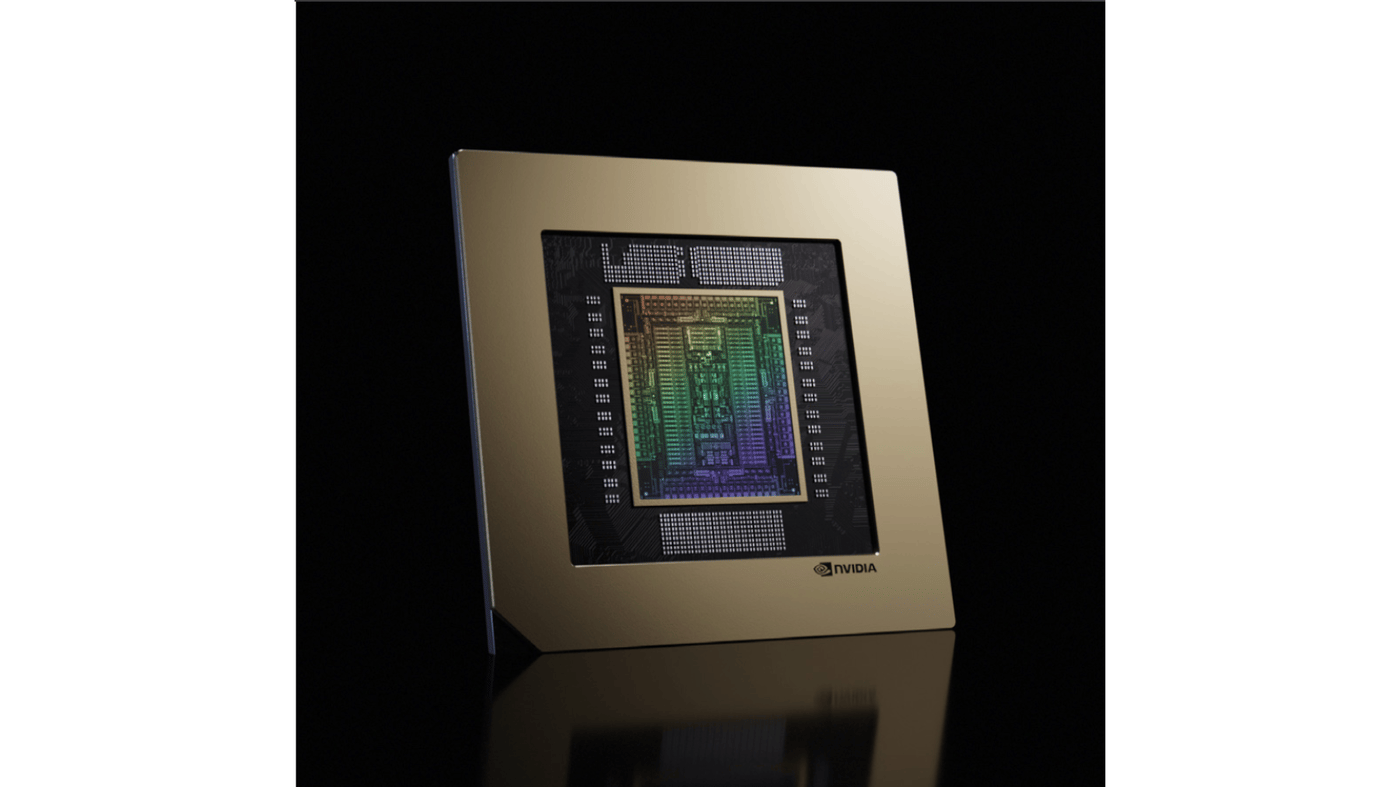
Nvidia Spectrum-6: Operates in the 102.4 Tbps class as part of the Spectrum-X platform, incorporating predictive performance features designed to eliminate jitter and tame the unpredictable, synchronized traffic bursts characteristic of massive GPU farms.
Cisco Silicon One P200: Tailored for scale-across inter-data center connectivity, providing 51.2 Tbps via 512 x 100 Gbps links. It pairs with external High-Bandwidth Memory (HBM) to maintain deep buffers capable of keeping long-haul optical fibers operating near maximum capacity.
The Thermal Challenge: Liquid Cooling High-Density Switches
The immense processing power packed into modern 102.4 Tbps switching ASICs generates thermal output that traditional air-cooling systems simply cannot manage. Rack power densities exceeding 100 kW have made thermal management a first-order design priority.
To prevent thermal throttling and hardware degradation, top-tier switches from Cisco and its competitors now incorporate advanced liquid cooling. Much like modern high-end GPUs, custom cold plates are mounted directly to the switching silicon and integrated into the facility’s broader liquid-cooling infrastructure. Recognizing diverse operational needs, vendors are offering flexible deployment models—ranging from fully liquid-cooled chassis and hybrid partial liquid cooling to traditional air-cooled variants for less intensive environments.
Official Statements and Industry Perspectives
Industry leaders emphasize that the transition to AI-native networking requires a complete psychological and architectural overhaul in how data centers are designed.
"The Cisco Silicon One G300 chip is designed for scale-out compute to manage the backend networking between racks of GPUs and other devices inside the data center. As congestion can happen randomly, packets are instantaneously redirected to avoid delays and enable GPUs to do more work. The networking enables GPUs to work as a supercomputer. No matter the AI traffic bursts, we can deal with it."
— Nick Kucharewski, Senior Vice President and General Manager, Cisco Silicon One
The sentiment is echoed by competing silicon giants who recognize that legacy protocols are fundamentally ill-suited for modern workloads.
"Ethernet was designed primarily for enterprise applications and north-south traffic moving between users, servers, and storage. It wasn’t created for the synchronized, collective-heavy communication patterns of gigascale AI; Spectrum-X Ethernet changes that. Purpose-built for AI, it transforms Ethernet into a high-performance scale-out fabric engineered to keep every GPU fed with data."
— Scot Schulz, Senior Director of HPC and Technical Computing, Nvidia
On the manufacturing and optical interconnect side, Broadcom stresses the critical triad of model performance metrics:
"By enhancing link stability and energy efficiency, we’re enabling smoother, more cost-effective AI model training. We designed this platform to scale large AI clusters by delivering on the three imperatives for optical interconnect: higher model FLOPs utilization, reduced job interruptions, and improved cluster reliability."
— Near Margalit, Vice President and General Manager, Optical Systems Division, Broadcom
Finally, analysts emphasize that while hyperscalers are driving the immediate wave of adoption, mainstream enterprises must eventually adapt their procurement and architecture strategies.
"Enterprises do not need to refresh everything overnight, but they do need to stop treating AI networking as an incremental upgrade. For serious GPU deployments, the network has to be designed as part of the compute system—not bolted on afterward."
— Sameh Boujelbene, Vice President of Research, Dell’Oro Group
Future Outlook: Who Buys First, and What Lies Ahead?
Not every data center requires 102.4 Tbps switching capability immediately. Organizations lacking large-scale training workloads or complex generative AI models will find little immediate justification for the capital expenditure. Consequently, initial adoption is heavily concentrated among hyperscalers, neocloud providers, and sovereign AI cloud operators who are racing to build out massive infrastructure footprints.
However, as foundational models mature and enterprise adoption of agentic AI accelerates, these high-performance networking principles will inevitably trickle down into mainstream enterprise environments. The market trajectory is unmistakable: network silicon is firmly established on the critical path of artificial intelligence development. Companies that treat the network as an afterthought risk stranding billions of dollars in computational power, while those that engineer their infrastructure from the silicon up will successfully unlock the true potential of the AI supercomputer era.