By Shane Snider | August 19, 2026
Executive Overview
In a strategic evolution that fundamentally redefines its relationship with the artificial intelligence infrastructure supply chain, semiconductor giant Nvidia has committed up to $105 billion in residual-value guarantees for OpenAI’s massive, newly unveiled data center campus in Ohio. Disclosed in an August 17 SEC filing, the financial arrangement reveals a multi-layered partnership where Nvidia acts not merely as a hardware vendor supplying cutting-edge graphics processing units (GPUs), but as a core financial guarantor underpinning the physical real estate and energy systems required to scale generative AI.
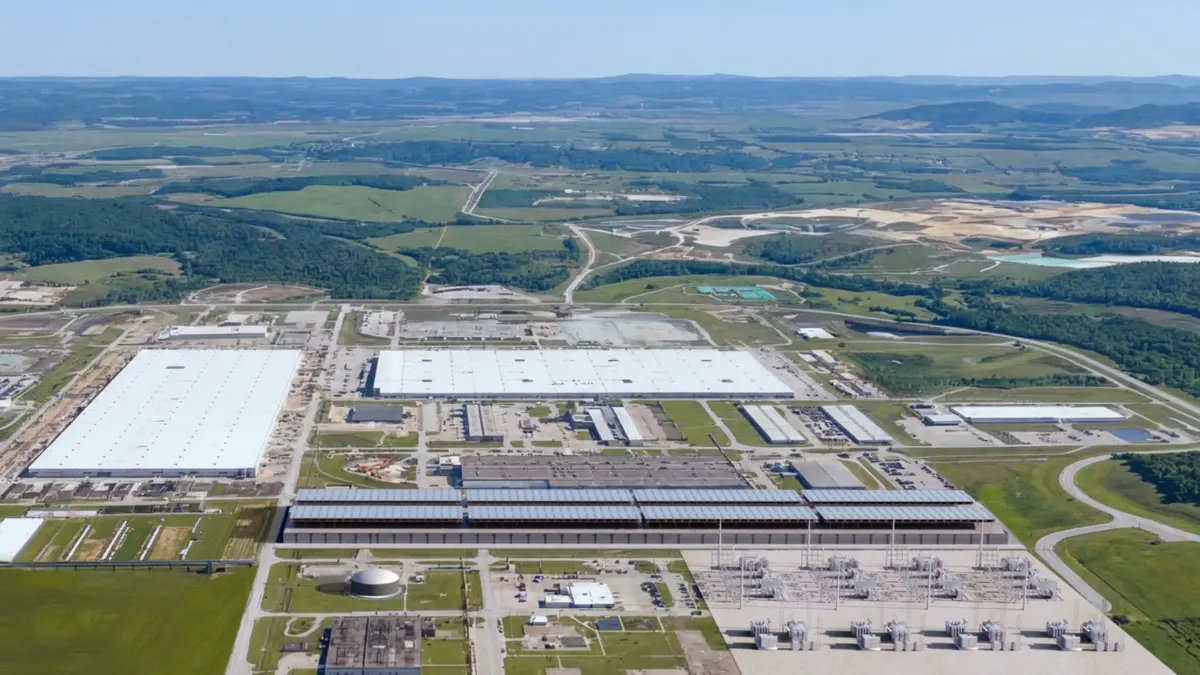
The monumental project centers on the PORTS-Pike Technology Campus in Pike County, Ohio, developed by SB Energy. Designed to scale to an astonishing 8 gigawatts (GW) of total IT capacity, the initial phase of the campus will deliver 4.25 GW of compute infrastructure, backed by Nvidia’s guarantee cap of $105 billion. An additional option allows for a further 3.75 GW expansion. While not a direct cash investment of $105 billion—Nvidia’s direct equity investment in SB Energy stands at a comparatively modest $1.5 billion—the residual-value guarantees serve as critical credit support. This mechanism unlocks unprecedented institutional capital for the AI buildout by leveraging the long-term utility and secondary market value of hardware and physical infrastructure.
As hyperscalers and chipmakers grapple with the capital-intensive reality of the next generation of "AI factories," this arrangement introduces a novel financing blueprint. By treating GPUs and their housing infrastructure as long-lived, investable asset classes akin to automotive financing structures, Nvidia and its partners are forging a path past the traditional limitations of corporate debt and venture capital.
Detailed Chronology and Transaction Structure
The contours of the Ohio project emerged publicly through regulatory filings and announcements that trace a complex architecture of real estate acquisition, power procurement, and financial engineering.
The Path to the SEC Filing
For months, industry watchers have tracked the scramble for land and power capable of supporting the next wave of foundational models. OpenAI’s demand for compute has outpaced standard data center availability, necessitating custom-built, gigawatt-scale campuses. SB Energy secured the strategic grounds at the PORTS-Pike Technology Campus, positioning the project to leverage regional power networks and abundant land space.
On August 17, 2026, Nvidia formally detailed its exposure to the project in an SEC filing. The documentation revealed that SB Energy will build, own, and operate the facility under a 20-year lease agreement with OpenAI. Nvidia’s role is tied directly to this leasing structure through residual-value guarantees capped at an aggregate payment obligation of $105 billion for the initial 4.25 GW deployment.
Mechanics of the Residual-Value Guarantee
To understand the financial weight of Nvidia’s commitment, analysts emphasize the distinction between a direct capital expenditure and a conditional guarantee:
- The Underlying Obligation: The guarantees are triggered only under specific default or insolvency events involving OpenAI and the underlying facility leases.
- Shortfall Calculations: Should such an event occur, Nvidia may become responsible for any financial shortfall between a pre-determined guaranteed minimum value under the leases and the actual recovery amounts achieved by SB Energy through re-leasing or selling the data center facilities.
- Indemnification: Counterbalancing Nvidia’s exposure, OpenAI has formally agreed to reimburse and indemnify Nvidia for any capital actually disbursed under these guarantees.
The complete legal agreements outlining the exact minimum values and default triggers are slated for release in Nvidia’s upcoming quarterly report for the period ending July 26.
Supporting Context & Metrics: Decoding the Numbers
The scale of the PORTS-Pike project forces a reevaluation of how the technology sector measures infrastructure development. Industry experts note a tension between power-centric metrics and actual compute capacity.
Power vs. Compute Metrics
Traditionally, data center growth has been tracked by real estate footprint (square footage) or total power draw (megawatts). However, the massive energy footprints demanded by modern AI clusters have made "gigawatts" the standard parlance.
Steven Dickens, CEO and principal analyst at HyperFrame Research, has voiced skepticism over this trend. “What I struggle with is measuring the AI build-out in units of power,” Dickens noted. “I would prefer Nvidia and the wider IT infrastructure business stick to IT units such as core, GPU, racks or servers, as it is easier to quantify and visualize.”
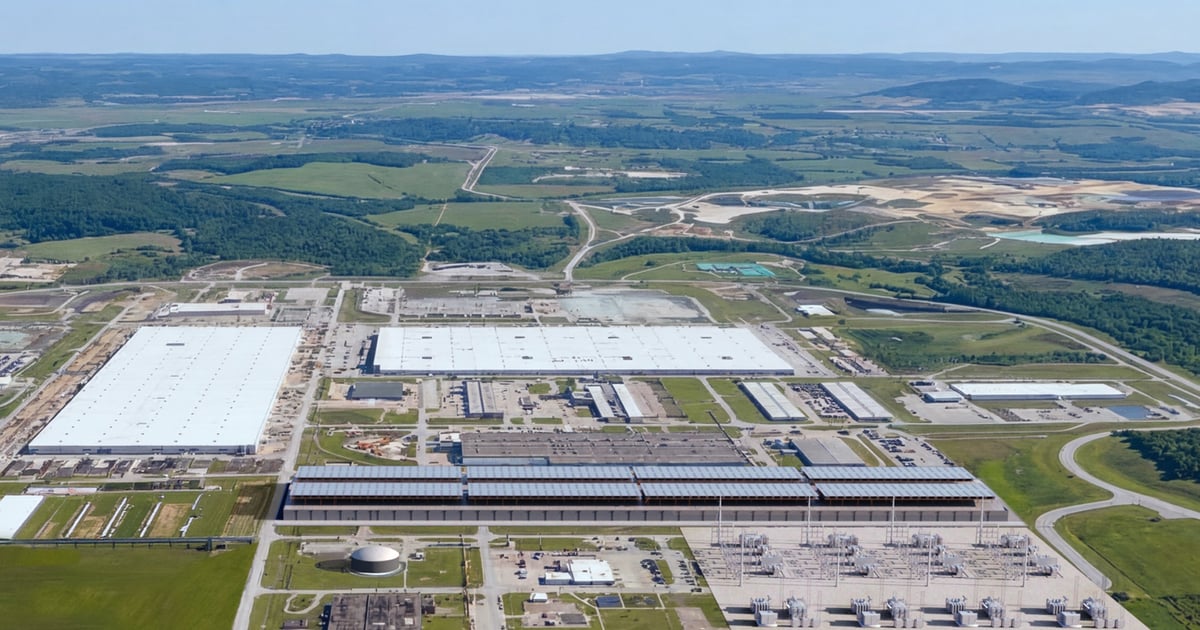
Despite these semantic debates, the sheer physical and energetic dimensions of the Ohio campus are historic:
- Initial IT Capacity: 4.25 GW dedicated to OpenAI’s deployment.
- Potential Expansion: An additional 3.75 GW option, driving total planned capacity to approximately 8 GW.
- Energy Generation Plans: SB Energy and Softbank have indicated plans to develop at least 10 GW of new, dedicated energy generation assets to support the continuous operational demands of the campus, ensuring the facility does not strain local utility grids.
The GPU as an Investable Asset Class
At the heart of Nvidia’s financial engineering is a shift in perspective regarding the lifespan of AI hardware. While early enterprise deployments assumed rapid obsolescence over a strict three-year hardware cycle, industry leaders now recognize that modern AI infrastructure retains substantial secondary utility.
"NVIDIA is realizing, in the same way that Ford Finance does with Ford’s vehicles, that GPUs have a residual value long after the initial three years of use," Dickens explained. By acknowledging that specialized AI hardware and its supporting liquid-cooled shells maintain operational viability across six- to seven-year lifecycles, Nvidia can pioneer financing models that treat compute infrastructure as an investable asset class. This unlocks massive pools of institutional liquidity, easing the capital crunch that currently threatens to bottleneck the global AI transition.
Official Statements and Industry Perspectives
The partnership unites three critical pillars of the modern technology stack: Nvidia’s hardware dominance, OpenAI’s insatiable demand for intelligence training models, and SB Energy’s industrial real estate and energy execution capabilities.
Leadership Vision
Nvidia CEO Jensen Huang emphasized the long-term utility of the infrastructure being forged in Ohio:
"We are securing long-lived infrastructure for Nvidia compute so OpenAI can deploy the most productive AI factories that can be upgraded repeatedly with each new generation delivering more intelligence and better economics."
This philosophy underscores Nvidia’s transition from a pure-play semiconductor designer into an architect of global digital infrastructure. By providing credit support through residual-value guarantees, Nvidia ensures that its chips have guaranteed, hyper-scale homes equipped with the power, cooling, and network density required for future model iterations.
Analyst Evaluations
Financial analysts point out that while the $105 billion figure sounds staggering, it represents a calculated risk management strategy rather than an unhedged cash outlay. By securing exclusive status as the AI compute infrastructure provider while utilizing SB Energy as the physical landlord and OpenAI as the primary tenant, Nvidia has built a resilient triad.
Furthermore, the structure insulates Nvidia’s immediate balance sheet while providing the credit enhancement necessary for SB Energy to secure project financing from risk-averse institutional lenders.
Future Outlook: The Next Phase of AI Infrastructure Financing
As the tech sector moves past the initial rush of experimental AI deployments into permanent, utility-scale operations, the bottleneck has shifted from software algorithms to physical capital and energy availability.
The Ohio campus model establishes a precedent for how future hyperscale projects will be financed. Key questions remain as the industry awaits the detailed filing exhibits due in late July:
- Capital Efficiency: Exactly how much additional third-party debt and equity will Nvidia’s $105 billion guarantee unlock across global credit markets?
- Grid Integration: How will SB Energy and SoftBank successfully bring 10 GW of new generation online without provoking severe regulatory hurdles or environmental pushback?
- Replicability: Will other hyperscalers—such as Microsoft, Google, and Amazon—adopt similar residual-value guarantee frameworks to secure their own captive data center pipelines?
What is clear is that the boundary lines between chipmakers, energy developers, and real estate landlords have permanently dissolved. As projects scale into the multi-gigawatt tier, financial innovation must match hardware innovation. Through its strategic pivot in Ohio, Nvidia has demonstrated that the future of artificial intelligence will be built not just on silicon, but on creative, institutional-grade financial engineering.