Executive Overview
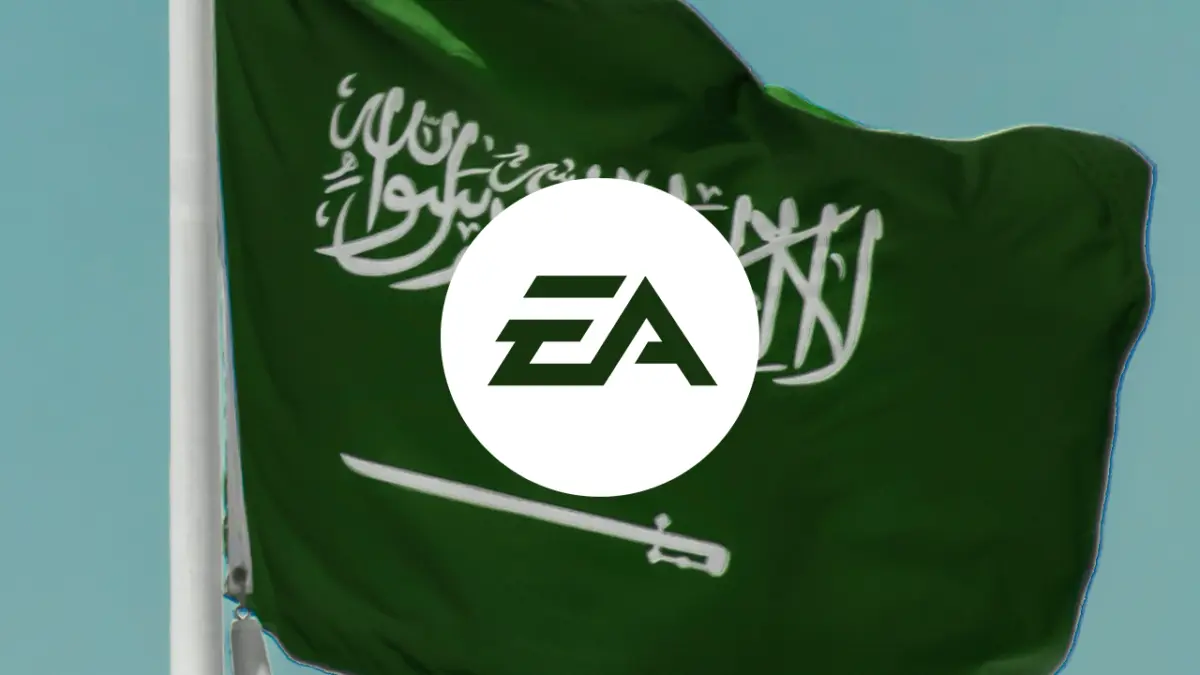
The video game industry has weathered profound structural shifts over the past decade, moving from independent studio ecosystems to massive corporate conglomerates. However, few transactions match the sheer scale, geopolitical complexity, and cultural friction of Electronic Arts’ (EA) transition to private ownership. Acquired for a staggering $55 billion by an investor consortium spearheaded by Saudi Arabia’s Public Investment Fund (PIF)—alongside high-profile figures including Donald Trump’s son-in-law Jared Kushner—the publisher of industry-defining franchises like Battlefield, Madden NFL, and EA Sports FC is undergoing a radical metamorphosis.
While EA executives have systematically attempted to reassure the company’s global workforce that day-to-day operations and creative freedoms will remain untethered, internal sentiment tells a starkly different story. Interviews with current EA employees across the United States and Canada reveal a landscape defined by deep cynicism, widespread anxiety regarding job security, and profound moral distress. Workers are grappling with the reality that their labor now directly enriches an authoritarian state explicitly utilizing high-profile investments—ranging from golf and football to interactive entertainment—to pursue geopolitical influence.
This investigative report examines the mechanics and fallout of EA’s monumental buy-private transaction. By analyzing internal communications, executive missteps, financial realities fueled by multibillion-dollar debt packages, and the pervasive fear of "pixelwashing," we explore how one of gaming’s legacy giants is navigating a deeply fractured internal culture where the chasm between executive leadership and rank-and-file developers has never been wider.
Detailed Chronology: From Public Giant to Private Asset
The road to EA’s privatization was paved over years of aggressive sovereign wealth expansion into global sports and entertainment. To understand the current climate within EA’s studios, one must trace the timeline of Saudi Arabia’s systematic acquisition strategy and the shifting rhetoric surrounding state-backed investments.
The Rise of PIF and the Normalization of "Sportswashing"
For years, critics and human rights organizations have accused Saudi Arabia of engaging in "sportswashing"—using multi-billion-dollar investments in global sports to launder the kingdom’s international reputation and distract from persistent allegations of severe human rights abuses. These concerns gained unprecedented clarity when Saudi Crown Prince and PIF Chairman Mohammed bin Salman addressed the practice directly in a candid interview with Fox News.
When pressed on whether the PIF’s funding of LIV Golf and the acquisition of Premier League club Newcastle United were calculated attempts to advance the Gulf kingdom’s geopolitical ambitions, bin Salman offered an unapologetic response: "If sportswashing is going to increase my GDP by 1 percent, then we’ll continue doing sportswashing. I don’t care about the term. I have 1 percent growth in GDP from sport and I am aiming for another 1.5 percent."
While the PIF subsequently scaled back certain golf investments, its commitment to football remained firm with Newcastle United. More importantly, the Saudi state systematically turned its sights toward the interactive entertainment sector.
The Video Game Industry Takeover
Long before setting its sights on EA, the Saudi state—acting through the PIF, the Misk Foundation, and the Savvy Games Group—orchestrated a historic series of acquisitions and equity stakes across the global gaming landscape. Key milestones in this expansion included:
- SNK Corporation: Acquiring majority ownership in the historic Japanese fighting game developer.
- Scopely: Purchasing the mobile gaming giant through Savvy Games Group in a landmark $4.9 billion deal.
- Capcom & Take-Two Interactive: Acquiring significant equity stakes (though the PIF later dissolved its Take-Two stake).
The culmination of this multi-year campaign arrived when the investor consortium successfully took Electronic Arts private in a blockbuster $55 billion transaction. Financed in part by a $20 billion debt-financing package led by financial titan JPMorgan Chase, the deal instantly shifted EA out of the public eye and away from the accountability of public shareholders—raising immediate, urgent questions about the future trajectory of the company’s creative output.
Supporting Context & Metrics: The Anatomy of a Leveraged Buyout
To fully grasp the fragility of EA’s current internal ecosystem, one must analyze the financial architecture of the acquisition and the economic realities facing its workforce.
The Burden of Debt
A leveraged buyout of this magnitude inherently carries massive financial obligations. With JPMorgan Chase orchestrating a $20 billion debt package to facilitate the transaction, EA’s private leadership faces intense pressure to service this debt. In corporate finance, heavy debt loads are almost invariably followed by aggressive cost-cutting measures, operational streamlining, and structural reorganizations.
Despite public assurances from EA management that the company remains in a "strong financial position" capable of sustaining organic and inorganic growth, employees remain deeply skeptical. Historical precedent dictates that when cash flows dip, private equity-backed entities turn to aggressive retrenchment.
Stock Windfalls vs. Temporary Precarity
The privatization deal locked EA’s stock price at a lucrative peak. For senior executives and long-term employees holding vested shares, the buyout represents an immediate, substantial cash windfall. However, this financial silver lining is far from universal.
- The Equity Divide: A significant portion of EA’s workforce—particularly contract workers, junior developers, and those classified as "Temporary Fulltime"—receive no stock options or equity. Consequently, while veteran staffers cash out, vulnerable workers face heightened job insecurity without a financial cushion.
- The Bonus Structure Black Box: Employees report that future bonus and compensation structures under private ownership remain opaque. As one source summarized: "Everyone is asking ‘how much do I get?’ and I can’t blame them. At this point, all you can do is get that bag today, because you’ll likely be unemployed tomorrow."
Official Statements and Internal Discord
As the reality of the buyout set in during late 2025 and early 2026, EA’s executive leadership attempted to quell employee dissent through internal town halls, Q&A sessions, and published Frequently Asked Questions (FAQs). However, these efforts frequently exacerbated tensions rather than resolving them.
Corporate Reassurances and Employee Cynicism
In an employee FAQ published shortly after the buyout was announced, EA management insisted that the transition would not negatively impact company culture or creative autonomy. "Through strong cash generation, we will continue pursuing organic and inorganic growth opportunities as a private company, even with the new debt," the company stated. Furthermore, leadership explicitly promised that there would be no "immediate" layoffs resulting from the deal.
Employees, however, found little comfort in these carefully worded statements. Many feared that the word "immediate" was a precarious semantic shield designed to buy time before inevitable staff reductions.
Furthermore, workers voiced deep moral qualms about being tied to an authoritarian regime. The conflict between EA’s historical corporate messaging—often centered around inclusivity, diversity, and progressive values, particularly championed by studios like The Sims developer Maxis—and the regressive human rights record of its new owners has created an atmosphere of profound alienation.
"It’s hard to feel good about being bought out by a regime that’s very much at odds with progressive society… If EA had a culture that had any semblance of a moral backbone, it wouldn’t get into bed with a prince who’s disgusted by many of its current employees’ sexualities and ethnicities." — Anonymous EA Employee
Hot Mics and Out-of-Touch Executives
The widening chasm between the executive class and rank-and-file developers was laid bare during internal communications. According to multiple sources, during a tumultuous town hall meeting in the fall of 2025 where employees pressed directors on job security and cultural preservation, a glaring technical oversight exposed executive attitudes.
Once the official Q&A concluded, directors of EA’s lifestyle pillar forgot to mute their microphones. As the call wound down, an executive was heard muttering "little babies" in reference to the concerned workers—a remark broadcast directly to the entire company. While opinions differed internally on whether the comment was a direct jab or an offhand remark, it severely damaged trust.
This incident was compounded by another town hall where an executive casually joked about needing to purchase another pony for their child because it was the Chinese lunar calendar’s "Year of the Horse." For employees struggling with inflation, housing costs, and the constant threat of unemployment, the tone-deaf joke served as a painful reminder of the vast economic inequality separating leadership from the people who actually build the games.
Future Outlook: The Threat of "Death by a Thousand Cuts"
As EA enters this new chapter as a private entity, the overarching question facing the video game industry is whether we have officially entered an era of "pixelwashing." Just as sports leagues were leveraged to project a modern, progressive image of Saudi Arabia to the West, interactive entertainment—with its massive global reach spanning millions of daily active users—offers an unprecedented medium for cultural integration and narrative framing.
Creative Self-Censorship
While external mandates from Riyadh may rarely arrive as explicit executive orders, employees fear that a much more insidious mechanism is already at play: preemptive self-censorship.
- "The prince is not going to get on to a town hall and say ‘we are no longer doing these things,’" noted one insider. Instead, projects are expected to quietly stall or fail to secure greenlights simply because they do not explicitly align with the ideological preferences of the Saudi government, or because middle management will preemptively alter pitches to appease their new owners.
The Specter of Micro-Layoffs
Regarding job security, employees are preparing for the worst. Under U.S. federal law, the Worker Adjustment and Retraining Notification (WARN) Act requires companies to provide advanced public notice for mass layoffs. To bypass the public scrutiny and regulatory oversight associated with large-scale WARN notices, sources predict that EA will execute continuous waves of small, targeted staff reductions.
This "death by a thousand cuts" strategy ensures that underperforming teams, niche studios, or non-essential franchises will be quietly dissolved or sold off over time.
"It’s hard to see how teams or games that underperform wouldn’t be dissolved or sold off," a source concluded. "The history of leveraged buyouts shows that this is the playbook, no matter what our executives insist will be different."
As EA navigates its post-buyout reality, the morale of its workforce remains severely compromised. Trapped between the financial necessity of employment and the moral injury of working under an authoritarian-backed regime, developers at one of the world’s largest publishers are bracing for an uncertain future—one where the games they create are increasingly overshadowed by the geopolitical machinery financing them.
Game Developer reached out to Electronic Arts for comment regarding these internal developments, but the publisher declined to respond.