




TL;DR — Key Takeaways
Microsoft is finally admitting what many IT teams already knew: It has too many Copilots.
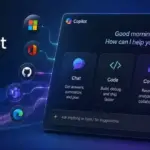
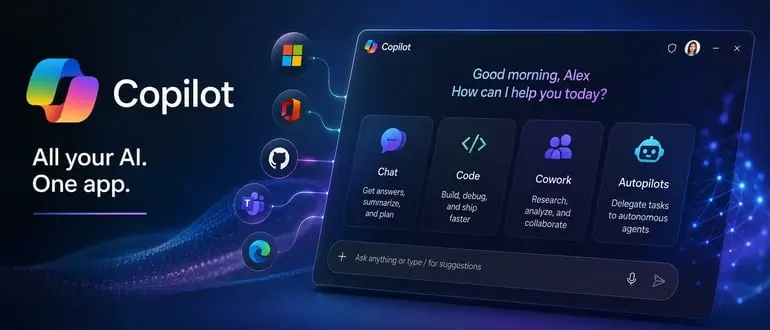
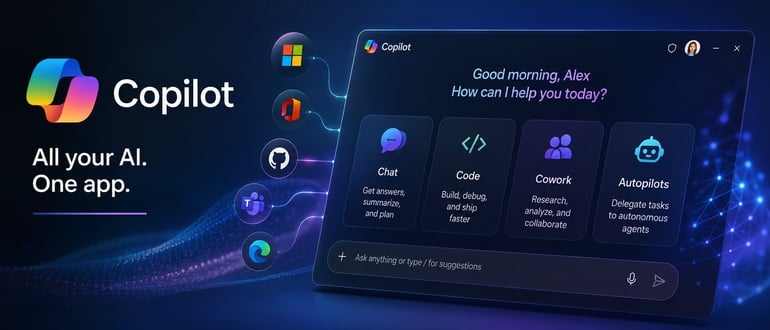
CEO Satya Nadella confirmed on the company’s fiscal Q4 2026 earnings call, held July 29, that Microsoft is folding its scattered Copilot experiences into a single app. The move will merge chat, coding, the Cowork research tool, and Microsoft’s autonomous agents, called Autopilots, into one place, spanning both consumer and business use. “Copilot is evolving rapidly from chat to Cowork to Autopilots,†Nadella said. “This quarter, we are bringing these Copilot experiences together, including code, in one super app. This is a major step forward, and I look forward to sharing more soon.â€
That’s a real commitment, not a rumor. Nadella attached a timeframe, not a date. He named the four pieces going into the merged app but did not say whether it replaces Microsoft’s existing standalone Copilot apps or runs alongside them. Pricing, feature scope and rollout mechanics are all still unknown.
Why Microsoft is Doing This Now
The consolidation has been in motion for a while. Fortune first reported the plan in May, under the internal slogan “Delivering one Copilot.†Inside Microsoft, the project reportedly goes by “One Copilot,†with the goal of cutting down on app switching so Copilot feels the same whether someone is coding, managing documents, collaborating with colleagues, or handling personal tasks.
The confusion Microsoft is trying to fix is real. The company has steadily expanded the Copilot brand across Windows, Microsoft 365, GitHub, Teams, Edge and several enterprise products. Today it runs two separate Copilot apps — Microsoft Copilot for consumers and Microsoft 365 Copilot for both consumers and enterprise users — with the latter having started life as the all-in-one Office app before its rebrand.
There’s also a usage story behind the timing. Nadella said user conversations have nearly doubled year over year, and weekly engagement has reached levels comparable to products like Outlook and Teams. Microsoft now counts more than 30 million paid Microsoft 365 Copilot seats. A consolidated app is as much about capturing that momentum as it is about tidying up the product line.
“Microsoft is claiming the agent control plane at the work surface,†said Mitch Ashley, VP and practice lead, software lifecycle engineering & AI-native software engineering, at The Futurum Group. “Autopilots running inside one consumer and commercial app put identity governance on the critical path.â€
Microsoft Isn’t Alone in Chasing the “Super Appâ€
This is very much an industry moment, not a Microsoft-only move. OpenAI recently launched its own super app combining ChatGPT and its Codex coding tool, and OpenAI president Greg Brockman admitted in an interview that the rollout was “kind of a mess.†Users who wanted the familiar chat experience were confused by new Work and Codex tabs, with chat history somewhat buried; OpenAI later reworked the app to add separate Work and Chat tabs and moved Codex into a drop-down menu. That’s a useful cautionary tale for Microsoft as it plans its own merge.
Microsoft isn’t alone in chasing this idea, and the “super app†has become the industry’s current obsession. The logic is straightforward: whoever gets users to open one app for chat, coding and delegated tasks controls the default interface for enterprise AI work. The race is no longer about building another AI assistant. It’s about becoming the place where users do everything with AI.
The Governance Question Nobody’s Answered Yet
For DevOps and platform teams, the interesting part isn’t the interface — it’s what a single app does to agent sprawl and identity management.
Consolidating chat, coding assistance, and autonomous agents into one app doesn’t automatically solve the governance problem; it just changes where it shows up. Enterprises are already wrestling with what’s commonly called agent sprawl, where AI agents multiply gradually as organizations experiment without establishing governance frameworks, often accumulating over-privileged access with no clean way to revoke it when something goes wrong. Gartner has projected that 40% of enterprise applications will include task-specific AI agents by the end of 2026, up from under 5% in 2025.
Microsoft has been building toward this problem on the identity side independently of the super app news. Microsoft Entra Agent ID is designed to apply identity governance across the full agent lifecycle, from creation through decommissioning, and its agent registry gives organizations a unified inventory of agents running across the organization, including non-Microsoft agents. That plumbing matters more once Autopilots sit inside a single app that spans consumer and commercial use — a single front door means a single, much larger set of credentials, permissions, and audit trails to keep straight.
Ashley put the harder work in perspective: “Admins will still reconcile licensing, permission scopes, and audit trails across four products that grew up separately. Consolidating the interface is the easy half.â€
Security researchers who track this space put it plainly: most organizations fail to control agent sprawl because they treat agents as software instead of identity-bearing entities, when every agent that can access data or trigger actions needs to be governed like any other identity, with scoped permissions and continuous monitoring. A super app that bundles an autonomous agent framework raises the stakes on getting that right, since the surface area for a misconfigured or over-privileged agent grows the moment more employees start relying on Autopilots by default.
What to Watch
Nadella committed to a launch window of this quarter, which runs through the end of October. Until Microsoft shares more, the open questions for IT leaders are less about features and more about operations: how licensing and admin controls carry over from Microsoft 365 Copilot and GitHub Copilot, whether Autopilots ship with the same Entra Agent ID guardrails by default, and what happens to existing Copilot deployments once the merged app arrives.
Microsoft has a chance to avoid OpenAI’s rocky rollout by learning from it in real time. Whether it does will say a lot about how seriously the company is treating governance, not just branding.
Frequently Asked Questions
When will the unified Copilot app launch?
Microsoft CEO Satya Nadella said the experiences would be brought together “this quarter,†but the company has not announced a specific launch date, pricing structure or detailed rollout plan.
How does Microsoft plan to govern AI agents?
Microsoft Entra Agent ID provides specialized identities for AI agents, along with authentication, authorization, lifecycle governance, access protection and activity logging. It can also govern agents built on non-Microsoft platforms.
How widely is Microsoft 365 Copilot being used?
Microsoft reported more than 30 million paid Microsoft 365 Copilot seats, while conversations per user had nearly doubled year over year at the time of its July 29, 2026 earnings call.