






Executive Overview
In a sweeping push to modernize federal security protocols and root out internal dissent, the United States government is preparing to channel $30.3 million over the next five years into the development of next-generation lie-detection technology. Unveiled through a Department of Defense (DoD) budget request first brought to light by Inside Defense, the initiative—formally designated as "Polygraph+" or "Polygraph Next"—aims to overhaul the century-old, analog foundation of credibility assessment. The program centers on two primary technological leaps: scoring algorithms driven by artificial intelligence and machine learning, and "standoff sensing," a non-contact methodology designed to capture physiological data without hooking a subject up to a tangle of wires, cuffs, and pneumatic tubes.
Managed by the Defense Counterintelligence and Security Agency (DCSA), the project is slated to support high-stakes federal background checks, security clearance vetting, and aggressive "insider threat detection." Yet, the timing of this multi-million-dollar investment has stoked acute controversy. The Pentagon’s pivot toward advanced lie detection arrives amid an atmosphere of intense internal friction under Defense Secretary Pete Hegseth. Confronted with a series of damaging leaks regarding military readiness and depleted weapons stockpiles during conflicts in the Middle East, the department has increasingly weaponized polygraph tests to enforce loyalty and track down journalistic sources within the military’s upper echelons.
While defense planners frame Polygraph+ as an indispensable upgrade for national security, legal scholars, psychologists, and security experts warn that the initiative is built on shaky scientific foundations. Critics argue that marrying artificial intelligence to a fundamentally flawed, century-old diagnostic tool simply compounds systemic errors, creating what legal scholar Kyri Kotsoglou describes as "the worst of both worlds"—introducing algorithmic opacity on top of clinical invalidity. Despite decades of technological evolution, the core reality of deception detection remains unchanged: there is no universal, biological "Pinocchio’s nose." As the Pentagon prepares to deploy these AI-driven systems across a workforce numbering nearly three million, civil liberties advocates and scientists alike are raising urgent alarms over the potential for mass false positives, systemic discrimination against minorities, and the normalization of intimidation as an instrument of state governance.
Detailed Chronology: From the 1920s Polygraph to the Pentagon’s AI Horizon
The Genesis of Credibility Assessment
The modern lie detector traces its lineage back to the early 1920s, when American physiologist and police officer John Augustus Larson—alongside contributions from William Moulton Marston—developed the polygraph. Designed to simultaneously measure changes in blood pressure, pulse rate, and respiration, the instrument was built on the unproven premise that lying provokes a distinct, measurable state of emotional and physiological arousal distinct from telling the truth.
For a century, the core mechanics of the polygraph have remained largely static. During a standard examination, a trained administrator poses a sequence of "control" or baseline questions (e.g., “Is the sky blue?” or “Have you ever broken a minor rule?”) alongside critical "target" or relevant questions (e.g., “Have you ever committed espionage?” or “Are you leaking classified information?”). Examiners judge the veracity of a subject’s responses based on differential physiological fluctuations between these categories. Despite being woven into the fabric of federal employment screening—with agencies conducting tens of thousands of tests annually—the polygraph has consistently struggled for scientific legitimacy. Its results are almost universally barred from criminal courts due to unreliability, and successive congressional and national research assessments have repeatedly dismantled its claims of objective accuracy.
The 2023 Defense Innovation Unit (DIU) Pivot
The path to Polygraph+ was quietly paved several years prior to the recent budget disclosures. In 2023, the Pentagon’s Defense Innovation Unit (DIU) launched an open-market solicitation seeking innovative commercial products capable of revolutionizing deception detection. The objective was to unearth scalable technologies that could move beyond the cumbersome, intrusive physical constraints of legacy polygraphs.
The DIU ultimately selected two commercial entities to build functional prototypes:
- Presage Technologies: A firm asserting the capability to extract critical biometric markers—specifically heart rate and respiration—utilizing standard, off-the-shelf optical cameras.
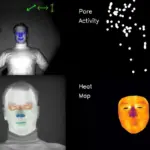
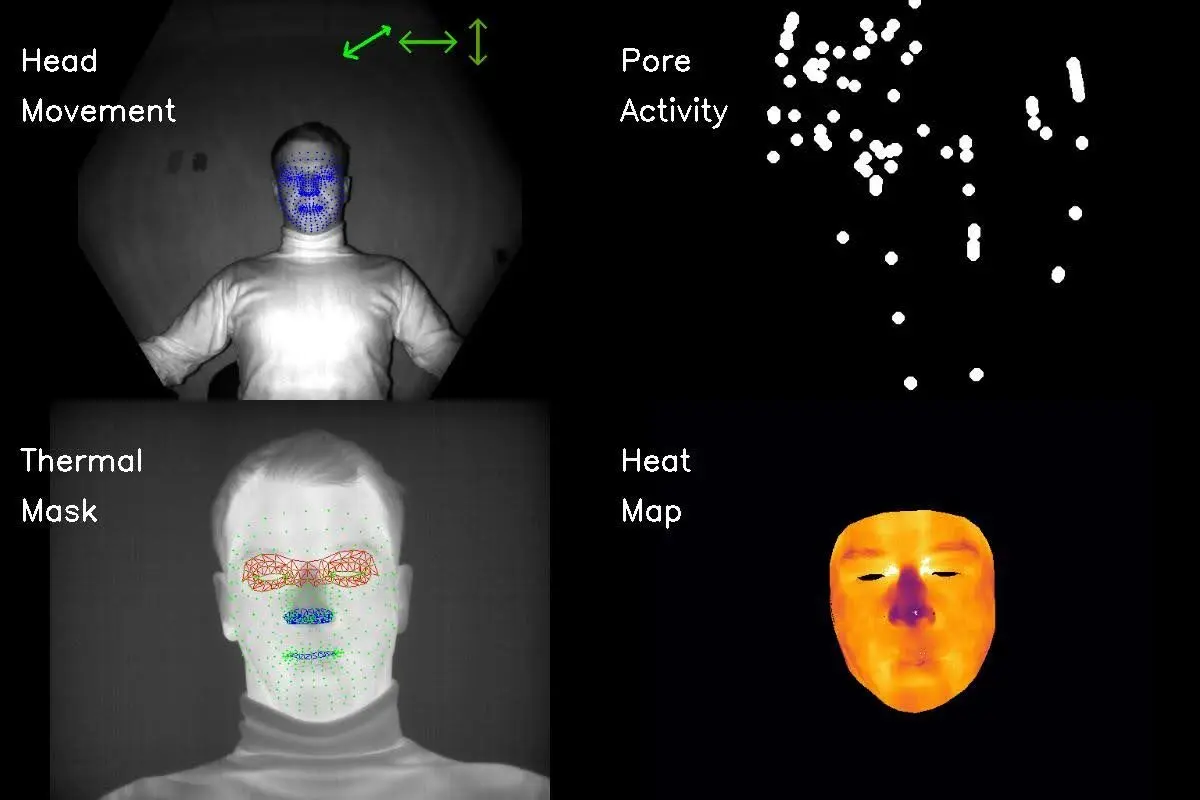
- Altec Research: A medical sensor developer transitioning into non-contact sensing systems. Released screenshots of Altec’s prototype technology showcased an advanced capability to track minute, involuntary physical phenomena, including subtle head movements, fluctuations in facial skin temperature, and localized pore activity.
Although the DIU and the selected contractors declined to comment on the direct evolution of these prototypes into the broader Polygraph+ initiative, the technological footprint of the 2023 solicitation maps precisely onto the core pillars of the newly funded Department of Defense budget request.
The Joint Staff Leaks and the 2026 Escalation
The urgency behind the Pentagon’s current funding request is not merely a bureaucratic modernization effort; it is directly tethered to a cascading series of internal security crises. Under the leadership of Defense Secretary Pete Hegseth, the Pentagon has confronted an extraordinary wave of high-level intelligence and operational leaks concerning the depletion of United States weapons stockpiles amid protracted military engagements, particularly regarding the war with Iran.
The tension reached a boiling point in September 2026, when The New York Times reported that approximately 50 senior officers and staff members on the elite Joint Staff had been subjected to mandatory polygraph examinations in a sweeping, aggressive hunt for the sources behind the press disclosures. This atmosphere of surveillance and suspicion has transformed lie detection from a routine administrative vetting hurdle into an active disciplinary and investigative tool within the highest echelons of the American military establishment.
Supporting Context & Metrics: The Science, The Scale, and The Flaws
The Statistical Reality and Margin of Error
Proponents of the polygraph—most notably the American Polygraph Association (APA)—assert that traditional polygraph examinations boast an accuracy rate ranging between 80% and 94%. However, these claims have been vigorously contested by independent scientific bodies.
In 1983, the congressional Office of Technology Assessment (OTA) concluded that there was meager empirical evidence supporting the validity of polygraph testing for employee screening. Two decades later, in 2003, the U.S. National Research Council (NRC) issued a landmark report stating that the scientific evidence regarding the polygraph’s efficacy for security screening was "weak at best."

To understand the societal danger of deploying an imperfect system, one must examine the mathematics of scale at the Department of Defense. The DoD directly employs roughly 2.8 million military and civilian personnel. When applied to a workforce of this magnitude, even a test with a purportedly high accuracy rate—say, 90% to 95%—generates a staggering number of false positives. A 5% error rate applied across millions of vetted individuals means that tens of thousands of loyal, innocent service members and civilian employees risk being falsely flagged as deceptive, triggering career-ending investigations, security clearance revocations, and profound personal distress.
Vulnerabilities, Countermeasures, and Subjective Interpretation
Beyond statistical error rates, the polygraph is plagued by operational vulnerabilities:
- Subjective Evaluation: Unlike objective biometric markers, polygraph interpretation relies heavily on the subjective judgment of the human examiner. Studies have repeatedly shown that different examiners reviewing the exact same physiological charts frequently arrive at contradictory conclusions.
- Demographic Bias: Research indicates that polygraph algorithms and human examiners are prone to systemic bias. Individuals from specific demographic and minority backgrounds are statistically more likely to be falsely judged as deceptive due to baseline physiological variations misread as stress responses.
- Countermeasures: Interviewees can easily neutralize the test if equipped with basic knowledge of how it functions. Subjects routinely utilize physical countermeasures—such as concealing a small tack or pin inside their shoe and pressing down on it during baseline control questions—to artificially inflate their physiological responses, thereby neutralizing the differential analysis.
Official Statements & Expert Analyses
The unveiling of the $30.3 million Polygraph+ budget request has drawn sharp rebukes from a coalition of legal scholars, digital rights researchers, and psychological experts who study deception and surveillance technologies.
"It’s a misguided effort to reduce the complex to something that is tangible."
— Kyri Kotsoglou, Legal Scholar at Northumbria University
Kotsoglou and fellow legal scholar Marion Oswald have written extensively on the dangers of injecting pseudoscientific credibility assessment tools into the machinery of the justice and security systems. Oswald argues that the rapid pivot toward AI-infused lie detection under the current administration is transparently motivated by a political panic over leaks and internal disloyalty rather than a quest for empirical truth.
"It seems very much a response to the concern of the current administration to leaks and perceived lack of loyalty. [Lie detection is] being used as a threat, to intimidate and force people to confess to things, as opposed to anything that’s actually getting valid information."
— Marion Oswald, Law Professor and Researcher
From a psychological perspective, researchers emphasize that the true power of the polygraph has never been its diagnostic precision, but its psychological deterrence. Sophie van der Zee, an associate professor specializing in deception at Erasmus University in Rotterdam, notes that the machine’s most potent effect occurs before the test even begins, when anxious subjects offer confessions out of sheer intimidation.
"If you know how it works, you can beat it. Its biggest effect is deterrence—often, subjects confess before it even begins. But that only works if people think a polygraph works. There is still no Pinocchio’s nose."
— Sophie van der Zee, Associate Professor, Erasmus University
Van der Zee explains that human deception involves three distinct psychological and physiological dimensions: physiological stress, cognitive load (the mental strain of fabricating and maintaining a false narrative), and the conscious effort to suppress behavioral indicators of guilt. Traditional polygraphs capture only physiological stress. While artificial intelligence theoretically offers the capability to analyze multi-modal data streams—combining voice analysis, thermal micro-expressions, and eye-tracking into a unified score—past attempts to operationalize these concepts, such as the UK’s Silent Talker project, the EU’s iBorderCtrl pilot, and the U.S. Department of Homeland Security’s AVATAR border-crossing project, have consistently stalled and faded away due to fundamental validity hurdles.
Future Outlook: The Intersection of AI, Surveillance, and State Power
As the $30.3 million Polygraph+ funding request winds its way through Congress, the broader trajectory of federal security vetting stands at a critical crossroads. If approved, the DCSA’s initiative will pioneer the deployment of standoff sensing and machine learning algorithms across federal agencies, setting a potent precedent for how the state monitors its workforce.
However, the fusion of artificial intelligence with discredited polygraph methodologies threatens to institutionalize algorithmic bias under a veneer of computational objectivity. Because there is no empirical "ground truth" dataset for lying—meaning AI models cannot be reliably trained on verified instances of deception—machine learning systems will merely learn to codify and automate existing human biases, institutional paranoia, and subjective examiner errors.
Ultimately, the Polygraph+ initiative highlights a recurring temptation in modern statecraft: the desire to substitute complex sociological and political problems—such as internal dissent, institutional leakage, and waning organizational morale—with technocratic, biometric quick fixes. As legal experts caution, transforming the lie detector into an AI-powered instrument of intimidation may succeed in chilling free expression and enforcing temporary compliance within the ranks, but it does so at a profound cost to civil liberties, scientific integrity, and institutional trust.