










Executive Overview
For the global technology ecosystem, time is rapidly running out to secure access to one of the industry’s most influential gatherings at a reduced rate. As the final 24-hour countdown begins, professionals across the startup landscape—from bootstrapping founders and venture capitalists to enterprise operators and emerging technologists—face a strict midnight deadline. Registrants who lock in their passes before the clock strikes twelve will save up to $200 on admission to TechCrunch Disrupt 2026, scheduled to take place from October 13–15 at San Francisco’s iconic Moscone West.
Beyond individual ticket discounts, organizers have rolled out dynamic group incentives, including an eye-catching BOGO-style promotion: buyers can secure an additional 50% off a second pass of the same type. For larger teams, group registrations of four or more unlock discounts of up to 30%.
As the industry prepares to converge in the Bay Area, the core thesis of Disrupt 2026 centers on a singular, high-value proposition: compressing months of exhaustive market research, networking, and critical decision-making into an intense, highly productive three-day window. This year’s event promises more than 250 curated sessions spread across six dedicated industry stages, drawing upward of 10,000 attendees eager to manufacture momentum, forge transformative partnerships, and accelerate their trajectories in an increasingly competitive marketplace.
Detailed Chronology & Event Architecture
The path to TechCrunch Disrupt 2026 has been defined by a carefully orchestrated rollout of ticket tiers, early-bird incentives, and content reveals. Understanding the timeline of the event’s promotional milestones highlights the urgency driving today’s final push.
The Buildup: From Concept to Countdown
Months ahead of the October kickoff, the planning committee behind TechCrunch Disrupt established a framework designed to highlight the multi-dimensional value of the conference. Rather than marketing the event merely as a traditional tech conference, the campaign systematically introduced core justifications for attendance—culminating in "Reason No. 5: Momentum."

- Months 1–6 (Strategic Foundation): Early announcements focused on securing marquee keynote speakers, establishing the six core industry tracks, and mapping out the logistical footprint at Moscone West. Early-bird pricing structures were implemented to reward proactive members of the tech community.
- Weeks 30–2 (The Content Reveal): As the agenda solidified around more than 250 expert-led sessions, attention shifted toward the intersection of emerging technologies—particularly artificial intelligence, deep tech, climate tech, and fintech—and practical commercialization.
- The Final 24 Hours (The Urgency Window): Today marks the ultimate threshold for tier-one pricing. As midnight approaches, the opportunity to shave up to $200 off standard registration rates evaporates, prompting a final rush of enterprise buyers, indie founders, and investor syndicates looking to maximize their capital efficiency.
What Happens on the Ground: The Three-Day Sprint
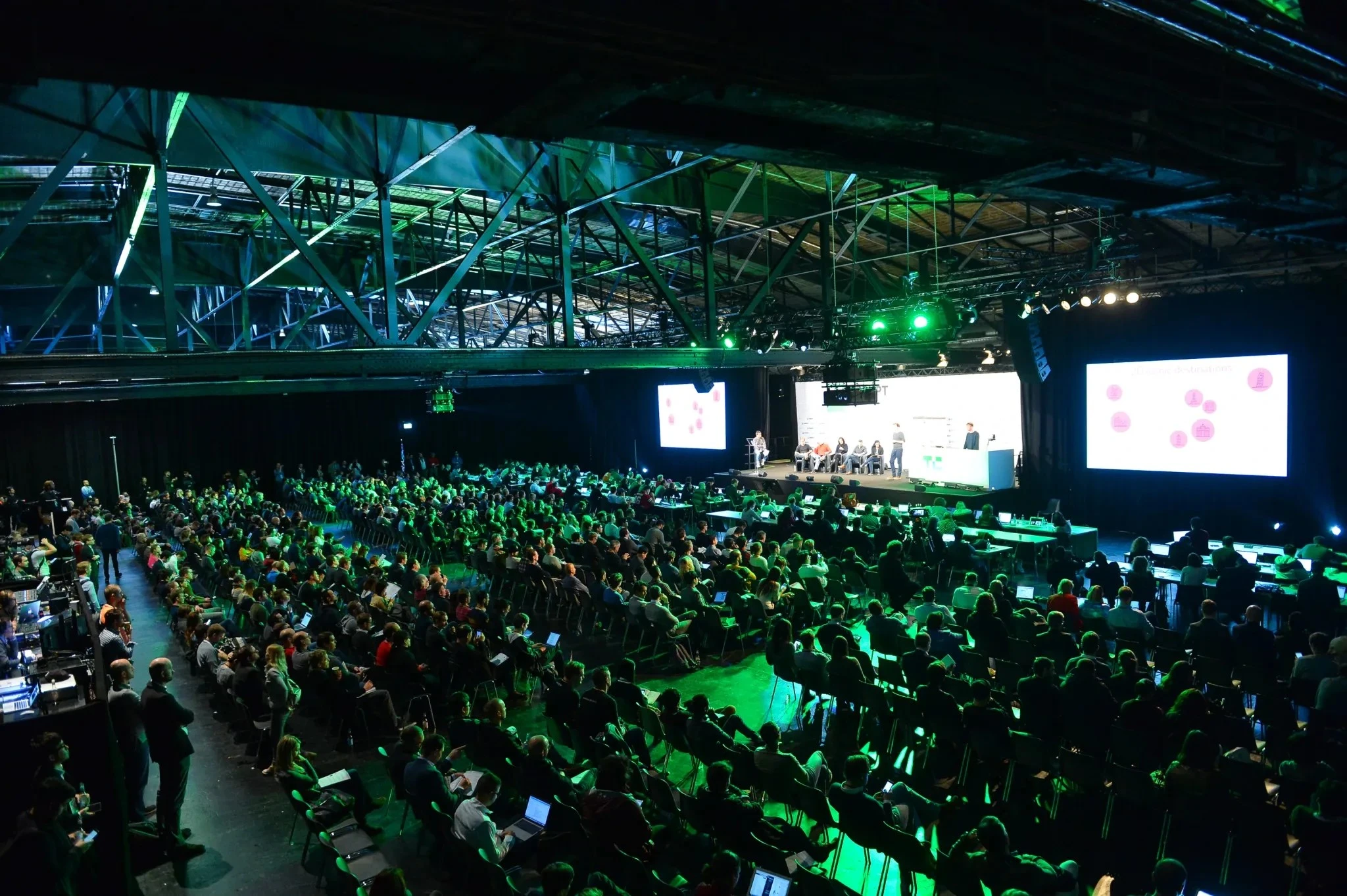
When the doors to Moscone West open on October 13, attendees will step into a meticulously engineered environment designed to maximize human capital and intellectual exchange.
- Day 1: Orientation and Ecosystem Mapping. The opening day traditionally serves as a high-velocity orientation for the tech landscape. Attendees navigate the bustling expo floor, sample early-stage breakthroughs on the startup battlefield, and calibrate their understanding of current macroeconomic trends through keynote panels featuring venture capital heavyweights and unicorn founders.
- Day 2: Deep Dives and Dealmaking. With the lay of the land established, day two shifts heavily toward execution. This is where scheduled meetings, impromptu hallway conversations, and targeted networking sessions yield tangible results. Founders cross paths with active investors, while enterprise leaders evaluate potential software and hardware integrations showcased across the six industry stages.
- Day 3: Synthesis and Strategic Pivots. The final day of Disrupt is dedicated to synthesis. Attendees take the intelligence gathered over the preceding 48 hours—ranging from regulatory insights to competitive intelligence—and translate it into actionable strategies for the fourth quarter and beyond.
Supporting Context & Metrics: The Mathematics of Momentum
In the startup world, progress is rarely linear. Breakthroughs do not typically emerge from a single piece of information or an isolated conversation; rather, they are the cumulative result of systemic inputs meeting the right opportunities. TechCrunch Disrupt 2026 is structurally optimized to accelerate this compounding effect.
Quantifying the Disrupt Experience
To understand the value proposition of attending Disrupt, one must examine the sheer volume of intellectual and relational capital compressed into a 72-hour period:
- 10,000+ Attendees: A hyper-targeted cross-section of the global tech community, ensuring that founders are surrounded by peers facing identical scaling challenges.
- 250+ Sessions: An expansive curriculum spanning six distinct stages, offering localized deep dives into specific vertical markets as well as broad macroeconomic outlooks.
- Six Industry Stages: Curated tracks that isolate critical technology sectors, allowing attendees to bypass generalized discussions and drill straight into niche innovations.
- Up to $200 in Direct Savings: Financial relief designed to lower the barrier to entry for cash-conscious early-stage startups, augmented by the 50% discount on secondary passes.
The Multiplier Effect of In-Person Collaboration
Consider the standard administrative checklist of a growing technology company: conducting market research, analyzing competitor roadmaps, sourcing early-stage investors, evaluating alternative tech stacks, establishing channel partnerships, and validating product-market fit with prospective clients. Completing these tasks remotely typically requires weeks, if not months, of asynchronous communication, cold outreach, and disjointed video calls.
At Disrupt, these disparate tasks occur simultaneously and organically. A founder might sit through a morning panel dissecting artificial intelligence regulation, engage in a live Q&A with the session’s speaker, bump into a relevant enterprise partner in the networking lounge during lunch, and pitch an interested venture capitalist by mid-afternoon. Each interaction acts as a catalyst for the next, drastically shortening sales cycles and fundraising timelines.

Official Statements and Industry Perspective
As the countdown enters its final hours, organizers and past participants have emphasized the psychological and strategic shift that occurs when leaders step out of their day-to-day operations and immerse themselves in a high-density innovation hub.
"TechCrunch Disrupt isn’t about trying to solve every single corporate problem in three days," notes the event’s programming team. "It’s about creating enough movement that the following Monday looks fundamentally different. A casual meeting becomes a structured follow-up. A lingering question turns into an executive decision. An obscure startup suddenly moves to the top of your competitor radar, and an untested idea transforms into a validated hypothesis. Once the momentum begins, the next step naturally accelerates."
Industry veterans echo this sentiment, pointing to previous iterations of the conference—such as the landmark appearances by high-growth startups like Perplexity AI—as proof that proximity to tier-one innovation creates lasting enterprise value. By bringing together the architects of tomorrow’s technology under one roof in San Francisco, Disrupt functions as a pressure cooker for commercial viability.
Future Outlook: Positioning for the Post-Disrupt Economy
As the technology sector navigates a complex macroeconomic climate characterized by cautious capital deployment, rigorous profitability metrics, and rapid artificial intelligence integration, the margin for error has narrowed. Founders and investors alike cannot afford to operate in silos.
Attending TechCrunch Disrupt 2026 offers a vital opportunity to future-proof organizational strategies. Whether the goal is closing an overdue seed round, securing enterprise pilot customers, or recalibrating a product roadmap to align with shifting regulatory and technological paradigms, the outcomes achieved in San Francisco this October will echo well into the future.

How to Secure Your Place
With the clock winding down, prospective attendees must act swiftly to lock in the lowest available rates.
- The Deadline: Midnight tonight marks the expiration of the up-$200 ticket discount.
- The Special Offers: Registering one pass unlocks a 50% discount on a second pass of the same type. Groups of four or more can leverage tiered discounts of up to 30%.
- Action Item: Interested parties can complete their registration directly through the official TechCrunch Disrupt Ticket Portal.
Arrival at Moscone West should never be treated as a passive exercise. Attendees are encouraged to arrive with a defined mandate—whether that involves accelerating a fundraise, stress-testing an investment thesis, or finalizing a crucial partnership—and leverage the next three days to see how far that momentum can carry them.
Disclaimer: When you purchase through links in our articles, TechCrunch may earn a small commission. This independent monetization structure does not affect our editorial independence or the integrity of our reporting.