








Executive Overview
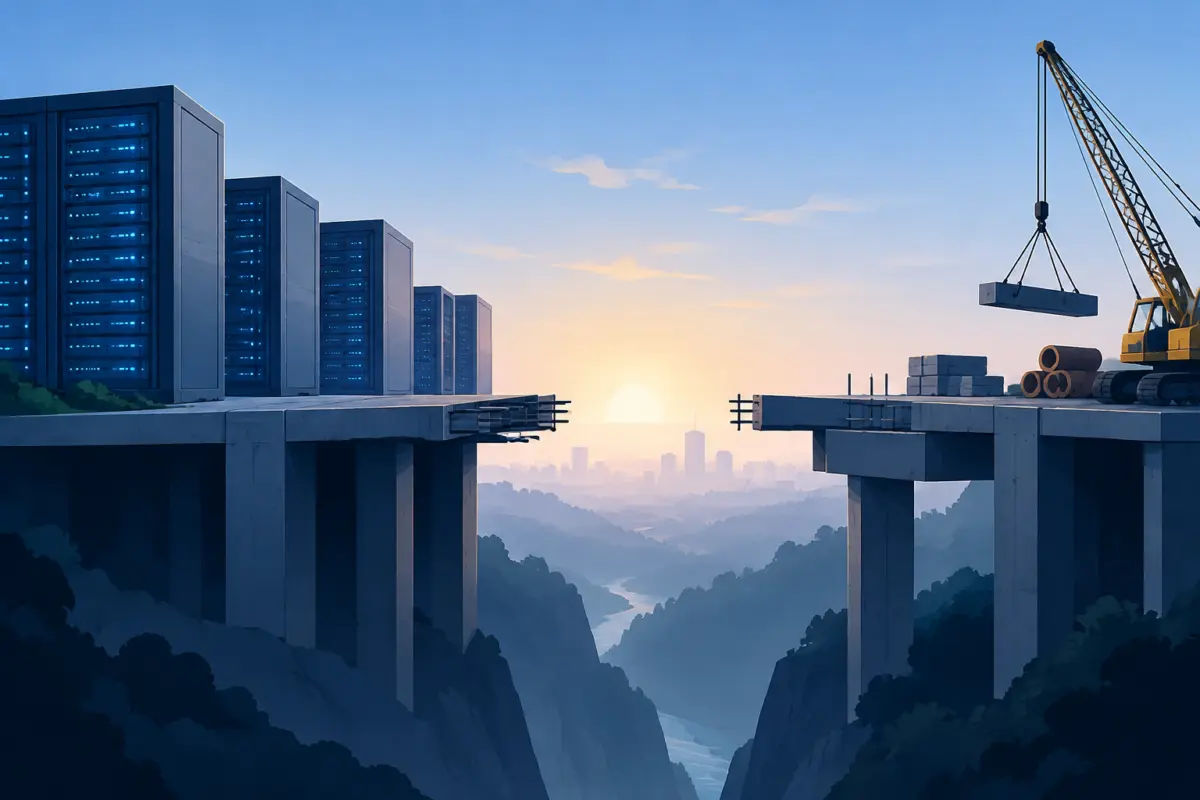
The rapid, relentless ascent of artificial intelligence, hyperscale cloud computing, and massive data-driven workloads has triggered a global gold rush for digital infrastructure. Yet, a severe structural imbalance threatens to halt this digital expansion in its tracks. The primary constraint on data center development is no longer a lack of capital, ambition, or end-user demand; rather, it is a profound physical infrastructure gap.
Electrical power connections, advanced cooling systems, and long-lead electrical components take significantly longer to procure, permit, and deploy than the software and server hardware they are meant to support. According to the International Energy Agency (IEA), electricity consumption by computing facilities surged by 17% in 2025 alone, setting off an aggressive global scramble for energy solutions.
As developers grapple with this reality, the old rules of site selection and project management are being rendered obsolete. No longer can a data center be planned from the server rack outward. Today, power availability, transmission line access, heat-rejection capacities, and equipment procurement schedules dictate every phase of development. For enterprises relying on cloud expansion, understanding this infrastructure bottleneck is vital for navigating future capacity constraints, pricing shifts, and deployment delays.
Detailed Chronology: The Evolution of the Data Center Infrastructure Crunch
To understand how the data center industry arrived at this critical juncture, it is necessary to examine the cascading series of events and technological shifts that brought supply and demand out of alignment.
Phase 1: The AI Inflection Point and Accelerated Demand (2022–2023)
The public debut and subsequent enterprise adoption of generative AI models ignited an unprecedented demand for high-density computing capacity. Traditional cloud infrastructure—designed for general-purpose computing and distributed web services—suddenly had to accommodate specialized Graphics Processing Units (GPUs) and Tensor Processing Units (TPUs). These high-density server racks consumed vastly more electricity and generated exponential amounts of heat compared to their predecessors.
During this initial window, tech giants and colocation providers aggressively purchased compute hardware, often prioritizing software capabilities and server acquisitions over underlying utility realities. Financing was readily available, and customer demand seemed boundless. However, early warning signs began to emerge as local electrical grids near traditional data center hubs—such as Northern Virginia’s Data Center Alley—approached maximum local capacity.
Phase 2: The Grid Collision and Permitting Gridlock (2024–2025)
By 2024, the mismatch between digital growth and physical infrastructure became a severe operational bottleneck. Developers who had secured land and capital discovered that obtaining a utility interconnection agreement could take years rather than months.
Regional transmission organizations (RTOs) and local electric utilities, overwhelmed by a backlog of connection requests, were forced to implement rigorous study queues. Traditional planning models crumbled under the weight of requests demanding hundreds of megawatts—loads historically associated with heavy industrial manufacturing rather than commercial real estate. Concurrently, supply chain disruptions for heavy electrical equipment, particularly large step-down transformers and substations, stretched procurement timelines to historic lengths.
Phase 3: The IEA Milestone and the 2026 Reality Check
In April 2026, the IEA released sobering data confirming that global electricity demand from data centers had surged by 17% over the preceding year. Fatih Birol, executive director of the IEA, issued a stark warning: “Global electricity demand from data centres is set to more than double over the next five years, consuming as much electricity by 2030 as the whole of Japan does today.”
This milestone cemented the reality that the data center industry could no longer expect local electrical grids to seamlessly absorb their growth. Developers were forced to completely abandon reactive site selection. By mid-2026, building a data center transformed into an integrated energy-infrastructure project, requiring direct partnerships with power generators, localized microgrid considerations, and multi-year supply chain orchestration before a single shovel touched the ground.
Supporting Context & Metrics: The Anatomy of the Constraint
The infrastructure gap is not driven by a single point of failure; it is the compound result of limitations across power generation, thermal management, and heavy equipment manufacturing.
1. Power Availability as the Ultimate Gatekeeper
Electricity is no longer a utility service to be contracted after selecting a piece of real estate; it is the foundational asset that determines where a facility can exist. A proposed site may sit adjacent to major highway networks and high-capacity fiber-optic cables, but if the local transmission system cannot deliver a firm, uninterrupted power load, the project stalls.
Furthermore, AI workloads concentrate immense electrical draws into remarkably small physical footprints. A legacy enterprise data center might draw 5 to 10 kilowatts per rack, whereas modern AI-optimized facilities routinely demand 40, 50, or even 100+ kilowatts per rack. This density strain turns localized power distribution into a hyper-localized engineering challenge.
2. The Thermal Challenge: Managing Massive Heat Loads
Nearly all electricity consumed by high-performance computing equipment is ultimately converted into heat. As rack densities soar, removing that heat via traditional means becomes physically impractical.
- Air vs. Liquid Cooling: While traditional air cooling remains sufficient for standard enterprise setups, high-density AI deployments require advanced thermal management. The IEA estimates that cooling consumes approximately 7% of electricity at highly efficient hyperscale facilities, but that figure climbs to more than 30% at older, less-efficient enterprise data centers.
- Complex Mechanical Ecosystems: Modern cooling designs extend far beyond fans and raised floors. They require intricate networks of pumps, piping, specialized heat exchangers, and robust local water supplies. Sourcing these components involves navigating tight supply chains where specialized manufacturers—such as heat exchanger coil fabricators—operate on extended backlogs.
3. Equipment Lead Times and Procurement Risks
The physical components required to build a modern data center have some of the longest manufacturing lead times in the industrial economy.
- Transformers and Substations: Large electrical transformers required for utility substations and backup generation have seen lead times skyrocket. What once required less than a year to procure now demands three to four years of advance ordering.
- Financial Exposure: Because these lead times frequently outlast the physical construction of the data center building itself, developers are forced to commit millions of dollars in capital equipment purchases long before zoning approvals are finalized or customer lease agreements are fully executed. This introduces profound financial risk into every development pipeline.
Official Statements and Industry Insights
The severity of the infrastructure bottleneck has prompted candid assessments from government leaders, energy analysts, and engineering executives on the front lines of the crisis.
-
On the Scale of the Energy Challenge:
Highlighting the trajectory of power consumption, Fatih Birol, executive director of the IEA, noted in an official agency release:"Global electricity demand from data centres is set to more than double over the next five years, consuming as much electricity by 2030 as the whole of Japan does today."
-
On Redefining Site Engineering:
Describing how developers are adapting to the power crunch, Tom Harper, computing infrastructure leader at Gallagher, stated in a Construction Dive interview:"We’re seeing sites engineered around power availability and resiliency first, with building layout, phasing and even cooling strategies adjusted to match what can realistically be delivered."
-
On the Reality of Transformer Lead Times:
Addressing the Department of Energy’s distribution transformer convening, Katie Jereza, assistant secretary for the U.S. Department of Energy Office of Electricity, highlighted the unprecedented delays plaguing grid equipment:"Large transformers for substations and generators have lead times growing from three to as much as four years."
-
On the True Objective of Data Center Cooling:
Clarifying the mechanical engineering goals behind thermal management, Dave Klusas, senior manager of facility cooling systems at Amazon Web Services (AWS), explained in an AWS cooling report:"We call it cooling, but our goal isn’t a comfortable, 68-degree data hall. Our goal is to move just enough air through our servers to keep them from overheating."
-
On the Dual Nature of Modern Construction:
Summarizing the structural evolution of the sector, Ted Way, area executive vice president at Gallagher Construction Services, wrote in a corporate analysis:"The data centres of 2026 and beyond are going to be two construction projects in one: Power generation and data halls."
Future Outlook: Navigating the New Era of Digital Infrastructure
As the industry looks toward the remainder of the decade and beyond, closing the timing gap between digital innovation and physical infrastructure will require a fundamental restructuring of how projects are conceived, financed, and executed.
Strategic Shifts for Developers and Utilities
- Early Utility Engagement: Developers can no longer afford to treat grid connections as a secondary milestone. Feasibility studies, interconnection queue applications, and direct dialogues with regional transmission operators must occur years before land acquisition.
- Co-Location with Generation: To bypass congested transmission lines, an increasing number of data center projects are exploring direct integration with dedicated power sources, including localized renewable microgrids, nuclear small modular reactors (SMRs), and behind-the-meter natural gas generation.
- Advanced Supply Chain Partnerships: Securing multi-year framework agreements with equipment manufacturers—ranging from primary switchgear and substations to specialized heat exchanger coils—will be essential to mitigating lead-time vulnerabilities.
Implications for Enterprise Cloud Consumers
For businesses planning their digital transformation and cloud computing strategies, the infrastructure gap carries immediate practical consequences. The cheapest land no longer equates to the fastest time-to-market. When evaluating cloud providers and colocation partners, enterprise leaders must ask probing questions:
- Where will this specific compute workload source its power?
- How will the facility manage the extreme heat generated by high-density AI models?
- Are the necessary electrical and mechanical components already secured in the supply chain, or is the project vulnerable to multi-year equipment delays?
Ultimately, while software development, algorithmic efficiency, and semiconductor design will continue to advance at a breakneck pace, the physical reality of the grid remains immutable. Substations take years to engineer, transmission lines require extensive permitting, and cooling plants demand meticulous mechanical planning.
Bridging the divide between the speed of software and the inertia of heavy infrastructure will define the winners and losers of the next digital era. Those who master the complex intersection of power, thermal dynamics, and supply chain logistics will successfully scale; those who ignore the grid will find their ambitions halted by the hard limits of the physical world.