







The modern digital imaging technician (DIT) cart has long resembled a miniature server rack on wheels. Tasked with managing multiple camera feeds, applying real-time color profiles, distributing graded signals to creative stakeholders, and ensuring absolute color accuracy, DITs have historically had to rely on a complex, fragile web of hardware.
At major trade shows like IBC, the broadcast and cinema production industries routinely search for ways to simplify these setups without sacrificing performance. The latest collaboration between Pomfort and Flanders Scientific Inc. (FSI) addresses this challenge directly.
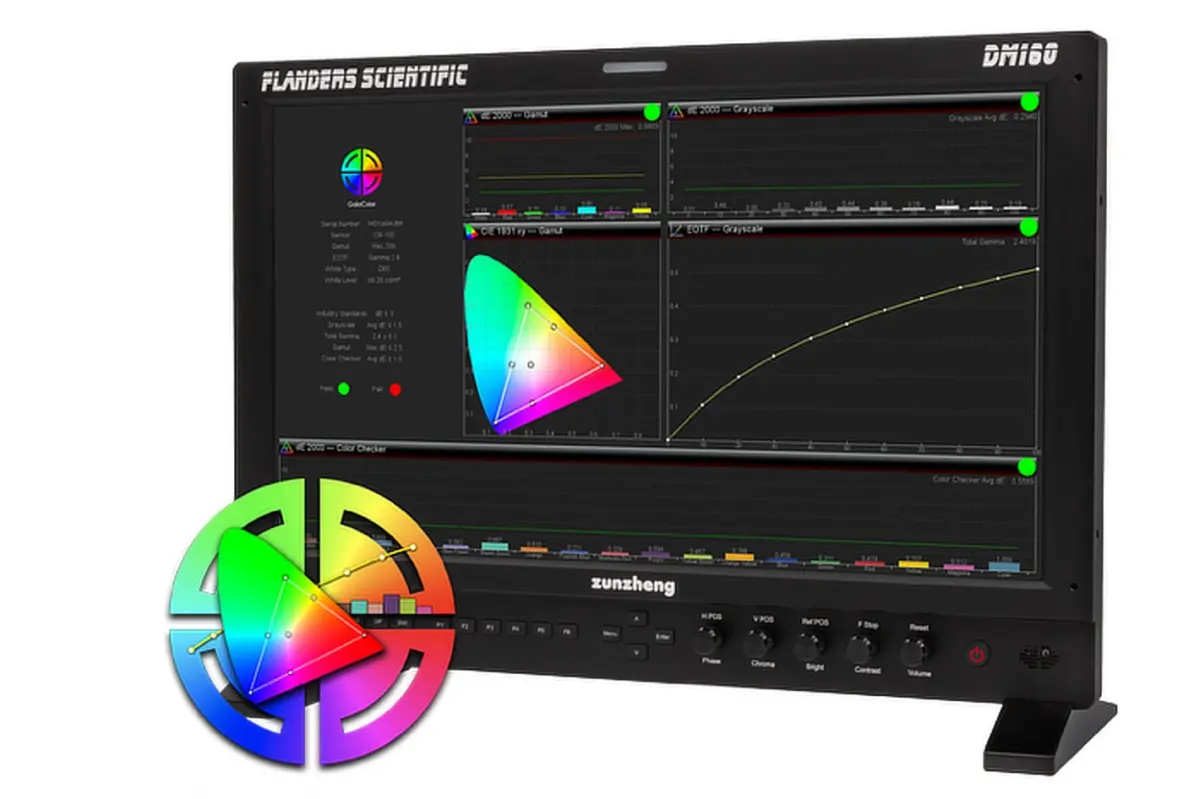
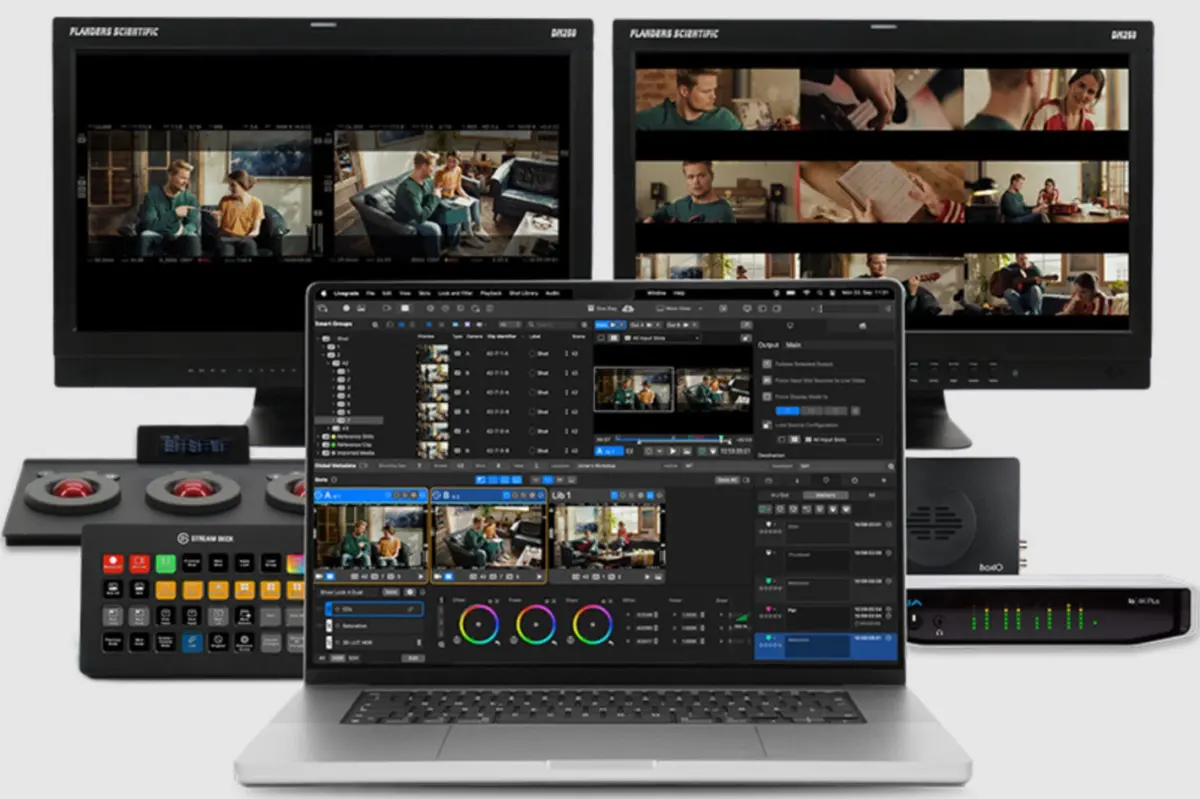
By integrating Pomfort’s Livegrade 7.2 with Flanders Scientific’s flagship XMP Series QD-OLED monitors (running firmware version 3.2.10 or later), the two companies have introduced a streamlined, four-channel live grading workflow. This integration allows a single reference monitor to simultaneously act as a multi-channel LUT box, a quad-split multi-viewer, and a distribution amplifier.
This technical integration eliminates the need for external LUT hardware on multi-camera sets, representing a significant shift toward software-defined, monitor-centric production pipelines.
Executive Overview: Redefining the DIT Cart Topology
In multi-camera film and television production, live grading is critical for establishing the creative look of a project directly on set. This process allows the director, cinematographer, and clients to see a color-graded approximation of the final film rather than a flat, desaturated log image.
Historically, executing this workflow for a four-camera shoot required a highly complex hardware signal chain:
[Camera 1-4 Logs] ──> [4x External LUT Boxes] ──> [SDI Router/Quad-Splitter] ──> [Reference Monitor]
                                                                        └──> [Downstream Monitors]
This traditional topology introduces several challenges:
- Physical Footprint & Weight: Multiple external LUT boxes, power supplies, mounting brackets, and a mass of SDI and power cabling add significant bulk to DIT carts.
- Power Consumption & Heat: Each active device generates heat and draws power, which is a major constraint on mobile, battery-powered carts or remote location sets.
- Point-of-Failure Multiplication: Every cable, power connector, and BNC junction represents a potential point of failure that can disrupt the video village feed during a shoot.
- Signal Latency: Cascading signals through multiple processing boxes and routers can introduce incremental frame delays, complicating critical focus pulling and live performance evaluation.
The Integrated Solution
The integration of Pomfort Livegrade 7.2 and FSI XMP Series monitors collapses this entire infrastructure into a single, cohesive ecosystem:
                      ┌───────────────── FSI XMP Monitor ─────────────────┐
                      │                                                   │
[Camera 1-4 Logs] ───>│──> [Internal LUT Engine (Managed via Ethernet)]   │
                      │         │                                         │
                      │         ├──> [Quad-View or Full-Screen Display]   │
                      │         │                                         │
                      │         └──> [4x Graded & 4x Clean SDI Outputs] ──┼─> [Downstream]
                      │                                                   │
                      └───────────────────────────────────────────────────┘
By leveraging the high-performance internal image processing engines of the XMP Series, Livegrade can control up to four independent 3D LUTs directly inside the monitor over a local network connection. The monitor itself performs the real-time color transformations, displays the results in a customizable quad-view layout, and routes both graded and clean signals downstream via its extensive SDI output array.
Detailed Chronology: The Road to Monitor-Based Processing
To understand how this integration was achieved, it is useful to look at the parallel technological developments of both companies over recent product cycles.
Timeline of Key Developments:
┌────────────────────────────────────────────────────────────────────────┐
│ 2023: FSI introduces XMP Series (QD-OLED mastering monitors)           │
├────────────────────────────────────────────────────────────────────────┤
│ Mid-2024: Atomos acquires FSI, boosting processing/pipeline R&D        │
├────────────────────────────────────────────────────────────────────────┤
│ Late 2024: FSI releases Firmware 3.2.10 (multi-channel LUT processing) │
├────────────────────────────────────────────────────────────────────────┤
│ Late 2024: Pomfort launches Livegrade 7.2 (native 4-channel FSI sync)   │
├────────────────────────────────────────────────────────────────────────┤
│ IBC Showcase: Full live integration of the unified ecosystem           │
└────────────────────────────────────────────────────────────────────────┘
1. The Rise of the FSI XMP Series
When Flanders Scientific introduced the XMP Series—featuring advanced QD-OLED panel technology—it quickly set a new benchmark for HDR and SDR mastering. Beyond its color accuracy and deep black levels, the XMP series was engineered with a highly capable internal processing board. Unlike legacy monitors that only allowed a single global calibration LUT, the XMP hardware was designed to handle multiple simultaneous video pipelines and complex mathematical operations in real time.
2. The Strategic Atomos-FSI Synergy
The development of these internal processing capabilities received a significant boost following the acquisition of Flanders Scientific by Atomos. By combining FSI’s expertise in high-end color science and reference displays with Atomos’s experience in silicon design, recording, and signal processing, the joint engineering teams accelerated the development of advanced monitoring features. This partnership laid the groundwork for the monitor to act as an active processing hub rather than a passive display.
3. Pomfort’s Multi-Channel Architecture
Concurrently, Pomfort was refining its Livegrade platform (both Pro and Studio editions) to handle increasingly complex multi-camera configurations. Recognizing that DITs were seeking to streamline their physical setups, Pomfort developed a unified network protocol designed to communicate directly with hardware displays.
4. The Convergence: Livegrade 7.2 and Firmware 3.2.10
The culmination of these efforts arrived with the simultaneous release of Pomfort Livegrade 7.2 and FSI XMP Firmware 3.2.10. By establishing a direct, latency-free IP network connection between the DIT’s workstation and the XMP monitor, Livegrade can now address four separate LUT slots inside the monitor’s memory. When a DIT adjusts a color wheel or a tone curve in Livegrade, the software instantly updates the corresponding 3D LUT inside the XMP monitor, providing real-time visual feedback.
Supporting Context & Technical Metrics
The benefits of this integrated workflow are best understood by analyzing its mechanical, electrical, and financial impact on a typical production.
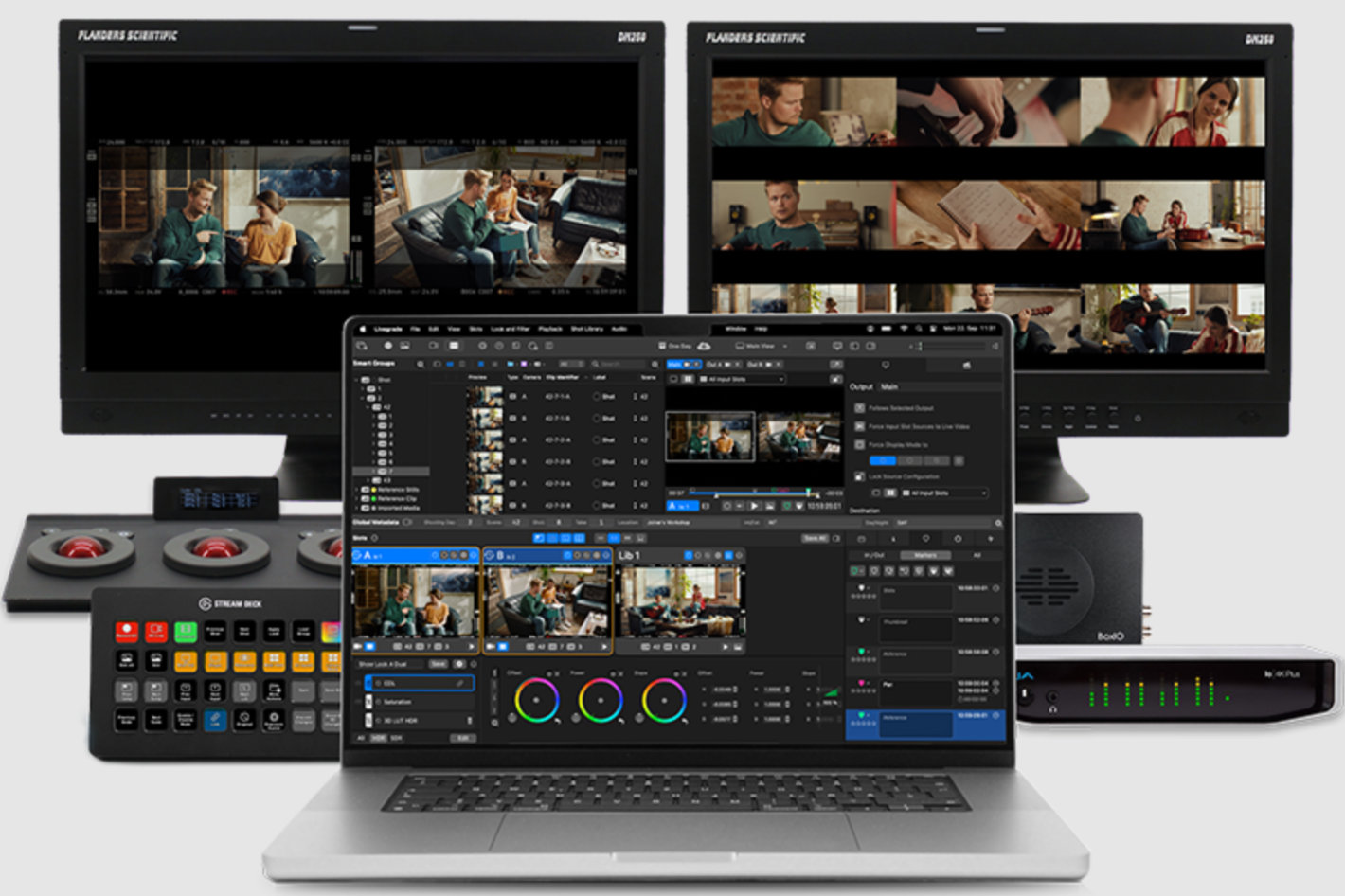
Hardware Comparison: Traditional vs. Integrated Workflow
To illustrate the physical and operational advantages of this new pipeline, consider a comparison of a standard four-camera DIT setup versus the integrated FSI/Livegrade solution:
| Parameter | Traditional 4-Camera Setup | Integrated FSI XMP & Livegrade 7.2 Setup |
|---|---|---|
| External LUT Hardware | 4x External LUT Boxes (e.g., BoxIO or Teradek COLR) | None (Processed internally by XMP monitor) |
| Signal Routing Hardware | 1x Dedicated Quad-Splitter / Multi-Viewer | None (Handled internally by XMP Quad-View) |
| Total DC Power Draw (Est.) | 60W – 100W (LUT boxes, splitter, extra power supplies) | 0W (No external accessories required) |
| Cabling Complexity | Min. 12x SDI Cables, 5x Power Cables | Min. 4x SDI Cables, 1x Ethernet Cable, 1x Power Cable |
| DIT Cart Weight Added | 12 – 18 lbs (including brackets, trays, and power strips) | 0 lbs |
| Genlock Requirement | Often required for stable quad-view display | None (Supports mixed sources of the same frame rate) |
| Total SDI Outputs | Limited by router/splitter capabilities | 8x Dedicated SDI Outputs (4 clean loop-through, 4 graded) |
Signal Path and Output Flexibility
One of the most notable engineering achievements of the XMP integration is its handling of downstream signal distribution. Typically, eliminating external LUT boxes means losing the ability to send individually graded feeds to downstream monitors (such as the director’s monitor or the client gallery).
The XMP Series solves this by utilizing a highly flexible physical backplane:
- Four Clean Loop-Through Outputs: These outputs pass the unaltered, raw log signals directly from the cameras, allowing for independent downstream recording or secondary analysis.
- Four Processed Monitor Outputs: These outputs deliver the fully graded, LUT-applied signals directly from each channel’s internal processor.
This layout yields a total of eight SDI outputs directly from the monitor, turning the XMP into a powerful distribution amplifier that preserves the creative look across the entire set.
Genlock-Free Quad-View Synchronization
In traditional multi-camera monitoring, displaying four feeds on a single screen in quad-view mode requires all cameras to be strictly synchronized via an external genlock generator. If the cameras are out of sync, the multi-viewer often suffers from dropped frames, tearing, or black screens.
FSI’s internal processing architecture overcomes this limitation. The XMP’s quad-view engine can ingest and display four independent SDI signals of the same frame rate without requiring external genlock synchronization. This makes the system highly adaptable for fast-moving productions, run-and-gun documentary shoots, or complex action sequences where running sync lines to every camera is impractical.
Operational Perspectives
For digital imaging technicians and cinematographers, this integration offers a range of workflow benefits that extend beyond simply reducing gear clutter.
The DIT Perspective: Speed and Reliability
On high-end commercial and narrative sets, setup speed is critical. A DIT must have their cart operational within minutes of arriving at a new location. By routing camera feeds directly into the reference monitor and connecting a single Ethernet cable to a network switch, the entire grading pipeline is instantly online.
Furthermore, the direct IP communication protocol between Livegrade 7.2 and the XMP monitor ensures high reliability. Because the 3D LUTs are computed and stored directly on the monitor’s internal hardware, the grading remains active even if the network connection is temporarily interrupted. The monitor continues to display and output the correct graded images using the last received LUT values, preventing on-set monitoring blackouts.
The Cinematographer Perspective: Uncompromised Color Accuracy
For Directors of Photography (DPs), the primary concern is color fidelity. Traditional external LUT boxes can sometimes introduce color sub-sampling, clipping, or slight color shifts depending on their internal processing limitations and bit-depth.
By performing the 3D LUT mathematical operations directly within the FSI XMP monitor—using its internal high-bit-depth processing pipelines—there is no risk of signal degradation between the LUT box and the display. The DP looks at a pristine, uncompromised QD-OLED panel displaying color transformations calculated at the highest level of precision. This ensures that creative decisions made on set translate accurately to the post-production grading suite.
Future Outlook: The Convergence of Set and Post
The integration of Pomfort Livegrade 7.2 and Flanders Scientific XMP monitors represents a key step in a broader trend: the convergence of on-set production and post-production workflows.
Set-to-Post Evolution:
┌────────────────────────────────────────────────────────────────────────┐
│ Past: Log monitoring on set; grading delayed until dailies creation    │
├────────────────────────────────────────────────────────────────────────┤
│ Present: Real-time live grading via complex, multi-device hardware     │
├────────────────────────────────────────────────────────────────────────┤
│ Future: Software-defined monitor hubs, cloud sync, and metadata pipelines│
└────────────────────────────────────────────────────────────────────────┘
As reference monitors grow more powerful, they are increasingly taking over tasks that once required dedicated external hardware. We are likely to see further software-defined features integrated directly into these high-end displays, such as:
- Direct-to-Cloud Metadata Streaming: Real-time streaming of color grading metadata directly from the monitor to cloud-based post-production platforms.
- In-Monitor Waveform and Analysis Tools: Advanced, multi-channel exposure and color analysis run natively on the monitor’s internal hardware.
- Integrated Recording Capabilities: High-quality proxy recording of graded and clean feeds directly within the monitor hub, drawing on the synergy of the Atomos-FSI partnership.
By consolidating critical hardware functions into a single reference display, Pomfort and Flanders Scientific have simplified on-set workflows, reduced physical footprints, and minimized potential points of failure. This integration delivers a leaner, more reliable, and highly efficient ecosystem that allows production crews to focus on their primary goal: capturing the creative vision.