






By Christopher Tozzi
Technology Analyst & Author
Executive Overview
For years, the conversation surrounding data center expansion, site selection, and infrastructure scaling has been dominated by two critical, constrained resources: electricity and water. As hyper-scale computing facilities proliferate to meet the unrelenting demands of modern digital workloads, grid capacity and liquid cooling supply chains have emerged as the ultimate gatekeepers of growth.
However, a less-discussed yet equally critical constraint is tightening its grip on the industry: access to enterprise-grade fiber-optic connectivity.
While power and water dictate where a facility can physically draw utility resources and keep its hardware cool, fiber dictates how efficiently that facility can communicate with the outside world. As data-intensive workloads—most notably real-time artificial intelligence (AI) inference, distributed model training, and massive cloud migrations—explode in volume, the sheer throughput required to keep modern data centers functional has skyrocketed. According to recent industry metrics, such as Zayo’s 2025 Bandwidth Report, total bandwidth purchased by data centers surged by roughly 330% in the early 2020s alone.
This staggering rise in data consumption has elevated fiber connectivity from a routine utility procurement task to a core strategic bottleneck. In many emerging markets, last-mile and long-haul fiber routes are failing to keep pace with the hyper-accelerated timelines of data center development. Consequently, operators are discovering that securing high-speed, resilient network routes is just as difficult—and just as critical—as securing a multi-megawatt power substation or municipal water rights.
This article explores the evolving crisis of fiber density, examines the underlying factors driving the crunch, and outlines the creative workarounds and alternative sourcing strategies that operators must adopt to maintain their build schedules in an increasingly connected, data-heavy economy.
Detailed Chronology: The Evolution of the Bandwidth Crunch
To understand how fiber became a primary operational bottleneck, it is necessary to trace how data center networking requirements have evolved over the past decade.
- The Pre-AI Era (Pre-2020): For years, enterprise data centers operated on relatively predictable growth curves. Standard cloud applications, enterprise resource planning (ERP) systems, and web hosting required steady, incremental bandwidth additions. Traditional telecommunications providers (telcos) easily met these demands through legacy copper upgrades and gradual fiber deployments along established enterprise corridors.
- The Cloud Expansion and Edge Era (2020–2022): As remote workforces expanded and multi-cloud architectures became ubiquitous, data generation accelerated. Regional edge data centers began popping up outside traditional Tier-1 hubs (such as Northern Virginia and Silicon Valley) to reduce latency for localized end-users. During this period, localized fiber route diversity became a competitive advantage, though power and real estate remained the primary focus for developers.
- The AI Gold Rush and the 330% Surge (2023–2025): The generative AI boom fundamentally fractured traditional infrastructure planning. Training large language models (LLMs) and executing real-time AI inference required distributed clusters communicating across vast geographical distances with near-zero latency. As Zayo’s 2025 Bandwidth Report highlighted, data center bandwidth consumption spiked by 330% during the early years of this decade. Fiber backbones that were engineered to handle standard enterprise traffic streams were suddenly subjected to hyper-dense data flows.
- The Current Bottleneck (2026 and Beyond): Today, the industry faces a structural mismatch. While Tier-1 markets remain relatively well-connected, emerging data center hubs suffer from chronic fiber deficits. A combination of skilled labor shortages (such as certified fiber splicers and installers) and a lack of economic incentives for telecom carriers to build out unpopulated long-haul routes has transformed fiber into the new "power and water" constraint.
Supporting Context & Metrics: Why Fiber Now Rivals Power and Water
The comparison between fiber constraints and power/water limitations is more than rhetorical; it is rooted in the physical realities of modern high-performance computing (HPC).
The Exponential Rise of AI Workloads
Traditional data center traffic flowed in a predictable north-south direction (from end-user to server and back). AI workloads, however, require massive east-west lateral communication between thousands of GPUs distributed across clusters. To maintain synchronization during model training, these nodes require ultra-high-throughput, low-latency pathways.
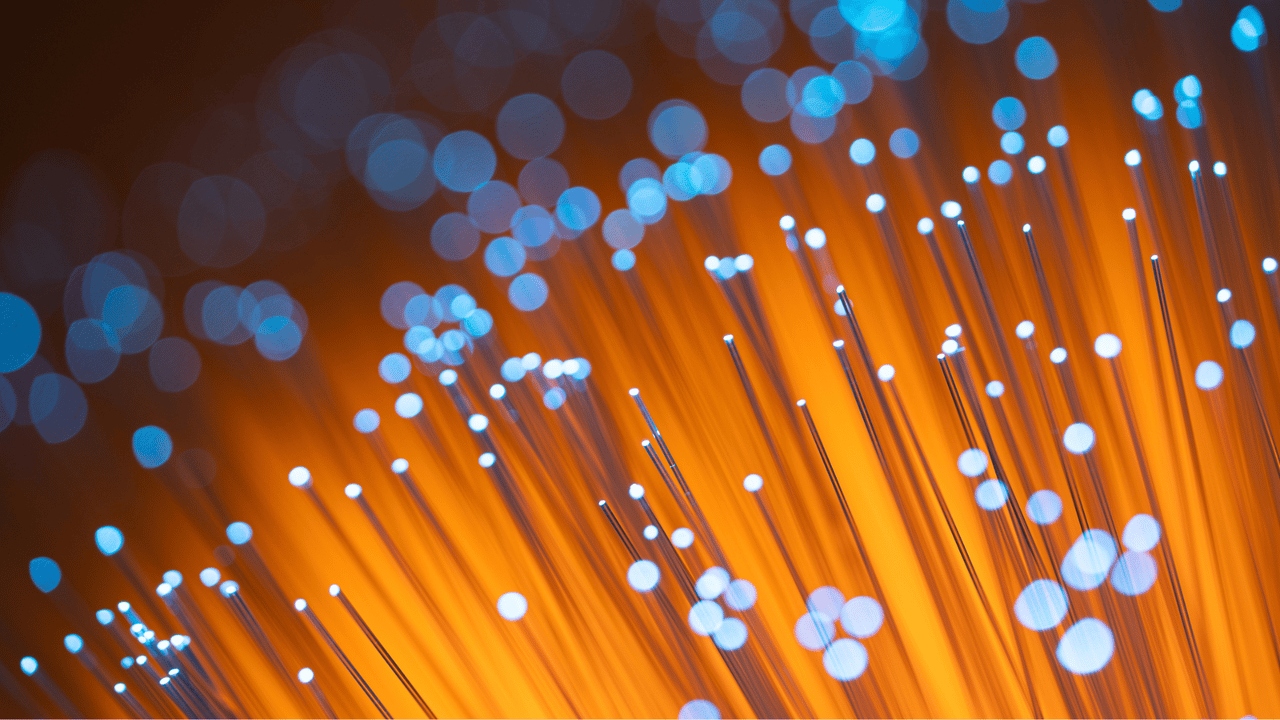
When a single facility demands terabits—and increasingly, petabits—of connectivity, relying on a single traditional telecom provider is no longer viable. Modern facilities require robust Meet-Me Rooms (MMRs) connected to multiple independent carrier networks to guarantee uptime and performance resilience.
The Macroeconomic and Supply Chain Realities
Several structural factors exacerbate the fiber deficit:
- The Skilled Labor Shortage: Manufacturing glass fiber is only half the battle; deploying it requires specialized trenching, boring, and precision splicing. The industry faces an acute shortage of qualified technicians, extending the lead times for custom fiber routes from months to several years.
- Economic Disincentives for Carriers: Telecommunications companies typically prioritize fiber deployments in densely populated consumer markets where return on investment (ROI) is rapid. Building long-haul or alternative-route fiber to remote or suburban greenfield data center sites often lacks immediate commercial justification for traditional telcos, forcing data center developers to shoulder a larger share of the infrastructure capital expenditure (CapEx).
- Geographic Disparities: While established markets like Northern Virginia, Dallas, and Silicon Valley enjoy dense, redundant fiber loops, emerging data center hubs in secondary U.S. markets and international regions face severe last-mile deficits. In these regions, a facility might secure a 100MW power allocation only to discover that the local fiber infrastructure can barely support a fraction of its data export capacity.
Strategic Alternatives: Thinking Beyond Traditional Telcos
Because the vast majority of data center operators—outside of a handful of monolithic hyperscalers—lack the capital and regulatory mandate to lay extensive private fiber networks, they must adopt innovative approaches to secure necessary capacity.
Leveraging Hyperscale Software-Defined Networking (SDN)
Traditional carriers are no longer the exclusive gatekeepers of high-bandwidth connectivity. Public cloud providers now offer software-defined, pay-as-you-go networking services that can interconnect distributed data centers without requiring physical workloads to reside inside the hyperscaler’s own walls.
- Services such as AWS SiteLink and Azure ExpressRoute Global Reach allow operators to route traffic across private cloud backbones.
- These services often bypass traditional regional telco bottlenecks, providing high-capacity networking options in geographic pockets where local carriers have failed to invest.
Multi-Carrier Strategy and Route Diversity
Relying on a single telecommunications partner introduces catastrophic single points of failure. Forward-thinking operators are engaging with dark fiber providers, municipal utility networks (which often lay proprietary fiber alongside water and electrical lines), and specialized infrastructure funds early in the site-selection process. By treating fiber procurement as an upfront engineering requirement rather than a post-construction checkbox, operators can align their construction ramp schedules with actual network activation dates.
Future Outlook: Navigating the Connectivity Landscape
Over the long term, structural market adjustments are expected to ease the fiber crunch. Just as electrical grid modernization and microgrid adoption are slowly alleviating power bottlenecks, ongoing investments in optical manufacturing—exemplified by massive supply agreements between infrastructure providers and cable manufacturers like Corning—will eventually boost raw material supply.
In the near term, however, enterprise-grade fiber will remain a restrictive, high-stakes variable in data center development.
Data center operators, developers, and real-time enterprise tenants must fundamentally shift their strategic posture:
- Integrate Fiber into Site Selection: Connectivity evaluations must occur concurrently with power availability studies and water rights acquisitions.
- Embrace Alternative Sourcing: Utilizing software-defined cloud backbones, dark fiber leases, and municipal utility partnerships will be mandatory for maintaining competitive build schedules.
- Prioritize Network Resiliency: Designing facilities with robust, multi-carrier MMR capabilities will ensure that infrastructure can handle the unrelenting data throughput demands of future AI deployments.
Ultimately, the companies that succeed in the next era of digital infrastructure will not simply be those that can secure the most watts and gallons—they will be the ones that ensure their facilities are never left speaking in whispers in a world that demands a roar.