








Executive Overview
The first week of September marks one of the most intellectually and commercially dense periods on the global digital marketing, media, and digital asset management (DAM) calendar. Across three distinct global hubs—New York City, Amsterdam, and Perpignan—industry leaders, technologists, creatives, and strategists are converging to address the tectonic shifts currently redefining the media landscape.
At the center of this week’s activity is the Digital Marketing World Forum (DMWF) North America 2026, taking place on September 9th and 10th at the iconic Javits Center in New York. Drawing over 1,500 Chief Marketing Officers (CMOs), marketing directors, and senior enterprise leaders, DMWF North America serves as a premier crucible for discussing the intersection of artificial intelligence, enterprise data architecture, and creative storytelling.
Simultaneously, across the Atlantic, the digital asset management community is gathering in the Netherlands for Bynder Connect Amsterdam on September 9th and 10th, where DAM News parent company Activo is participating as a Gold Sponsor. Concurrently, the coastal city of Perpignan, France, is hosting the prestigious International Festival of Photojournalism (Visa pour l’Image) from September 3rd to 5th. There, industry veterans are tackling the existential questions of photographic integrity, AI-generated imagery, ownership, and copyright trust.
Together, these concurrent events capture the duality of modern marketing and media operations: while brands race to scale hyper-personalized, AI-driven omnichannel experiences, they must simultaneously grapple with the profound governance, ethical, and digital rights challenges that these technologies introduce. This comprehensive report examines the core themes, major institutional participants, technological developments, and strategic implications emerging from this pivotal week.
Detailed Chronology: A Global Week of Industry Convergence
The early September event schedule offers a fascinating cross-section of enterprise marketing, creative photojournalism, and technological infrastructure development. Below is the detailed chronology of the week’s major happenings:
September 3rd – 5th: Perpignan, France – The International Festival of Photojournalism (Visa pour l’Image)
Kicking off the week’s intellectual discourse, the historic city of Perpignan becomes the world capital of visual journalism. Amidst exhibitions documenting global conflicts, social movements, and environmental crises, the festival pivots toward the modern crisis of visual authenticity.
A high-profile panel featuring DAM News regular and visual tech expert Paul Melcher alongside Mathieu Desoubeaux, co-founder of image tracking and watermarking firm Imatag, takes center stage. Their discussions delve deep into the mechanics of preserving trust in photography. In an era where generative AI can synthesize hyper-realistic images within seconds, the sessions explore how photographers, publishers, and archival institutions can protect copyright, trace origin points, and re-establish consumer trust in visual media.
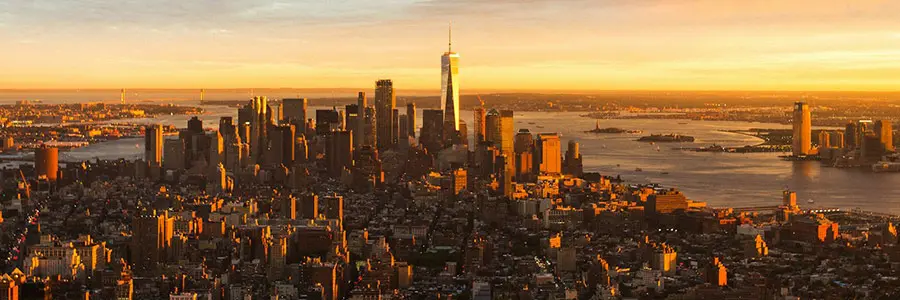
September 9th – 10th: New York City, USA – DMWF North America 2026
As the work week resumes in North America, the Javits Center opens its doors to the marquee event of the season. DMWF North America 2026 convenes a staggering collection of over 120 speakers representing the pinnacle of global corporate and media power, including Disney, Google, CNN, PepsiCo, BP, Meta, and Warner Bros.
Spanning two intensive days, the summit is structured around six core agendas:
- AI and Data Insights: Moving beyond the hype to practical, enterprise-grade deployment of machine learning algorithms for consumer behavior prediction.
- Content and Storytelling: Balancing automated scalability with human creativity and emotional resonance.
- Search and Advertising: Adapting to the evolution of search engine algorithms, conversational AI discovery engines, and privacy-first programmatic advertising.
- Brand and Influencer Strategy: Navigating authenticity, creator economies, and micro-segmentation in saturated digital markets.
- Omnichannel CX: Seamlessly bridging physical and digital customer journeys across fragmented touchpoints.
- AI-Powered Automation: Streamlining operational workflows, asset tagging, and content localization through intelligent automation.
September 9th – 10th: Amsterdam, Netherlands – Bynder Connect Amsterdam
In tandem with the New York proceedings, the European enterprise DAM community gathers in Amsterdam for Bynder Connect. As organizations generate staggering volumes of digital assets to fuel omnichannel campaigns, the need for robust, scalable, and secure Digital Asset Management infrastructure has never been more acute.
Activo, the owner of DAM News, participates prominently as a Gold Sponsor of the event, engaging directly with enterprise brand custodians, IT directors, and DAM administrators. Discussions in Amsterdam focus heavily on how organizations can integrate DAM ecosystems with broader enterprise resource planning (ERP) and customer data platforms (CDPs), ensuring that creative assets are efficiently managed, securely stored, and legally compliant throughout their lifecycle.
Supporting Context & Metrics: The Scale of Modern Digital Transformation
To understand the weight of these events, one must examine the macroeconomic and operational pressures currently facing marketing executives. The convergence of exponential data growth, stringent privacy regulations, and the generative AI revolution has fundamentally altered the responsibilities of the modern CMO.
Key Metrics Driving Industry Strategy
- Audience Scale: DMWF North America 2026 brings together 1,500+ senior decision-makers, representing industries that collectively account for hundreds of billions of dollars in global annual media spend.
- Content Density: The event features 120+ expert speakers delivering multidisciplinary masterclasses, case studies, and panel debates across six dedicated tracks.
- Economic Investment: With ticket pricing starting at $749 (exclusive of group discounts), the demographic in attendance is strictly upper-management, ensuring that exhibitors and vendors enjoy high-value networking and direct enterprise lead generation.
- The Technological Imperative: According to recent industry benchmarks, over 75% of enterprise marketing departments have integrated or are actively testing generative AI tools within their content workflows. However, fewer than 30% report having fully unified digital asset management systems capable of tracking the provenance of AI-generated versus human-created assets.
The juxtaposition of the New York, Amsterdam, and Perpignan events highlights a critical tension: while marketers are eager to leverage AI to maximize output and personalization, they are simultaneously running headfirst into complex compliance, copyright, and brand safety hurdles.
Official Statements and Industry Insights
The philosophy and urgency underpinning this week’s gatherings are best captured in the statements released by event organizers and participating thought leaders.
Framing the overarching mission of the New York summit, the official DMWF manifesto states:
"Join 1,500+ CMOs, marketing directors and senior decision-makers driving strategy and investment across industries. Explore world-class content built for the future of marketing, with practical sessions across 6+ agendas covering AI, data, creativity and digital transformation. Hear real insight from the brands and agencies leading the industry, and discover the ideas shaping what’s next."
This sentiment echoes across the Atlantic. The presence of Activo as a Gold Sponsor at Bynder Connect Amsterdam underscores the vital role that independent industry analysis and robust technological frameworks play in guiding organizations through digital transformation.
Meanwhile, the dialogue in Perpignan between Paul Melcher and Mathieu Desoubeaux brings a vital reality check to the festivities. As generative tools flood the market with synthetic media, the protection of intellectual property is no longer just a legal footnote—it is an existential requirement for brand integrity. The discussions at Visa pour l’Image remind the broader marketing community that consumer trust is fragile, and the provenance of digital assets must be mathematically and legally guaranteed.
Future Outlook: What Lies Ahead for DAM and Digital Marketing
As the curtains close on the events in New York, Amsterdam, and Perpignan, the trajectory for the remainder of 2026 and into 2027 becomes increasingly clear. Several macro trends are poised to dominate the digital asset management and marketing ecosystems:
1. The Mandatory Convergence of DAM and Generative AI
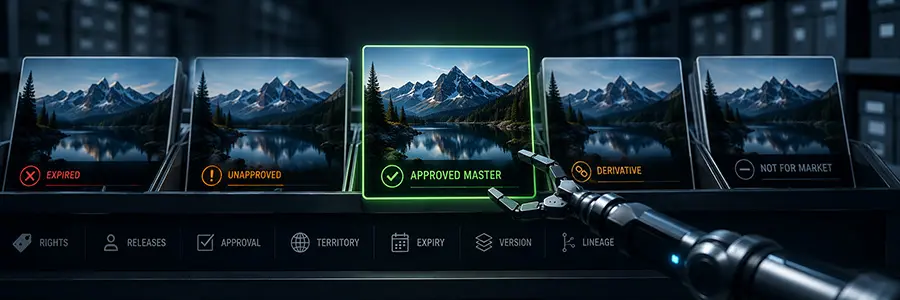
Asset management is shifting from a passive repository function to an active, intelligent participant in the content supply chain. Future DAM platforms will not merely store files; they will utilize advanced metadata tagging, automated transcription, and real-time compliance checking to ensure that every asset deployed across omnichannel campaigns is cleared for usage, localized correctly, and optimized for specific audience segments.
2. The Rise of Provenance Tracking and Watermarking
Driven by regulatory pressures (such as the European Union’s Artificial Intelligence Act) and brand protection concerns, technologies that verify the origin of digital media—such as invisible watermarking championed by firms like Imatag—will become standard components of enterprise creative stacks. Marketers will need to prove the authenticity of their visual assets to maintain credibility with increasingly skeptical consumers.
3. Hyper-Personalization at Enterprise Scale
With insights gleaned from the Javits Center discussions, CMOs will accelerate their shift toward real-time, data-driven personalization. However, this will require an unprecedented level of alignment between creative teams, data scientists, and DAM administrators to ensure that the necessary variations of creative assets are produced, managed, and deployed without bottlenecking operations.
Conclusion
The convergence of global leaders in New York, Amsterdam, and Perpignan this week is more than a coincidence of the corporate calendar; it is a snapshot of an industry in rapid transition. By tackling the dual imperatives of technological innovation and creative integrity, these gatherings are laying the intellectual and infrastructural groundwork for the next era of digital marketing and asset management.