










Executive Overview
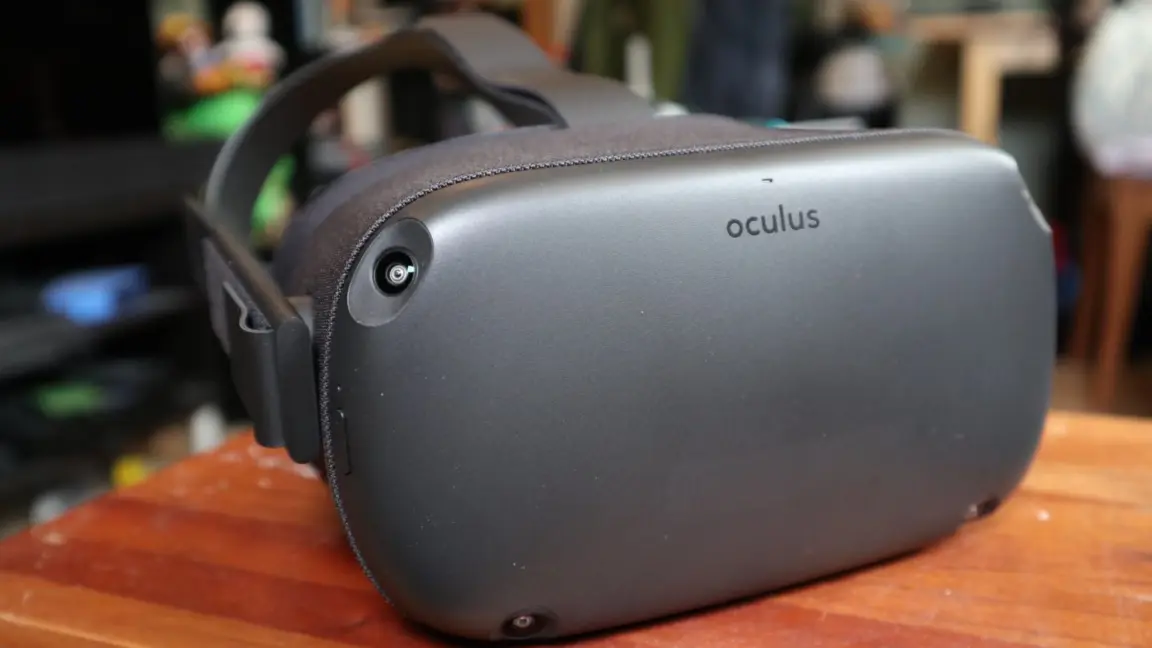
The landscape of virtual reality hardware preservation and user autonomy has reached a watershed moment. A newly discovered privilege escalation exploit has unlocked "full control" of the original Meta Quest (formerly Oculus Quest) headset, liberating the aging hardware from Meta’s overarching server infrastructure and proprietary application ecosystems. For years, tinkerers, preservationists, and hardware enthusiasts have eyed closed-ecosystem standalone VR headsets with a mixture of awe for their processing power and frustration at their software locks. This breakthrough changes the equation entirely.
By exploiting vulnerabilities within the device’s firmware and boot sequence, community developers can now achieve root-level access, effectively cutting the umbilical cord tying the hardware to Meta’s backend servers. This means users are no longer subject to forced updates, remote deprecation of features, or mandatory telemetry and account ecosystems enforced by the social media giant.
Beyond mere liberation from corporate oversight, gaining root access opens the door to profound performance modifications that were previously locked away by software design choices. Developers are already capitalizing on this newfound freedom to restore capabilities that were artificially throttled by Meta’s operating system for thermal and battery preservation reasons. Furthermore, this breakthrough mirrors legendary efforts within the tech community to future-proof hardware against obsolescence—echoing initiatives spearheaded by former Oculus Chief Technology Officer John Carmack. As the VR community looks toward an increasingly consolidated and closed hardware future, this root exploit serves as a powerful reminder of the enduring demand for true user ownership of digital devices.
Detailed Chronology: From Closed Ecosystems to Open Root
The journey toward freeing standalone VR headsets from corporate control has been a protracted, uphill battle defined by cat-and-mouse security updates, community-led reverse engineering, and occasional nods from sympathetic industry insiders.
The Original Vision and Hardware Bottlenecks
When the Oculus Quest launched in 2019, it revolutionized untethered virtual reality by packing a complete mobile computing suite inside a consumer-friendly headset. However, to maintain thermal equilibrium, battery efficiency, and strict performance baselines, Meta’s software layer imposed artificial limits on the hardware. Most notably, legendary game developer and then-Oculus CTO John Carmack publicly admitted in late 2019 that the Quest’s operating system was intentionally holding back the hardware’s display refresh rate to 72 Hz, despite the panel being fully capable of handling 90 Hz under proper thermal management.
For years, users had to accept these limitations, as modifying system-level settings required bypassing tightly locked bootloaders guarded by cryptographic signatures.
Carmack’s Precedent: The Oculus Go Unlocked
The concept of liberating standalone VR hardware gained legitimate industry backing in October 2021. As the Oculus Go—the Quest’s wireless, three-degree-of-freedom predecessor—reached the end of its commercial and support lifecycle, John Carmack pushed out an official, unrestricted "full root access" system update.
At the time, Carmack explained his rationale via social media, stating that he hoped the update would allow tinkerers and hobbyists to "repurpose the [Go] hardware for more things today." More importantly, Carmack expressed a long-term preservationist ethos: he wanted to ensure that "a randomly discovered shrink-wrapped [Go] headset twenty years from now [would] be able to update to the final software version, long after over-the-air update servers have been shut down."
While Carmack’s official blessing created an ideal exit strategy for the Oculus Go, Meta took a decidedly more restrictive path with the subsequent Quest line, leaving future preservation efforts entirely in the hands of independent hackers.
The Privilege Escalation Breakthrough
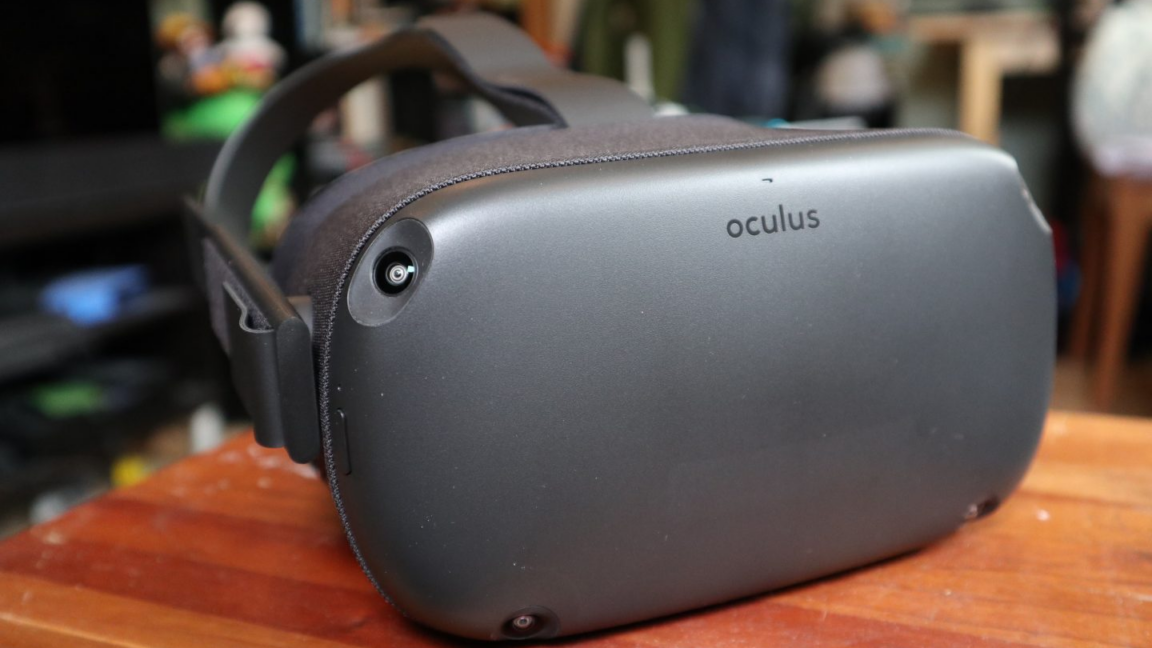
Fast-forward to the current era of hardware maturation, and the community has finally cracked the code for the original Meta Quest. Through a sophisticated privilege escalation exploit, hackers have successfully bypassed the device’s security architecture to achieve root control.
This exploit enables what developers are calling total server freedom. Once the exploit is applied, the headset can operate entirely independently of Meta’s companion applications and verification servers. Tinkerers are no longer forced to log into Meta corporate accounts or rely on cloud-based authentication to initialize the device.
However, the road to total freedom is not without its perils. Developers working on advanced projects—such as starseed12345, author of the open-source GitHub project QuestStack—have noted that while similar privilege escalation methodologies could theoretically apply to newer hardware like the Quest 2 on older firmware versions, the risks remain exceptionally high. According to community documentation, the distinct threat of "bricking" (permanently disabling the hardware due to a corrupted bootloader) currently outweighs the immediate benefits of unlocking newer bootloaders, making the original Quest the prime, lower-risk sandbox for these experimental procedures.
Supporting Context & Metrics: Unlocking the True Potential
With root access now a reality for the original Meta Quest, the developer community is moving past the initial phase of security penetration and into practical hardware reclamation. Unlocking the bootloader is not merely an ideological victory; it unlocks tangible performance metrics and cross-compatibility features that Meta’s standard firmware kept hidden.
Reviving the 90 Hz Refresh Rate
Chief among the unlocked capabilities is the restoration of the display’s higher refresh rate. As John Carmack noted years prior, the underlying display hardware of the original Quest was capable of pushing a smoother 90 Hz experience. By using root privileges to bypass the operating system’s hardcoded constraints, tinkerers can now force the display to run at its optimal hardware specification. While this requires careful monitoring of thermal thresholds to prevent overheating, it fundamentally changes the fluidity and visual comfort of the legacy device.
Hardware Cross-Compatibility
Beyond internal display tweaks, root access allows developers to rewrite low-level drivers and input handling routines. Projects currently in development—such as the q2ctrl-module hosted on GitHub—are actively working to bridge software gaps, allowing alternative VR controllers and legacy input devices to interface seamlessly with the original Quest hardware.
| Modification / Feature | Meta Stock OS Limitation | Rooted / Unlocked Capability |
|---|---|---|
| Refresh Rate | Locked at 72 Hz for performance/thermal baselines | Unlocked up to 90 Hz hardware potential |
| Server Dependency | Mandatory connection to Meta servers & apps | Full operation independent of Meta infrastructure |
| Account Management | Required Meta corporate account login | Localized, standalone operation |
| Peripheral Support | Strictly limited to first-party Oculus/Meta controllers | Community support for alternative VR controllers via custom modules |
| Firmware Updates | Controlled exclusively via over-the-air Meta pushes | Manual firmware flashing and bootloader customization |
These metrics highlight a growing divide between corporate hardware lifecycles and consumer-driven longevity. While manufacturers have a financial incentive to render older devices obsolete through software deprecation, open-source root access extends the utilitarian lifespan of consumer electronics indefinitely.
Official Statements and Industry Perspectives
The breakthrough on the original Quest has reignited long-standing debates regarding digital ownership, the right to repair, and the ethical responsibilities of tech giants regarding hardware obsolescence.
Tech industry observers and security researchers have largely applauded the exploit as a triumph for digital autonomy. In the realm of traditional computing, running root or administrator privileges on a device you purchased is taken for granted. However, the consumer electronics sector—particularly spatial computing and smart home ecosystems—has increasingly shifted toward locked appliances where the consumer merely rents the right to use the software.

While Meta has not issued a formal press release addressing this specific privilege escalation exploit on legacy hardware, the company’s historical stance has consistently prioritized platform security, anti-piracy measures, and ecosystem control. Meta’s security teams argue that closed bootloaders protect average consumers from malicious software, malware, and unstable operating system modifications that could compromise personal data or physical safety (such as inducing severe motion sickness through improper display calibration).
Conversely, independent security analysts point out the stark contrast between corporate security arguments and the reality of electronic waste. When a company decides to sunset support servers for a piece of hardware, a locked bootloader transforms a perfectly functional piece of consumer electronics into expensive electronic waste.
Prominent software preservationists frequently cite John Carmack’s 2018–2021 philosophy as the ethical blueprint for the industry: manufacturers should provide an official "sunset patch" that unlocks the bootloader when commercial support ends. Because major corporations rarely commit to this practice voluntarily, community-led exploits like the one targeting the original Quest remain the only viable mechanism to keep hardware functioning in perpetuity.
Future Outlook: What This Means for the Future of Standalone VR
The successful rooting of the original Meta Quest is more than just a historical footnote for an aging piece of VR gear; it serves as a harbinger for the future of standalone spatial computing devices. As augmented reality (AR) and virtual reality (VR) hardware become increasingly sophisticated, the temptation for manufacturers to lock down their ecosystems tightens.
The Threat of Orphaned Hardware
As newer iterations of standalone headsets—such as the Quest 3, Quest Pro, and upcoming industry competitors—age, their reliance on cloud infrastructure creates a ticking clock. If a manufacturer goes bankrupt, pivots business models, or simply decides to shut down authentication servers, millions of dollars worth of functional consumer hardware risks becoming instantly bricked. The techniques pioneered by the QuestStack author and associated hardware hackers lay the groundwork for a standardized methodology to liberate future generations of hardware.
The Rise of Alternative Operating Systems
With root access achieved, advanced developers are already speculating on the long-term possibility of porting custom, open-source operating systems—such as specialized builds of Android Open Source Project (AOSP) or custom Linux-based VR stacks—directly onto standalone headsets. If successful, this could detach standalone hardware from any corporate ecosystem entirely, turning proprietary headsets into open-canvas computing nodes for independent developers, researchers, and hobbyists.
Conclusion
The new bootloader and privilege escalation exploit for the original Meta Quest represent a monumental victory for digital rights and device ownership. By proving that Meta’s ironclad software grip can be bypassed, the hacking community has ensured that the original Quest will not quietly fade into obsolescence. Instead, it stands as a testament to the resilience of open-source preservation—proving that with enough technical ingenuity, users can truly take the "Meta" out of the Meta Quest.