Executive Overview
In an effort to stem a rising tide of public indignation, regulatory pushback, and municipal contract cancellations, police-tech giant Flock Safety has announced sweeping updates to how law enforcement personnel access its sprawling network of automated license plate readers (ALPRs). The company, whose 120,000 cameras form an interconnected digital dragnet tracking millions of vehicles daily across the United States, is moving to make previously optional privacy and security settings mandatory.
These adjustments arrive on the heels of devastating investigative reports highlighting systemic privacy violations. Most notably, a recent Washington Post exposé revealed dozens of instances where police officers abused their privileged access to the platform to stalk, harass, and spy on current or former romantic partners. Concurrently, a broad-based coalition of civil liberties groups, local activists, and high-profile political figures from across the ideological spectrum have pushed back against the normalization of mass, warrantless surveillance.
While Flock executives frame the new mandatory guardrails as a proactive maturation of their corporate responsibility, privacy advocates and critics argue that the measures fall woefully short. By failing to institute rigorous independent oversight, leaving critical enforcement loopholes unaddressed, and ignoring the foundational Fourth Amendment concerns inherent to mass data collection, Flock’s updates may do little to halt the growing rebellion against municipal police surveillance technologies.
Detailed Chronology: The Escalation of the Flock Crisis
To understand the urgency behind Flock’s recent policy pivot, it is necessary to examine the rapid acceleration of scrutiny facing the company over the past year.
The Seeds of Discontent (Late 2024 – Early 2025)
As Flock aggressively expanded its market footprint—contracting with more than 5,000 police agencies nationwide—concerns over the scope of its technology began to mount quietly among local privacy boards and municipal advisory committees. Originally marketed as a tool to help local police departments solve property crimes, auto thefts, and violent offenses by capturing vehicle makes, models, colors, and license plates, the technology’s capabilities quickly expanded through software updates and cross-jurisdictional data sharing. Cities realized that their local cameras were no longer localized tools; they were nodes in a vast, national intelligence-sharing apparatus accessible by outside law enforcement agencies with minimal friction.
The Stalking Scandal and Investigative Exposés (Mid-2025 – August 2026)
The latent anxieties of privacy advocates materialized into concrete public scandals as investigative journalists began probing how officers utilized the system. A landmark investigation published by The Washington Post in August 2026 brought national attention to a harrowing reality: officers across multiple jurisdictions were systematically abusing the Flock database to stalk ex-partners, track estranged spouses, and gather personal intelligence on citizens with whom they had personal disputes. The investigation cataloged at least 46 specific instances of unauthorized surveillance and harassment facilitated directly by the platform’s searchable location archives.
The Municipal Exodus and Legislative Pushback (Early 2026 – Present)
Faced with constituent outrage, city councils began reassessing their financial and ethical commitments to Flock. In February 2026, an NPR analysis revealed that at least 30 cities had completely dropped their Flock contracts over the preceding year, a number that grassroots tracking organizations like DeFlock suggest is significantly higher. The backlash transcended traditional partisan divides. While left-leaning municipalities expressed deep alarm over civil rights violations and potential weaponization for immigration enforcement, right-wing commentators like Tucker Carlson amplified the narrative, warning millions of listeners that the camera networks were laying the digital foundation for a "slave state."
Furthermore, state legislatures began introducing bills to severely restrict or outright ban ALPR networks, while municipalities opting to retain license plate readers began migrating toward legacy competitors such as Axon and Motorola.
Flock’s Policy Pivot (Today)
Cornered by mounting lost revenue and catastrophic public relations, Flock leadership announced a definitive policy shift: moving several key administrative safeguards from "optional" settings controlled by individual police departments to mandatory, platform-wide requirements.
Supporting Context & Metrics: The Mechanics of Surveillance and Its Loopholes
To evaluate the efficacy of Flock’s newly instituted rules, one must understand how the technology operates in the field and the specific vulnerabilities that have allowed officers to bypass previous administrative checks.
The Scale of the Dragnet
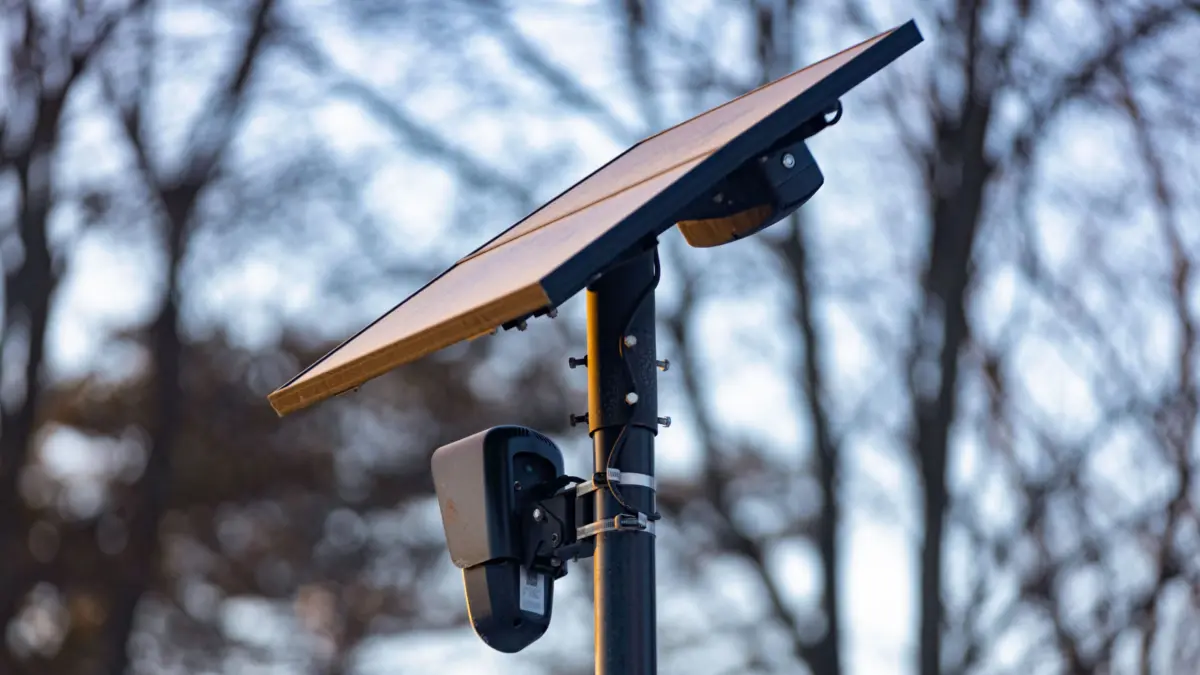
Flock’s network comprises roughly 120,000 specialized cameras fixed to utility poles, traffic lights, and entranceways across American neighborhoods, commercial districts, and highways. These cameras capture high-resolution imagery of every passing vehicle, logging timestamps, exact geographic coordinates, and vehicle characteristics. This data is aggregated into a searchable cloud database.
Because querying this database does not technically require a warrant under current statutory interpretations in many jurisdictions, law enforcement officers have enjoyed unprecedented latitude. As Chad Marlow, senior policy counsel at the American Civil Liberties Union (ACLU), aptly noted: "In America, you only get to investigate someone if you think they’ve done something wrong." The ubiquity of ALPR networks flips this premise on its head, enabling dragnet data mining of innocent citizens without establishing prior individualized suspicion.
Analyzing Flock’s New Guardrails—and Their Flaws
Flock’s newly announced rules attempt to address two primary vectors of criticism: individual officer abuse (such as stalking) and systemic over-collection of data. However, a closer examination reveals profound structural weaknesses:
-
Mandatory Criminal Case Numbers:
- The Rule: Officers must now input a valid criminal case number before executing a search within the Flock database. This was previously offered as an optional feature for departments seeking extra compliance checks.
- The Loophole: Flock does not independently verify the legitimacy or existence of the entered case numbers against an external law enforcement records management system. Past implementations of similar text-box requirements by civil rights groups revealed systemic mockery by police personnel. For instance, the ACLU documented an instance in an Oregon police department where officers bypassed text-based reason prompts by entering nonsensical text like "hehehe" more than 20 times. Without back-end verification, the case-number requirement remains easily circumvented.
-
Automated Auditing Tools:
- The Rule: Flock is making its automated auditing system mandatory for all client agencies. The software analyzes search patterns and flags administrative profiles for suspicious activity or anomalous query volumes.
- The Limitation: Flock has consistently declined to publish empirical data verifying the accuracy rate of its automated auditing tool, nor has it permitted independent academic or technical auditors to evaluate the algorithm’s efficacy. Consequently, departments must trust a black-box system designed by the vendor itself to police the behavior of its primary paying customers.
-
Data Retention Rollbacks:
- The Rule: Flock is actively recommending that client agencies reduce their data retention windows from 30 days down to 7 days.
- The Limitation: This remains purely a recommendation. Individual police departments maintain ultimate administrative authority to overrule the suggestion and retain data for longer periods, meaning data hoarding practices can continue unabated in jurisdictions that refuse to comply.
-
Inter-Agency Data Restrictions:
- The Rule: Departments can now restrict outside agencies from querying their local camera feeds unless the search aligns with specific, pre-approved investigative categories—such as "kidnapping"—while blocking categories like "immigration enforcement."
- The Limitation: Once again, this safeguard relies entirely on the querying officer truthfully and accurately reporting the true intent of their search within the system. If an officer mischaracterizes a search, the restriction fails.
Official Statements & Industry Perspectives
The chasm between Flock’s corporate messaging and the assessment of civil rights watchdogs highlights the profound ideological conflict defining the modern police-tech landscape.
Flock Safety: Combating "Misinformation"
Garrett Langley, CEO and co-founder of Flock Safety, pushes back fiercely against the characterization that his company’s technology is inherently invasive or abusive. In an interview with MIT Technology Review, Langley attributed the wave of contract cancellations primarily to a campaign of public "misinformation."
"If you look at the main reason we’ve lost customers, it’s misinformation," Langley stated, pointing to widespread public misconceptions that Flock engages in facial recognition or commercial data brokerage—practices the company explicitly denies engaging in.
Langley defended the company’s evolution from offering optional security tools to enforcing mandatory platform-wide standards:
"Our change in stance is more of one from building things that are optional to building more confidence that as a technology company we have a responsibility to enforce guardrails, not provide optionality."
Critics, however, note that the charge of spreading misinformation cuts both ways. The ACLU and various municipal watchdogs have previously published extensive documentation detailing instances where Flock representatives allegedly misrepresented the capabilities, data-sharing scopes, and legal limitations of their systems to city councils and police boards during contract acquisition phases.
The ACLU: A Crossroads of Fear and Intransigence
Chad Marlow of the ACLU views Flock’s concessions not as a genuine awakening of corporate conscience, but rather as a desperate PR maneuver forced by an unprecedented wave of public resistance.
"Flock has come to the table because this incredible, unprecedented nationwide uprising against their company has scared them," Marlow remarked. However, he remains deeply skeptical of the company’s ultimate willingness to enact meaningful reform: "At the same time, they are just absolutely unwilling to make the actual changes they need to make in order to legitimately respond to these concerns. So this is the best that the company is willing to do."
Marlow challenges the fundamental utilitarian argument often deployed by police departments and tech vendors—that the invasion of privacy is a fair trade for recovering stolen property or apprehending fugitives.
"Is it worth it to catch a certain number of criminals, return a certain number of stolen cars, to eviscerate Americans’ privacy?" he asked.
Future Outlook: Where Do We Go From Here?
As Flock Safety attempts to weather the storm through incremental compliance adjustments, the broader debate over automated municipal surveillance stands at a historic crossroads. The friction between public safety imperatives and constitutional privacy rights is no longer a theoretical debate fought exclusively in appellate courts; it is actively playing out in city council chambers, state legislatures, and neighborhood meetings across the nation.
The Threat of Market Fragmentation and Regulatory Backlash
While Flock continues to tout its expansive network of 5,000 police agency clients, the loss of dozens of municipal contracts points to a fracturing customer base. If more states pass sweeping bans on warrantless ALPR networks—or if municipal insurance providers begin factoring the civil rights liability of mass surveillance tools into premium calculations—tech vendors may face severe economic headwinds.
Furthermore, as competitors like Axon and Motorola position themselves as alternative providers, the entire police-tech sector is under intense pressure to demonstrate that corporate governance can keep pace with aggressive algorithmic expansion.
The Road Ahead for Civil Liberties
For privacy advocates, Flock’s decision to mandate its previously optional safeguards validates their long-standing argument that voluntary corporate self-regulation is entirely inadequate. True accountability, civil rights groups argue, requires statutory prohibitions against warrantless bulk data collection, strict independent auditing by non-partisan third parties, and absolute transparency regarding inter-agency data sharing agreements.
Until tech companies and law enforcement agencies are willing to subject their digital dragnet to genuine constitutional limits—rather than cosmetic software prompts—the backlash against automated surveillance will likely continue to swell, leaving communities deeply polarized over the price of security in the digital age.