
Executive Overview
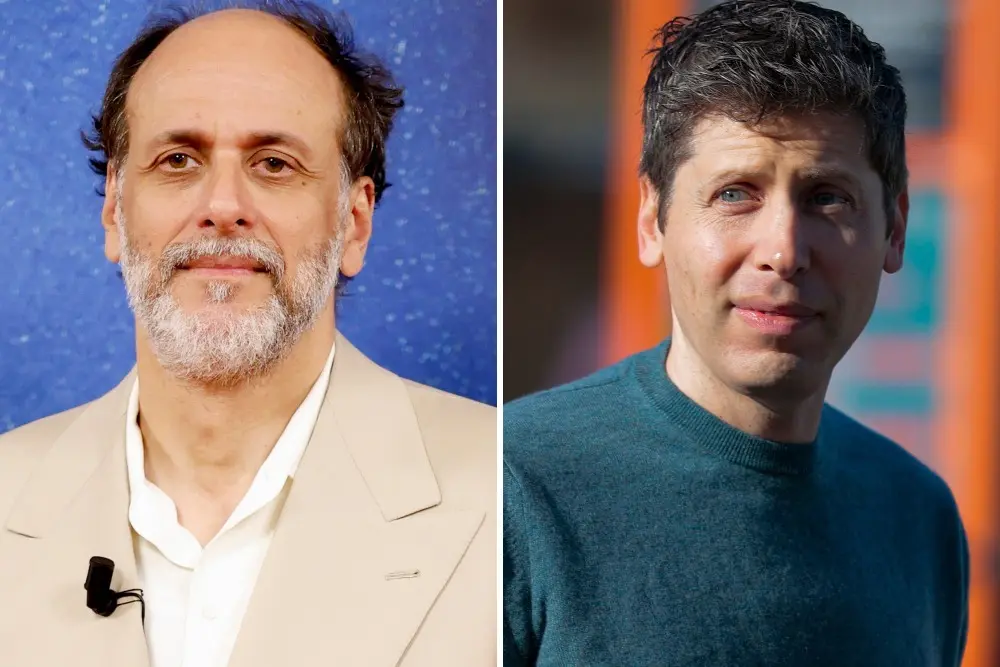
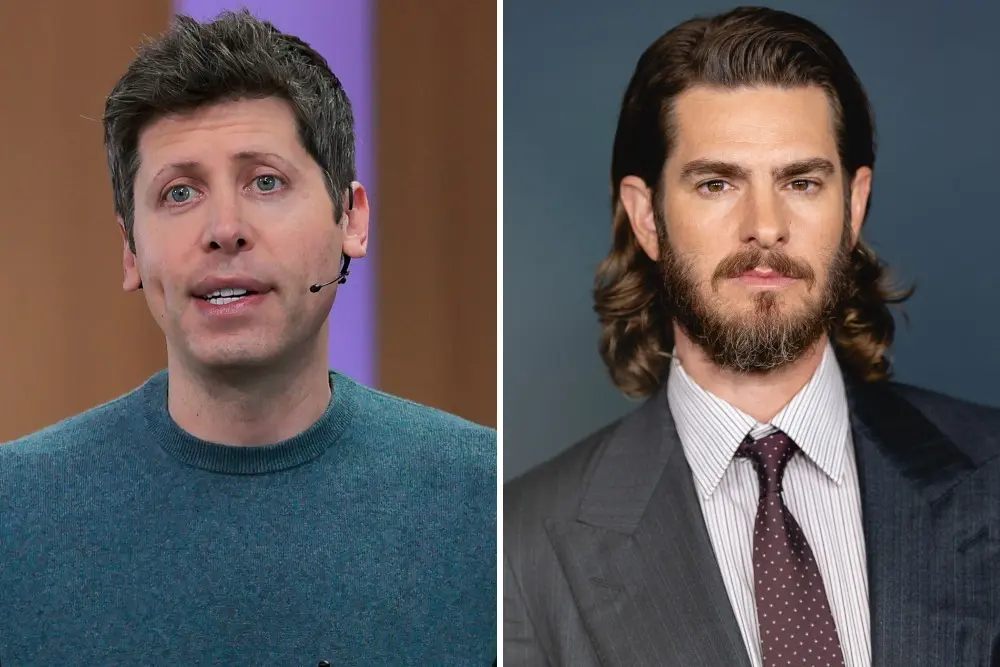
The intersection of Silicon Valley ambition and Hollywood dramatization has rarely felt as surreal as it did on a quiet neighborhood street in 2023. OpenAI Chief Executive Officer Sam Altman recently addressed the cinematic treatment of his tumultuous five-day ouster and subsequent triumphant return to the helm of the world’s most influential artificial intelligence enterprise. In a wide-ranging, exclusive cover story with Vanity Fair, Altman shared his candid impressions of Artificial, the upcoming biographical drama directed by visionary filmmaker Luca Guadagnino.
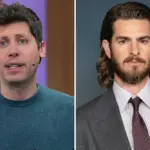
Starring Academy Award nominee Andrew Garfield as the tech executive, Artificial chronicles the corporate coup that briefly separated Altman from OpenAI in November 2023. Yet, despite playing the central figure in a high-stakes corporate drama, Garfield and Altman have never formally met. Their only interaction to date occurred spontaneously when Altman, strolling down his own neighborhood street to pick up his morning coffee, literally walked into a parallel version of his own existence.
As the film prepares for its high-profile premiere at the New York Film Festival—following a distribution shuffle that saw Amazon MGM Studios drop the project—the real-life protagonist has offered a pragmatic, occasionally amused perspective on Hollywood’s interpretation of his life. While dismissing the film’s factual accuracy—noting, among other things, the fictional inclusion of gun-lined underground bunkers—Altman conceded that Garfield captured his characteristic gait with uncanny precision.
This report provides an exhaustive, multi-faceted analysis of the convergence between OpenAI’s corporate trajectory and Luca Guadagnino’s cinematic vision, exploring the production’s behind-the-scenes hurdles, the philosophical divide between actor and subject, and the broader implications of rendering contemporary tech titans on the silver screen.
Detailed Chronology: From the Boardroom Crisis to the Silver Screen
To understand the cultural weight of Artificial, one must revisit the seismic events of November 2023. Over a frantic five-day period, the global technology landscape held its breath as OpenAI’s board of directors abruptly ousted Sam Altman, citing a vague lack of candor in his communications. What followed was a hyper-accelerated corporate mutiny: nearly all of OpenAI’s employees threatened to resign and join Microsoft unless Altman was reinstated and the board stepped down. By Thanksgiving week, Altman was back in the CEO chair, and the narrative of modern artificial intelligence governance was forever altered.
Hollywood, sensing a modern-day Shakespearean tragedy wrapped in venture capital, moved with lightning speed. Visionary director Luca Guadagnino—known for his sensual, psychologically complex storytelling in films like Call Me by Your Name, Challengers, and Bones and All—signed on to direct Artificial, a dramatic feature exploring the five-day crucible.
Production commenced under strict secrecy, utilizing urban locations to replicate the tense, high-pressure environments of San Francisco and Silicon Valley. It was during this location scouting and filming phase that Altman had his bizarre, meta-cinematic encounter with his cinematic alter ego.
Recounting the morning to Vanity Fair, Altman explained that despite neighborhood notices warning of upcoming film shoots, he paid little heed.
"Then one morning, I was walking down the street to get coffee and there were all these cameras and there was a guy dressed exactly like me with my same backpack walking so much that I felt I was in some weird glitch of the simulation or something," Altman said. "It was very strange. And then I immediately figured out what was happening."
The two men exchanged a brief wave—the sum total of their interpersonal contact—before parting ways. Reflecting on the moment, Altman remarked on the eerie sensation of watching a stranger synthesize his physical idiosyncrasies:
"We waved and went on, but it was really weird. I mean, it’s like a strange thing to see someone that has nailed your kind of quirky mannerisms or whatever."
Supporting Context & Metrics: The Corporate Shuffle and Production Hurdles
The path of Artificial from script to screen has not been without its own corporate drama. Originally developed under the umbrella of major studios, the project faced unexpected turbulence when Amazon MGM Studios abruptly dropped distribution rights. The timing raised eyebrows across the industry, given that Amazon had previously poured a staggering $50 billion investment into OpenAI.
Speculation immediately mounted regarding whether corporate sensitivities or pressure from tech executives influenced Amazon’s retreat. However, Altman firmly denied any behind-the-scenes machinations. When questioned by Vanity Fair if he had spoken to Amazon executives, including CEO Jeff Bezos, regarding the film, Altman was unequivocal:
"I did not speak to anyone at Amazon about the movie, and I don’t know of anyone else who did."
Following Amazon’s exit, indie powerhouse Neon stepped in to rescue and distribute the film, ensuring its high-profile rollout. Neon’s acquisition underscores the independent, prestige-driven angle the production ultimately adopted, distancing itself from traditional studio oversight.
Despite these corporate maneuvers, Altman harbors zero illusions regarding the film’s fidelity to actual events. When evaluating the trailer—which notably features a dramatic sequence of him rushing into a secure bunker adorned with firearms on the wall—Altman offered a mixture of amusement and detachment:
"I will say from having watched the trailer, I don’t think they’re going for accuracy. So in that sense, no, it doesn’t bother. I mean, they’re trying to make a good movie and maybe it will be good. I don’t know. Good as a movie. It will not be good as an accurate depiction. Except for the walk."
On the fictionalized bunker scene, Altman quipped:
"There’s no bunker with firearms on the wall. That’s an example of inaccuracy, but I did look kind of cool."
Official Statements and Artistic Perspectives
The dynamic between subject and actor is further complicated by Andrew Garfield’s deliberate decision to bypass any personal consultation with Altman. While many actors playing living subjects rely on intensive immersion, shadow sessions, or direct interviews, Garfield took a purely textual and analytical approach.
In an interview with Esquire U.K., Garfield articulated his artistic reasoning:
"I’ve never met him. I was going off of the script and court transcripts and interviews and research, and we were telling a story. But I think anyone who takes on that level of responsibility for a company or a technology that you know is going to do a hell of a lot of damage to the soul of humanity [must have] a certain ability to dissociate."
Garfield’s interpretation frames Altman not merely as a tech entrepreneur, but as a psychological archetype navigating the immense moral weight of ushering in artificial general intelligence (AGI). This critical distance allows the film to explore themes of hubris, existential risk, and corporate warfare without becoming a hagiography or an authorized biography.
Director Luca Guadagnino has echoed this fearless creative stance. Speaking to Vulture, Guadagnino addressed whether he harbored any anxiety regarding potential backlash from Altman or his inner circle:
"I don’t know—maybe they love the movie. I’m not afraid. I think that people that have a lot of power should be very much aware that you must be responsible for the community."
Guadagnino’s philosophy places the burden of responsibility squarely on the shoulders of the tech elite, suggesting that artistic scrutiny is a necessary tax on immense corporate power. Rather than seeking the approval of Silicon Valley, Guadagnino’s lens is calibrated to examine the ripple effects of technology on the broader social fabric.
Future Outlook: The Intersection of AI and Cinematic Storytelling
As Artificial premieres at the New York Film Festival, it marks a significant milestone in contemporary culture: the moment Silicon Valley figures begin to receive the cinematic biopic treatment traditionally reserved for political leaders, pop icons, and historical titans.
For Sam Altman, life continues at breakneck speed. OpenAI remains at the epicenter of the global AI arms race, navigating billions in capital investments, regulatory scrutiny from global governments, and ethical dilemmas surrounding the future of human labor and cognition. The release of a major motion picture dramatizing his worst professional week is, in the grand scheme of his responsibilities, an eccentric footnote.
Yet, the film serves as a cultural mirror. It captures the public fascination—and underlying anxiety—surrounding the men and women building the infrastructure of tomorrow. Whether Artificial ultimately succeeds as a masterclass in cinematic tension or fades as a sensationalized dramatization, it has already achieved something remarkable: it forced one of the most powerful men in the world to step out of his routine, walk down a San Francisco street, and wave at a ghost of his own making.