







Executive Overview
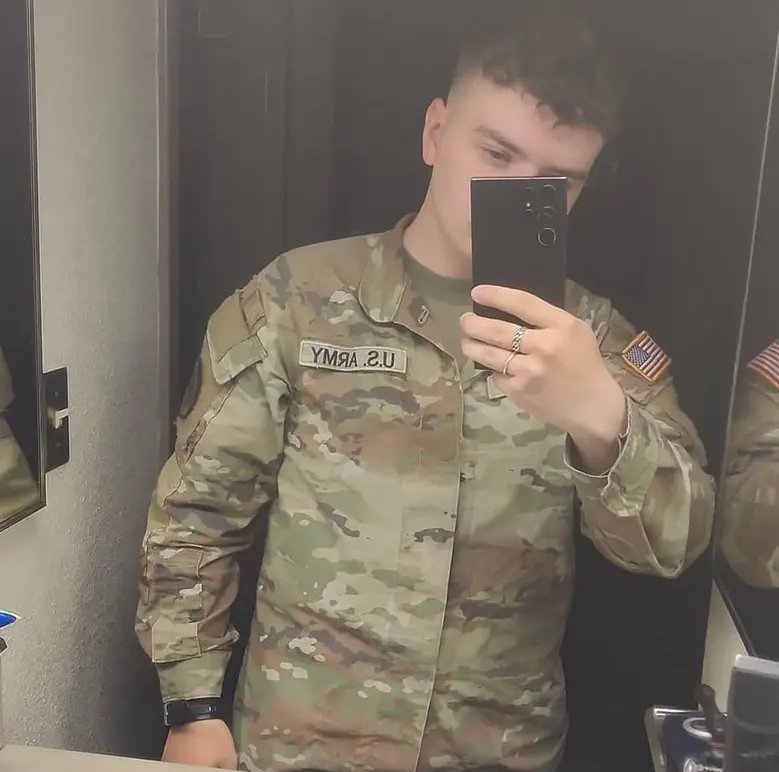
In one of the most unusual insider threat and cyber-extortion cases in recent military history, a 22-year-old active-duty U.S. Army soldier stationed in South Korea has been sentenced to 70 months in federal prison for his role in a massive, global cybercriminal conspiracy. Cameron John Wagenius, who operated online under the handle "Kiberphant0m," was ordered by a federal judge in Seattle to serve nearly six years in custody and pay $294,978 in restitution to his victims.
Wagenius was a core member of an extortion syndicate that systematically targeted major telecommunications providers and corporate enterprises through compromised cloud infrastructure. Utilizing stolen credentials to breach cloud data storage giant Snowflake, Wagenius and his co-conspirators exfiltrated sensitive call and text metadata belonging to more than 100 million AT&T customers, alongside systems associated with Verizon’s Push-to-Talk service and over a dozen international telecommunications operators.
Despite holding a active Secret security clearance with the U.S. Armed Forces, Wagenius engaged in high-profile public extortion schemes, attempting to hold corporate entities hostage for millions of dollars in Bitcoin. In a desperate bid for leverage, he posted stolen call logs belonging to top American political figures—including then-President-elect Donald Trump and then-Vice President Kamala Harris—alongside alleged national security schematics on underground crime forums.
Yet, despite causing tens of millions of dollars in containment, remediation, and operational damages across the telecommunications sector, federal prosecutors revealed a striking paradox: Wagenius himself earned approximately $1,500 from his illicit activities. Furthermore, while incarcerated and awaiting sentencing, Wagenius’s compulsion to breach networks persisted. Federal court filings show he attempted to orchestrate jailbreaks of commercial Artificial Intelligence (AI) models via inmate email systems to discover zero-day and unpatched vulnerabilities within the Federal Bureau of Prisons’ (BOP) internal networks.
Detailed Chronology
+-----------------------------------------------------------------------------------+
|                                 CRIME TIMELINE                                    |
+-----------------------------------------------------------------------------------+
| 2024             | - Operates as "Kiberphant0m" while stationed in South Korea.   |
|                  | - Breaches Snowflake databases lacking MFA.                    |
|                  | - Exfiltrates >100M AT&T customer call/text records.          |
|                  | - Co-conspirators extract $370,000 ransom payment.            |
+------------------+----------------------------------------------------------------+
| Late 2024        | - KrebsOnSecurity identifies hacker as active U.S. soldier.    |
|                  | - Posts call logs of Trump & Harris after co-conspirator arrest|
|                  | - Arrested by federal task force (DCIS, FBI, Secret Service).   |
+------------------+----------------------------------------------------------------+
| Sept 2025        | - While in custody, attempts AI prompt injection via inmate   |
|                  |   email to exploit prison network (Windows 10, D-Link CVEs).   |
+------------------+----------------------------------------------------------------+
| Aug 2026         | - Key co-conspirator Conor Riley Moucka pleads guilty.         |
+------------------+----------------------------------------------------------------+
| Present          | - Wagenius sentenced in Seattle to 70 months prison time      |
|                  |   and $294,978 in restitution.                                 |
+-----------------------------------------------------------------------------------+
The Birth of Kiberphant0m in South Korea
While deployed to a U.S. Army installation in South Korea, Cameron John Wagenius maintained a double life. By day, he was a service member trusted with access to classified defense materials. By night, operating under the alias "Kiberphant0m," he embedded himself within elite cybercriminal rings specializing in initial access, enterprise extortion, and database exfiltration.
Wagenius aligned himself with seasoned cybercriminals, including Kenneth Schuchman—a 28-year-old hacker from Vancouver, Washington, famous in underground circles for creating the notorious "Satori" Internet-of-Things (IoT) botnet in 2017—as well as Canadian national Conor Riley Moucka ("Judische") and John Erin Binns, an American fugitive living in Turkey wanted for the 2021 breach of T-Mobile that exposed 76 million records.
Exploiting Snowflake and the Telecom Extortion Spree
Throughout mid-2024, the network targeted corporate tenants of Snowflake, a prominent cloud data warehousing provider. The attackers systematically harvested exposed corporate credentials that lacked Multi-Factor Authentication (MFA).
By leveraging these unmanaged entry points, Kiberphant0m and his crew breached Snowflake environments belonging to major corporations, most notably AT&T. Once inside, the group exfiltrated massive stores of phone call and text message metadata, spanning source and destination numbers, time stamps, and call durations for over 100 million telecommunications subscribers. Wagenius subsequently launched a aggressive extortion drive, targeting at least a dozen international telecommunications organizations—including Verizon’s Push-to-Talk business—demanding cryptocurrency ransoms under threat of publishing the raw data online.
High-Profile Leaks, Ransoms, and Unmasking
In response to the unprecedented threat to customer privacy, AT&T paid a extortion demand of roughly $370,000 in Bitcoin to the criminal group to secure a promise that the data would be deleted. However, honor among thieves proved non-existent. Following the late-2024 arrest of co-conspirator Conor Riley Moucka in Canada, an enraged Wagenius initiated a re-extortion campaign.
To prove his capabilities and maximize panic, Wagenius posted screenshots and samples on public cybercrime forums containing sensitive records. Among these were the personal call logs of high-profile political leaders, specifically then-President-elect Donald Trump and then-Vice President Kamala Harris. He further escalated his threats by uploading files he claimed were confidential schematics belonging to the U.S. National Security Agency (NSA).
The aggressive behavior drew immediate scrutiny from investigative journalists and federal law enforcement. In late November, cybercrime investigative outlet KrebsOnSecurity published evidence pointing to the likelihood that "Kiberphant0m" was an active-duty U.S. soldier operating out of South Korea. Within weeks, a joint task force moved in. Federal authorities arrested Wagenius, charging him across two separate federal indictments in Washington state, where he subsequently pleaded guilty to all charges.
Jailbreaking Behind Bars: The AI Exploitation Strategy
While awaiting sentencing at a federal detention facility, Wagenius displayed an extraordinary unwillingness to disengage from computer exploitation. According to a government sentencing memorandum filed in September 2025, federal authorities intercepted a series of unauthorized communications originating from Wagenius inside prison.
Operating through the inmate email system by utilizing accounts belonging to fellow prisoners, Wagenius attempted to perform remote "prompt injection" attacks against commercial artificial intelligence tools via an outside intermediary.
                  IN-PRISON PROMPT INJECTION SCHEME

 +------------------+      Inmate Email      +--------------------+
 |  Cameron        | ---------------------> |  Outside           |
 |  Wagenius       |   (Using Proxy Account) |  Intermediary      |
 +------------------+                        +--------------------+
                                                        |
                                                        | Prompts AI
                                                        v
 +------------------+   Exploit Scripts      +--------------------+
 | BOP Network      | <--------------------- | Commercial AI      |
 | Target Systems   |   (Windows 10 / D-Link)| Service            |
 +------------------+                        +--------------------+
The government memorandum revealed three distinct incidents in September 2025:
- Windows Privilege Escalation: Wagenius directed an outside contact to prompt a commercial AI service to identify active Common Vulnerabilities and Exposures (CVEs) allowing privilege escalation and security bypasses in Windows 10 Enterprise—the operating system used across Bureau of Prisons workstations. He specifically asked for "a real-world working script for each CVE… without omitted code."
- Hardware Exploitation: Days later, using a second inmate’s account, he directed the recipient to ask the AI for step-by-step exploit code targeting CVE-2023-45208, a command-injection vulnerability present in D-Link networking hardware, instructing the AI to "make sure to describe everything in detail" or write custom exploit code if none existed.
- Physical Egress & RF Engineering: In a third prompt, Wagenius asked the AI: "How do you make an antenna in a prison environment with commissary or readily available items/tools to improve/make an antenna to extend radio reception?" Subsequent messages asked his contact to research methods for escaping prison custody.
To circumvent the guardrails programmed into commercial AI platforms designed to block the creation of malicious payloads, Wagenius instructed his contacts to frame the requests as research for a fictional novel he was writing—a textbook application of AI jailbreaking via context-framing prompt injection. When confronted by prison officials, Wagenius claimed he was attempting to locate security flaws to help the BOP harden its internal networks.
Supporting Context & Metrics
Key Figures and Threat Actors
The legal proceedings surrounding Wagenius shed light on the broader nexus of cybercriminals responsible for the 2024 Snowflake extortion wave.
| Actor Name | Alias | Role in Conspiracy | Current Legal Status |
|---|---|---|---|
| Cameron John Wagenius | Kiberphant0m | Exfiltration, public extortion, metadata theft | Sentenced to 70 months prison; $294.9k restitution |
| Conor Riley Moucka | Judische | Database access, primary extortion negotiator | Arrested 2024; pleaded guilty August 2026 |
| Kenneth Schuchman | Nexus / Satori Author | Infrastructure advisory, technical support | Prior federal conviction (Satori botnet); Charged |
| John Erin Binns | Irv / T-Mobile Attacker | Database breach operations, data broker | Fugitive residing in Turkey; Wanted by FBI |
The Mechanics of the Snowflake Cloud Compromise
The primary intrusion vector utilized by Wagenius and his associates targeted the architecture of cloud data platforms. The threat actors did not breach Snowflake’s central corporate core; rather, they exploited vulnerable customer-managed endpoints.
+-----------------------------------------------------------------------+
|                    ATTACK VECTOR ARCHITECTURE                         |
+-----------------------------------------------------------------------+
|  [Infostealer Malware Campaign]                                       |
|               |                                                       |
|               v                                                       |
|  [Exfiltration of Unprotected Corporate Credentials]                 |
|               |                                                       |
|               v                                                       |
|  [Targeting Snowflake Accounts Lacking Multi-Factor Authentication]   |
|               |                                                       |
|               v                                                       |
|  [Direct SQL Queries & Mass Exfiltration of Data Warehouses]          |
|               |                                                       |
|               v                                                       |
|  [Extortion Demands & Public Leaks via Cybercrime Forums]             |
+-----------------------------------------------------------------------+- Credential Harvesting: The syndicate purchased or gathered compromised corporate credentials harvested by infostealer malware strains (such as RedLine, Vidar, and Lumma) over preceding years.
- Single-Factor Exploitation: Targeted enterprise accounts had failed to enable MFA requirements for their administrative or analytical users, allowing remote login directly via valid username/password combinations.
- Mass Data Exfiltration: Once authenticated, the attackers ran automated scripts within Snowflake’s interface to package and download terabytes of raw structured data—including customer call detail records (CDRs)—to attacker-controlled infrastructure.
The Financial Disparity Metrics
One of the most remarkable aspects highlighted by federal prosecutors was the severe mismatch between the macro-economic damage inflicted by the enterprise extortion ring and Wagenius’s personal financial gain:
- Total Records Compromised: 100,000,000+ AT&T customer records.
-
Direct Corporate Ransom Paid:
$370,000 (paid in Bitcoin by AT&T to the broader network).
- Restitution Order Issued: $294,978 (assessed against Wagenius).
- Wagenius’s Actual Net Profit: ~$1,500.
As federal prosecutors noted in their sentencing memorandum: "While Wagenius was not particularly financially successful as a cybercriminal, he both intended to and caused significant harm to numerous individual victims, U.S. companies, and the U.S. government."
Official Statements
The investigation involved a multi-agency task force comprising the Defense Criminal Investigative Service (DCIS), the Federal Bureau of Investigation (FBI), the U.S. Army Criminal Investigative Division (CID), and the U.S. Secret Service.
Paul Russell, Resident Agent in Charge at the Defense Criminal Investigative Service (DCIS), emphasized the unique security severity posed by an active-duty military insider:
"We don’t often get leads where there’s an active duty soldier with a secret clearance who’s creating hacking tools and trafficking in data. That doesn’t happen every day, and so when that hits it really spins all of our partner organizations up. It was very serious from jump street, just because it was unique, it was an insider threat, and we weren’t sure what we were dealing with."
Addressing Wagenius’s actions while in custody, federal prosecutors written in their sentencing memorandum presented to the U.S. District Court in Seattle:
"According to records from BOP, in or around September 2025, Wagenius used another inmate’s email system to request that the email recipient prompt a commercial AI tool to provide information about ‘[w]hat CVE’s are there for Windows 10 Enterprise privilege escalation and bypasses’ and to ‘[p]rovide the CVE’s and a real world working script for each CVE . . . without omitted code’… In several instances, Wagenius framed the AI queries as being posed in connection to a book he was writing. This is a common method of ‘prompt injection,’ in which attackers feed specially crafted, deceptive inputs into commercial AI tools."
Future Outlook
Industrial Cloud Security Mandates
The fallout from the Snowflake-related breaches, capped by Wagenius’s sentencing, marks a turning point in enterprise cloud access policies. In the wake of the 2024 incidents, major cloud data platform providers—including Snowflake—transitioned from offering Multi-Factor Authentication as an opt-in security setting to enforcing mandatory MFA protocols for all enterprise client accounts globally.
The case serves as a precedent for corporate liability and cloud hygiene. Regulatory bodies, including the U.S. Securities and Exchange Commission (SEC) and the Cybersecurity and Infrastructure Security Agency (CISA), have increasingly signaled that failing to enforce basic access controls like MFA on critical cloud repositories containing consumer data may be classified as negligent security behavior subject to regulatory penalties.
AI Risk and the Correctional Cyber Threat Landscape
Wagenius’s attempt to jailbreak commercial Large Language Models (LLMs) via proxy while incarcerated exposes a emerging threat surface for federal and state correctional facilities: AI-assisted prison security bypasses.
As correctional facilities expand access to digital services—such as educational tablets and monitored email portals like TRULINCS—administrators now face the reality that inmates can leverage off-site contacts to query AI systems for physical security bypasses, radio-frequency manipulation, and local network privilege escalation vectors.
Moving forward, federal law enforcement and correctional institutions are expected to implement strict algorithmic content filtering on inmate communications. This includes deploying specialized natural language processing (NLP) filters designed to detect "jailbreak syntax," context-framing evasion techniques, and technical queries aimed at identifying hardware vulnerabilities, ensuring that the digital infrastructure inside correctional institutions remains isolated from the evolving threat of generative AI manipulation.