







Executive Overview
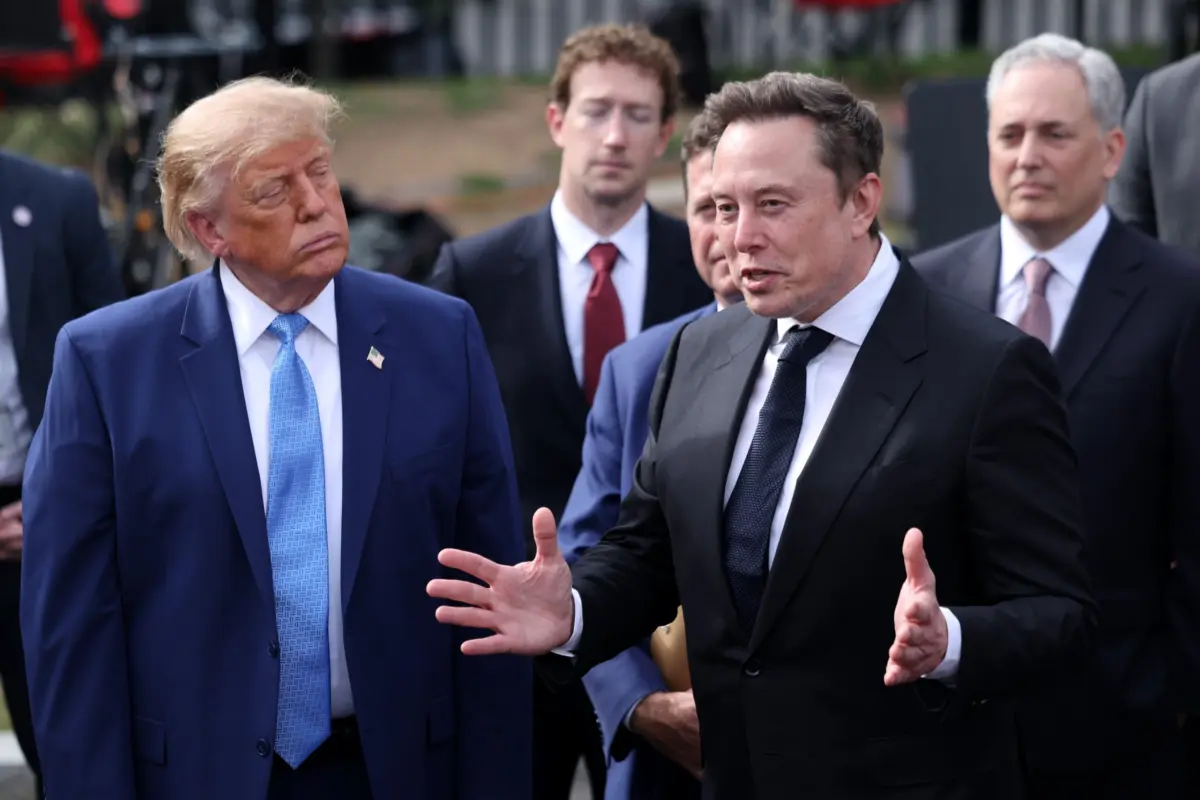
The intersection of federal policymaking and Silicon Valley ambition reached a historic inflection point this week, as the White House convened a high-stakes summit bringing together nearly every major technology chief executive. Industry heavyweights—including Meta’s Mark Zuckerberg, Amazon’s Jeff Bezos, Tesla and xAI’s Elon Musk, and Anthropic’s Dario Amodei—assembled in the nation’s capital to officially sign a high-profile artificial intelligence safety pledge. Labeled "morally binding" by President Donald Trump, the agreement attempts to establish a unified ethical framework for a sector hurtling toward artificial general intelligence.
Simultaneously, the administration formalized a dramatic shift in federal nomenclature and strategy, with President Trump signing an executive order officially rebranding artificial intelligence as "super intelligence." This linguistic and regulatory pivot underscores a growing urgency within the government to not only regulate the technology, but to position the United States as the undisputed global hegemon in the next epoch of computing.
Yet, beneath the glossy photo-ops and sweeping executive directives, a stark economic reality persists. While tech giants pour billions into enterprise-grade applications that continue to drive revenue, consumer-facing artificial intelligence struggles under the weight of "ugly economics." Companies like OpenAI and Meta are rushing to deploy friendlier, more approachable interfaces—such as OpenAI’s newly launched, bubbly agentic avatar "Dots"—in a desperate bid to capture consumer affection and retention. However, monetization in the consumer segment remains elusive, raising critical questions about the long-term sustainability of the current consumer-AI boom.
These complex dynamics took center stage on a recent episode of TechCrunch’s flagship podcast, Equity. Hosts Kirsten Korosec, Anthony Ha, and Sean O’Kane unpacked the week’s whirlwind developments, examining the friction between Washington’s grandiose safety pledges, the precarious economics of consumer tech, a shifting initial public offering (IPO) market, and a fresh wave of venture capital startup deals.
Detailed Chronology: A Week of Power, Policy, and PR
The events of this pivotal week unfolded through a rapid succession of high-profile announcements, policy enactments, and product reveals that captured the attention of global markets.
The White House Summit and the Safety Pledge
The week’s headline event occurred behind closed doors at the White House, where the administration corralled the most powerful figures in modern technology. The summit was designed to project a unified front between the federal government and private enterprise regarding the existential and practical risks of rapid AI development.
The resulting safety pledge, signed by leaders like Amodei, Zuckerberg, Bezos, and Musk, was heralded by the White House as a cornerstone for responsible innovation. President Trump underscored the gravity of the pact by declaring it "morally binding," a phrase that immediately sparked intense debate among legal scholars and tech ethicists regarding its actual enforceability. Adding a touch of irony to the high-stakes diplomatic proceedings, sharp-eyed observers later pointed out a glaring typographical error within the signed document itself, which misspelled "the United States"—a minor gaffe that briefly overshadowed the gravity of the event on social media.
Rebranding the Future: The "Super Intelligence" Executive Order
Minutes after the summit concluded, President Trump signed a sweeping executive order that symbolically and structurally alters how the federal government approaches the sector. By officially rebranding artificial intelligence as "super intelligence" within official policy documents, the administration is signaling a departure from incremental machine learning models toward systems capable of outperforming human intelligence across all economically valuable tasks.
Industry analysts note that this terminology shift is more than just semantic; it is designed to align regulatory frameworks with the national security imperatives of a perceived "intelligence race," particularly against geopolitical rivals like China. By framing domestic AI development as a matter of supreme national security, the executive order paves the way for streamlined federal support, prioritized energy infrastructure development, and potentially expedited federal procurement pathways for approved tech conglomerates.
Humanizing the Machine: Consumer AI Gets "Bubbly"
While Washington focused on geopolitics and safety semantics, Silicon Valley’s product labs were busy addressing a fundamentally different problem: consumer apathy and fatigue. Despite trillions of dollars in market valuation tied to the AI narrative, everyday users have frequently struggled to find enduring, daily use cases for generative chatbots beyond novelty interactions.
In response, major players are aggressively attempting to soften the technology’s image. Openai launched "Dots," a bubbly, highly agentic avatar designed to interact with users in a more organic, friendly, and emotionally resonant manner. Similarly, Meta continued to roll out persona-driven AI features across its family of apps. These moves reflect an industry-wide pivot away from sterile, text-heavy prompt boxes toward ambient, emotionally intelligent companions meant to seamlessly integrate into daily digital life.
Supporting Context & Metrics: The Ugly Economics of Consumer AI
Beneath the veneer of friendly avatars and presidential handshakes lies a turbulent financial landscape. During their deep dive on the Equity podcast, Korosec, Ha, and O’Kane dissected what they termed the "ugly economics of consumer AI."
The Enterprise Engine vs. The Consumer Void
The financial chasm between enterprise-level adoption and consumer-facing monetization defines the current tech economy.
- The Enterprise Gold Rush: Enterprise software integration remains the primary cash cow for foundational model providers. Businesses are willing to pay steep subscription fees for tools that demonstrably reduce overhead, automate customer service pipelines, synthesize massive corporate databases, and accelerate software engineering. For cloud providers and hardware manufacturers supplying the necessary GPUs, enterprise demand is a relentless engine of growth.
- The Consumer Monetization Struggle: Conversely, consumer AI operates on razor-thin margins plagued by astronomical inference costs. Running complex large language models for millions of individual queries requires immense computational power, electricity, and cooling. When scaled to free-tier or low-cost consumer subscription models ($20/month), the cost to serve a heavy user often eclipses the revenue generated.
Furthermore, consumer retention remains volatile. While millions eagerly test novelty features, maintaining high daily active usage (DAU) without degrading profit margins has proven exceptionally difficult. As venture capitalists tighten their belts regarding unprofitable growth, consumer AI startups face mounting pressure to prove unit-level profitability—a feat that remains elusive for many.
Macroeconomic Shifts: IPOs and Venture Capital Deals
The broader macroeconomic climate added another layer of complexity to the week’s tech news. The long-stagnant initial public offering (IPO) market is showing tentative signs of unfreezing, though institutional investors remain hyper-selective. Companies hoping to ring the opening bell must now present crystal-clear paths to profitability rather than relying solely on high-growth narratives—a direct consequence of the cooling enthusiasm for unmonitored consumer tech burn rates.
Concurrently, startup funding continues to bifurcate. While early-stage infrastructure, cybersecurity, and enterprise-focused AI startups are still commanding impressive valuations, consumer-facing application startups are finding it increasingly difficult to secure funding unless they possess proprietary data moats or radical new efficiency architectures.
Official Statements and Industry Reactions
The convergence of federal oversight and corporate ambition elicited a wide array of responses from industry leaders, legal experts, and political commentators.
- The White House Perspective: Administration officials defended the "morally binding" safety pledge as a necessary mechanism to ensure that the creators of super intelligence maintain rigorous safety protocols without suffering an immediate competitive disadvantage. "We are entering an era of unprecedented capability," a senior administration official noted during the summit briefing. "Innovation and responsibility must walk hand in hand."
- Silicon Valley Leadership: Tech executives struck a cooperative tone during the summit, recognizing that federal engagement is rapidly shifting from passive observation to active intervention. Prominent CEOs emphasized their commitment to self-regulation and safety research, though private corridor whispers suggested lingering anxiety over potential regulatory capture and compliance burdens that could disadvantage smaller competitors.
- Podcast Insights (Equity): On the Equity podcast, the editorial team provided a pragmatic reality check. Co-host Sean O’Kane highlighted the stark contrast between the lofty rhetoric of the White House summit and the gritty, margin-driven reality of building sustainable tech businesses. Kirsten Korosec and Anthony Ha further contextualized how these regulatory pressures trickle down to early-stage founders navigating a cautious venture capital ecosystem.
Future Outlook: Navigating the Era of "Super Intelligence"
As the dust settles on a tumultuous week in Washington and Silicon Valley, the trajectory of artificial intelligence points toward several critical inflection points over the coming years.
- Regulatory Realism vs. National Ambition: The formal adoption of the "super intelligence" label signals that federal policy will increasingly treat AI development through the lens of national security and industrial policy. How the "morally binding" safety pledges translate into enforceable statutes—or whether they remain toothless public relations exercises—will become a central battleground in Congress and regulatory agencies.
- The Battle for Consumer Retention: For companies like OpenAI, Meta, and their competitors, the coming year will test whether humanized, agentic interfaces like "Dots" can successfully bridge the gap between novelty and necessity. If consumer monetization models fail to mature, expect a significant contraction and consolidation within the consumer AI app ecosystem.
- The Investor Reckoning: As highlighted on Equity, the capital markets are no longer willing to subsidize endless experimentation without a clear route to profitability. Startups and tech giants alike must prove that their technological marvels can translate into sustainable, high-margin business models.
For a deeper dive into these stories, including detailed analyses of the shifting IPO landscape and exclusive breakdowns of this week’s startup deals, listen to the full episode of TechCrunch’s Equity podcast on YouTube, Apple Podcasts, Spotify, or your preferred podcast platform. Join the TechCrunch editorial team live at TechCrunch Disrupt 2026, where Equity kicks things off on the Builders Stage.