









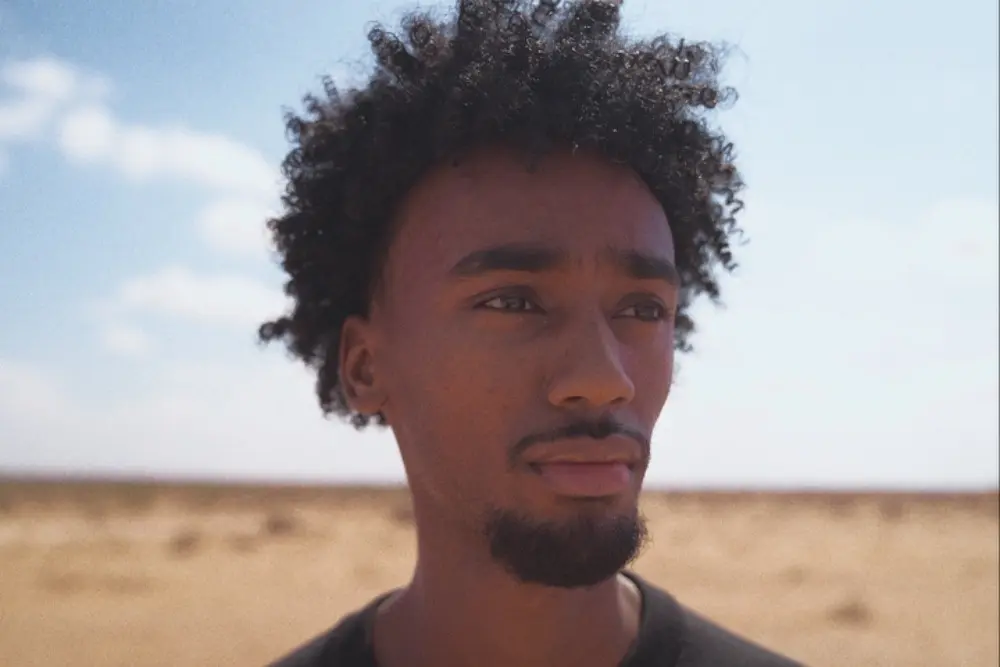
Executive Overview
The modern digital landscape is a double-edged sword. While it offers unprecedented democratisation of media, allowing anyone with a smartphone and an internet connection to build global audiences, it also serves as a relentless megaphone for xenophobia, harassment, and casual racism. For prominent Finnish-Somali YouTube star Abdirahman Keinaan, navigating this landscape meant growing up with a familiar, derogatory refrain ringing in his ears: "Go back to Somalia!"
Rather than retreating into silence or engaging in petty online skirmishes, Keinaan decided to take his detractors quite literally.
The result is Keinaan, Go Back to Somalia, a provocative, deeply introspective, and critically acclaimed docuseries that recently celebrated its world premiere at the prestigious Helsinki International Film Festival – Love & Anarchy. Co-produced by Keinaan’s independent production banner, Knaans, alongside Finnish public broadcaster YLE’s Culture & Factual Content department, the series marks a monumental leap for digital-first creators breaking into traditional prestige media. Directed collaboratively by Timo Korpi and Keinaan himself, and produced by Pertti Neuvonen, the show transcends standard travelogue formats. It serves as a profound meditation on identity, belonging, displacement, and the psychological toll of growing up caught between two vastly different cultures in contemporary Europe.
This comprehensive report examines Keinaan’s journey from a teenage content creator uploading videos in his bedroom to an emerging voice in documentary filmmaking. We explore the genesis of the series, the societal backdrop of casual xenophobia in Finland, the challenges of translating internet celebrity into cinematic storytelling, and the universal resonance of a young man asking a deeply unsettling question: When people tell you to go back to your country, which country are they actually talking about?
Detailed Chronology: From Bedroom Vlogs to the Silver Screen
The Formative Years: Discovering the Power of the Lens
Abdirahman Keinaan’s journey into media did not begin in a prestigious film academy or behind the mahogany desks of television executives. It began eight years ago, when Keinaan was a mere 16 years old. Alongside his best friend, he uploaded his very first videos to YouTube—an impulsive venture born out of adolescent creativity and boredom.
For the first six years of his digital career, Keinaan focused primarily on standard YouTube fare, building an organic following through trial and error, intuition, and an innate understanding of digital algorithms. However, as he matured, so did his artistic ambitions. Two years prior to the premiere of his docuseries, Keinaan pivoted toward documentary filmmaking. He began traveling the globe, lending his camera and platform to marginalized voices, capturing the untold stories of everyday people. What started as a casual hobby blossomed into an all-consuming passion for visual anthropology and narrative storytelling.
The Turning Point: The Birth of Keinaan, Go Back to Somalia
Despite his growing expertise behind the camera, Keinaan had a strict personal boundary: he never made himself the subject of his art. Whether on his YouTube channel or in his independent documentaries, the focus remained squarely on others. He was never the type of social media influencer prone to public vulnerability or confessional online vlogs.
That all changed during creative consultations with executives at YLE Culture & Factual Content. The broadcaster was eager to collaborate with Keinaan on a project that would test his boundaries and stretch his narrative capabilities. They wanted something deeply personal.
The premise was audacious. For his entire life in Finland—the country of his birth, where he was raised and educated—Keinaan had been subjected to xenophobic microaggressions and outright hostility, encapsulated by the phrase, "Go back to Somalia!" Rather than letting the phrase sting, Keinaan reframed it as an investigative blueprint. Accompanied by his trusted cameraman, Hamsa Hussein, Keinaan packed his bags and boarded a flight to a land he had never truly known, embarking on a physical and emotional pilgrimage to confront his ancestral roots.
The Premiere at Helsinki International Film Festival
The culmination of this intense creative journey arrived at the Helsinki International Film Festival – Love & Anarchy. Sitting alongside veteran filmmakers and industry heavyweights, Keinaan found his work evaluated not as a "YouTuber’s vanity project," but as a legitimate piece of documentary art.
The premiere generated significant buzz among critics and festival-goers alike. The title alone—deliberately provocative—sparked immediate conversations across Finnish media outlets, social media platforms, and cultural circles. For Keinaan, stepping onto the red carpet at a major international film festival was surreal, validating a grassroots, self-taught approach to media production that bypassed traditional institutional gatekeeping.
Supporting Context & Metrics: The Reality of Digital Xenophobia and Intercultural Identity
The Normalization of Online Harassment in the Nordic Region
To fully understand the gravity of Keinaan, Go Back to Somalia, one must examine the socio-political climate in which it was conceived. Finland, frequently lauded for its high standards of living, education, and social equality, has concurrently witnessed a rise in polarized political rhetoric regarding immigration and multiculturalism.
For second-generation immigrants like Keinaan, this polarization manifests in daily life. As Keinaan notes in interviews, the hostility he faces is no longer confined to the physical confrontations of his childhood schoolyards; it has migrated seamlessly into the digital sphere, proliferating in the comment sections of social media platforms.
[Childhood: Face-to-Face Xenophobia] ──> [Adolescence: Digital/Online Harassment] ──> [Adulthood: Artistic Reclamation]What is perhaps most alarming—and what Keinaan highlights with a sense of quiet resignation—is how normalized this behavior has become. Growing up hearing variations of "Go back to Somalia!" conditioned him to treat racism as background noise. The psychological toll of desensitization is a heavy burden carried by countless youths across Europe who find themselves perpetually othered in the only homes they have ever known.
The Mechanics of Self-Taught Media Production
Keinaan represents a new vanguard of media creators who refuse to be confined by old industry silos. Traditional film industries have long maintained rigid hierarchies regarding who is permitted to tell stories and how. Film schools, institutional funding bodies, and legacy networks have historically gatekept the medium.
Keinaan’s trajectory dismantles this paradigm:
- Peer-to-Peer Education: "Nobody teaches us anything—we learn everything from YouTube," Keinaan reflects on his upbringing in the digital creator economy. Creators experiment, fail, analyze data, and iterate in real-time.
- The Fusion of Creator Economy and Prestige TV: By partnering YLE with an independent digital creator, the production bridges the gap between rapid-fire digital engagement and the meticulous pacing of high-end documentary filmmaking.
- Agnostic Storytelling: Keinaan argues that the medium should not dictate the value of a story. Whether distributed via a smartphone app or projected in a dark auditorium at a film festival, authentic and impactful narratives will naturally transcend their distribution channels.
Official Statements & Direct Perspectives
The narrative of Keinaan, Go Back to Somalia is best understood through the words of its creator, who balances humor, trauma, and profound self-reflection when discussing the project.
On the Provocative Title
“[This title] provokes people. It definitely makes them react. Listen — I’ve been experiencing this since I was a child. It used to be face-to-face. Now, it’s online comments. In this country, it’s pretty normal, and I’m not the only one. I’ve gotten used to it, which is kind of sad.”
Keinaan acknowledges the shock value of the series’ name, noting that it acts as a mirror held up to society, forcing viewers to confront casual racism head-on rather than sweeping it under the rug of polite discourse.
On Vulnerability and Overcoming Fear
For a creator accustomed to keeping the spotlight on interview subjects, turning the camera inward proved to be an emotionally destabilizing experience.
“It started to hit me when we came back from Somalia. I went: ‘I’m talking about things I’ve never talked about before!’ Sometimes it feels almost too personal. I’m still processing things.”
His initial apprehension about Somalia itself—fueled by lifelong consumption of negative media tropes regarding violence and instability—gradually dissolved through direct human contact.
“I used to be so scared of Somalia. I kept hearing terrible things about it, like that people were getting killed and that it was dangerous. Then, after a while, something changed in me. I started getting curious. This series will show people a new side of Somalia. I’m really happy about that.”
On Emerging as a Role Model
As his view counts translated into real-world influence, Keinaan had to grapple with the unintended responsibilities of stardom.
“There was a moment when I realized: ‘People are looking up to me now.’ When you do stuff for fun, you only see numbers and views. You don’t see the people. But when they come up to you and say you’re their idol, it starts to click… It used to make me nervous, but these days I just want to talk about things that interest me. I don’t put additional pressure on myself just because others are watching me.”
On the Universal Dilemma of the Intercultural Generation
Keinaan firmly believes that his personal journey touches upon a global socio-cultural phenomenon affecting millions of diaspora youth worldwide.
“I knew right away that millions of people could relate to that. There’s potential for this show to be sold to other countries, which is a good thing because we don’t talk enough about what it means to live in between two cultures. What is it like? Where do you belong? What is your home? Some people tell you: ‘Go back to your country.’ But which country?!”
Future Outlook & Industry Implications
As Keinaan, Go Back to Somalia finishes its initial festival run and prepares for broader distribution, its implications for the media landscape extend far beyond a single streaming window or broadcast schedule.
1. International Distribution Potential
The universal themes of identity crisis, diaspora life, and second-generation integration position the docuseries as prime material for international syndication. European nations grappling with multiculturalism—such as Sweden, France, Germany, and the United Kingdom—house millions of citizens who navigate the exact geographical and psychological limbo that Keinaan explores. Broadcasters across these territories are increasingly hunting for authentic, non-didactic narratives that address contemporary social cohesion.
2. The Evolution of the Creator Economy
Keinaan’s successful transition into prestige documentary filmmaking serves as a roadmap for digital creators worldwide. As audiences experience fatigue with superficial vlogs and hyper-commercialized influencer content, creators who pivot toward investigative journalism, deep-dive documentaries, and socially conscious storytelling will likely find eager institutional partners in public service media seeking to capture younger demographics.
3. Personal Closure and Unscripted Futures
For Abdirahman Keinaan personally, the journey is far from over. Having processed complex layers of identity on film, his relationship with his heritage has shifted from abstract anxiety to grounded curiosity. His immediate plans involve returning to Somalia—this time entirely unburdened by production schedules, lighting rigs, or documentary crews.
Without the camera lens mediating his interactions, he intends to simply sit, listen, and connect with the people of his ancestral homeland. In doing so, Keinaan is not fulfilling the hateful demands of internet trolls who sought to banish him; rather, he is claiming his heritage on his own terms, proving that home is not merely a geographic coordinate assigned by bigots, but a complex, evolving tapestry of human connection, self-discovery, and narrative courage.