










By the Practical E-Commerce Editorial Desk
Executive Overview
The global e-commerce ecosystem is undergoing a profound structural evolution, driven by the convergence of generative artificial intelligence, hyper-efficient cross-border logistics networks, and increasingly sophisticated agentic software frameworks. Over the past week, enterprise technology providers, open-source platform maintainers, venture-backed startups, and industry giants have rolled out a sweeping wave of product updates, funding rounds, and strategic integrations.
This installment of our weekly merchant dispatch covers critical developments across live-shopping infrastructure, composable commerce architectures, cross-border parcel fulfillment, and autonomous marketing engines. Notably, mega-funding rounds—such as Whatnot’s $545 million Series G and RepSpark’s $22 million growth equity investment—demonstrate continued investor confidence in specialized retail technology. Meanwhile, platform upgrades from WooCommerce and Adobe Commerce reflect a deeper push toward optimizing back-end database performance and preparing merchant catalogs for machine-readable discovery by large language models (LLMs).
As merchants navigate shifting privacy landscapes, rising consumer expectations for instantaneous delivery, and the rise of conversational commerce channels, this week’s announcements highlight the tools reshaping digital storefronts. Below is a comprehensive, deep-dive chronology and analysis of the most significant product releases, platform updates, and financial investments impacting online merchants worldwide.
Detailed Chronology of New Merchant Tools and Platform Updates
1. Platform Infrastructure & Core Architecture
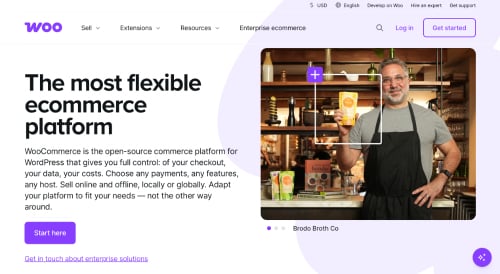
WooCommerce Releases Version 11.0
WooCommerce has officially launched version 11.0 of its ubiquitous open-source e-commerce platform, introducing critical optimizations designed to bolster store performance and conversion recovery. A primary focus of the 11.0 release is order-screen optimization; database queries for management screens have been streamlined to drastically reduce server timeouts and eliminate empty search counts for high-volume merchants.
Additionally, the update debuts built-in Checkout Recovery features. This system allows store owners to systematically test and refine abandoned-cart messaging variants to gauge real-time shopper responses, optimizing recovery workflows without requiring disparate third-party plugins.
Adobe Commerce Introduces Catalog Agent for AI Product Discovery
Adobe Commerce—the enterprise e-commerce platform built upon the Magento framework—has announced the rollout of Catalog Agent. Designed to address the rapidly growing importance of artificial intelligence search engines and zero-click discovery surfaces, Catalog Agent automatically enriches product detail pages with advanced structured data markup.

The tool taps into existing Adobe Commerce services, including deep product attributes, real-time inventory levels, dynamic pricing structures, and cross-sell relationships. It then packages this data into a machine-readable layer specifically optimized for AI crawlers and LLM-powered discovery systems, ensuring enterprise brands remain visible as consumer search habits migrate away from traditional keyword engines toward conversational AI assistants.
Kibo Commerce Unifies Agentic Platform and Order Management
Kibo Commerce, a recognized leader in composable commerce and distributed order management systems, has unveiled the next iteration of its agentic AI architecture. By unifying order management and agentic capabilities into a single, model-agnostic AI framework, Kibo allows enterprise brands to plug in any large language model of their choice.
The framework is systematically structured around five core operational functions: configure, explain, analyze, engage, and optimize. This modular approach provides brands with automated oversight across complex order routing, customer service queries, inventory forecasting, and real-time storefront personalization.
2. Supply Chain, Logistics, & Global Fulfillment
Cainiao Launches 3-Day Cross-Border E-Commerce Delivery
Cainiao Group, the global logistics and supply chain arm of Alibaba, has launched an aggressive new service guaranteeing three-day door-to-door parcel delivery across 15 major international trade lanes.
The service leverages Cainiao’s comprehensive global logistics infrastructure—integrating proprietary air cargo networks, localized ground transportation fleets, automated customs clearance procedures, and advanced fulfillment hubs. For cross-border merchants selling internationally, the service removes one of the most stubborn friction points in global e-commerce: unpredictable transit times.
ShipBob Introduces Anthropic-Verified AI Suite and MCP Integration
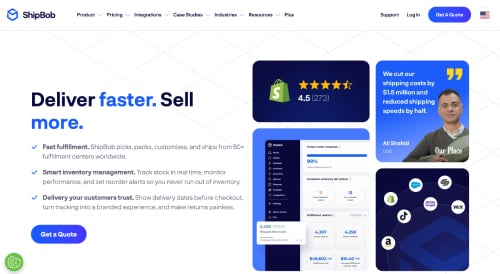
Fulfillment giant ShipBob has rolled out a comprehensive AI suite spanning its entire technology ecosystem, touching everything from merchant-facing software dashboards to autonomous robots on warehouse floors.
Anchored by Model Context Protocol (MCP), ShipBob’s new AI suite securely connects cutting-edge language models directly to live operational data. Merchants can interact with their fulfillment metrics via a certified connector in Claude or through "Bobby," ShipBob’s dedicated in-dashboard conversational agent. This integration allows supply chain managers to query inventory levels, forecast shipping bottlenecks, and manage warehouse instructions using natural language commands.
3. AI Automation, Content Generation, & Marketing Suites
AI Bulk Listing Generator Launches for Multi-Platform Merchants
To combat the labor-intensive bottleneck of product catalog creation, the AI Bulk Listing Generator has officially launched. The platform allows merchants to import structured product spreadsheets and instantly generate thousands of optimized, SEO-friendly product descriptions, bullet points, and metadata tags within minutes.
The software maintains consistent brand voice and messaging across large inventories and natively supports major e-commerce ecosystems, including Shopify, WooCommerce, Etsy, Amazon, eBay, BigCommerce, and Wix.
Adobe Expands Workflow Integration via ChatGPT Plugin
Adobe has announced a powerful new creativity and productivity plugin for ChatGPT, drawing on more than 70 core tools across its legendary software suite. The plugin bridges the gap between conversational ideation and professional asset creation, allowing users to execute tasks such as professional photo editing, marketing video production, campaign graphic design, and PDF generation directly within a chat interface.
For e-commerce marketers and solopreneurs, this integration simplifies the creation of visual assets for social media and advertising campaigns.
Wunderkind Partners with Cordial for Autonomous Marketing
Wunderkind, an industry leader in converting anonymous web traffic into owned revenue, has announced a strategic partnership with cross-channel customer engagement platform Cordial.
By fusing Wunderkind’s proprietary identity resolution graph and AI-driven behavioral decisioning for unknown site visitors with Cordial’s cross-channel orchestration and predictive messaging models, enterprise brands can dramatically expand their reachable audience. The partnership enables automated, real-time trigger campaigns across email, SMS, and direct channels without requiring manual audience segmentation.
Wayy.ai Raises $2 Million and Launches AI Co-Founder for Small Businesses
Wayy.ai has secured a $2 million pre-seed funding round led by Zero to One Ventures alongside the launch of its flagship AI-powered selling tool. Positioned as a virtual co-founder and sales representative for solopreneurs and small business owners, the software automates outbound sales workflows, identifies high-value prospects, and manages outreach campaigns to potential partners and investors. The fresh capital will be deployed to accelerate product engineering and scale go-to-market sales teams.
Rokt Introduces Brain V4 for Real-Time Checkout Decisioning
Rokt, a leading post-purchase e-commerce technology platform, has launched Brain V4, its next-generation artificial intelligence decisioning engine. Operating at the exact moment of checkout, Rokt Brain ingests real-time consumer behavior, contextual signals, transaction history, and advertiser data.
Through advanced machine learning, real-time auctions, and automated guardrails, the engine instantly determines the optimal content, cross-sell product recommendation, loyalty offer, or post-purchase experience to display to each unique buyer, maximizing transactional yield for merchants.
4. Social Commerce, Engagement, & Specialty B2B Retail
Whatnot Secures $545 Million Series G Funding Round
Live-shopping and social marketplace giant Whatnot has closed a monumental $545 million Series G funding round, co-led by prominent institutional investors ICONIQ, Lightspeed, and Avra.
The massive capital injection will fund the development of advanced seller tools, deeper integrations of generative AI moderation and recommendation systems, and broader international market expansion. The funding follows a milestone operational period for Whatnot, which announced that its gross merchandise volume (GMV) for August 2026 alone surpassed its entire annual GMV for 2025.
RepSpark Secures $22 Million Investment to Scale B2B Platform
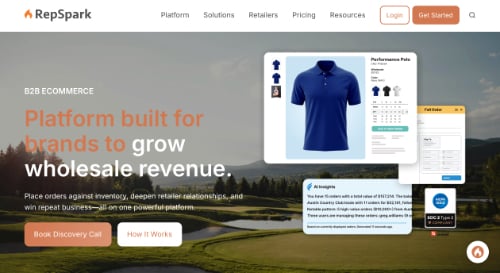
RepSpark, a premier B2B e-commerce platform powering wholesale operations for specialty retail brands, has secured $22 million in strategic growth equity from Headlight Partners.
Specializing in sectors such as golf, swim, fitness, tactical gear, and footwear, RepSpark provides digital showrooms, line sheets, and order-writing tools for brands and specialty retailers. The company plans to use the investment to expand its enterprise product suite, build out its integration ecosystem, and enhance its AI-powered wholesale analytics tools.
Minty Launches Shopify App to Capture High-Intent Browsers
Minty, an AI-powered shopping companion that delivers cashback and rewards to consumers, has launched an official application on the Shopify App Store. The integration allows Shopify merchants to effortlessly connect their stores to Minty’s proprietary shopper network.
When high-intent shoppers browse a store and exhibit exit-intent without completing a purchase, Minty surfaces targeted cashback incentives across AI chat interfaces, mobile apps, and browser extensions (Chrome and Safari), effectively bridging the gap between passive browsing and final conversion.
Knowband Expands PrestaShop Ecosystem with Customer Engagement Tools
Plugin developer Knowband has released three powerful new modules for the 160,000+ merchants operating on the PrestaShop platform.
- Form Studio: Empowers store owners to build customized contact forms, customer feedback portals, and post-purchase surveys with zero coding required.
- WhatsApp Business CRM Module: Connects storefronts directly to the WhatsApp Business API, automating order confirmations, real-time shipping alerts, and embedding a live chat widget directly on storefront pages.
- Blog Module: Delivers an integrated, search-engine-optimized publishing platform designed to drive organic content marketing traffic.
Eyeota and Zeotap Data Integrate Solutions into Amazon DSP
Audience data provider Eyeota and identity infrastructure firm Zeotap Data have partnered to integrate Eyeota’s global audience data ecosystem directly into Amazon DSP (Demand-Side Platform).
Through this integration, advertisers can deploy privacy-compliant, first- and third-party data segments across Amazon’s premium ad inventory—including Prime Video and Twitch—utilizing precise behavioral, intent, and interest signals for advanced targeting.
Markable Launches Advanced Social Commerce Video and 3D Tools
Markable has introduced two innovative AI-driven tools designed to help creators turn social media engagement into direct e-commerce income.
The platform’s new AI Video Editor allows creators to ingest raw footage and automatically transform it into shoppable videos, complete with automated lighting enhancements, background optimizations, script generation, and synthesized voiceovers. Additionally, Markable’s 3D Visuals Tool leverages generative AI to convert standard product images into dynamic, interactive 3D collages and photorealistic marketing assets.
Supporting Context & Market Metrics
The economic and technological shifts underlying this week’s announcements point toward several macro-trends defining the modern digital commerce landscape:

- The Agentic AI Transition: As demonstrated by Kibo Commerce, ShipBob, and Adobe, software is shifting from passive chat interfaces to active, autonomous execution layers (MCP). Enterprise platforms are no longer just repositories for product data; they are agentic ecosystems capable of executing complex multi-step supply chain, marketing, and customer service tasks independently.
- Zero-Click and LLM Discovery: With Adobe Commerce introducing Catalog Agent and Cainiao accelerating logistics to 3-day windows, brands are preparing for a future where search traffic originates not from Google keywords, but from AI assistants that query structured merchant data directly.
- Capital Concentration in Live and B2B Commerce: Whatnot’s $545 million raise and RepSpark’s $22 million investment emphasize that venture capital and private equity continue to back category-defining vertical platforms that solve specific operational complexities—whether that is live-stream auction mechanics for collectibles or digital wholesale showrooms for specialty apparel.
Official Statements and Industry Insights
Commenting on the structural evolution of digital supply chains and AI integration, industry analysts point to the democratization of enterprise-grade tooling for small and medium-sized businesses (SMBs).
- "We are witnessing the definitive death of manual catalog management," noted a leading enterprise software strategist following the launch of the AI Bulk Listing Generator. "When platforms like WooCommerce optimize their core database queries while startups like Wayy.ai and ShipBob introduce agentic AI workflows, the operational overhead required to run a multi-channel store drops exponentially."
- On the logistics front, supply chain experts emphasize that Cainiao’s 3-day cross-border service sets a punishing new benchmark for international fulfillment. "Speed is no longer a domestic luxury," noted a cross-border logistics consultant. "Consumers buying from cross-border brands now expect domestic-grade delivery speeds, forcing global supply chains to compress customs and airfreight timelines."
Future Outlook
Looking ahead through the remainder of 2026 and into 2027, e-commerce merchants must prepare for several critical operational inflections:
- Mandatory Structured Data Readiness: Brands failing to adopt advanced structured data markup (such as Adobe’s Catalog Agent framework) risk invisibility as AI crawlers and LLM-driven shopping assistants become primary consumer discovery channels.
- Checkout Customization Wars: With Rokt’s Brain V4 and WooCommerce’s Checkout Recovery tools setting new precedents, the checkout page is transforming from a static payment form into a dynamic, real-time personalization engine driven by predictive machine learning.
- The Rise of Autonomous Operations: The integration of Model Context Protocol (MCP) across fulfillment providers like ShipBob signals that warehouse management and inventory forecasting will increasingly be handled by AI agents executing workflows across disparate software stacks.
Merchants are encouraged to audit their current technology stacks to ensure compatibility with agentic AI architectures, machine-readable catalog standards, and accelerated cross-border fulfillment partners.
Got an e-commerce product release, platform update, or funding announcement? Submit your news directly to our editorial team at [email protected].