







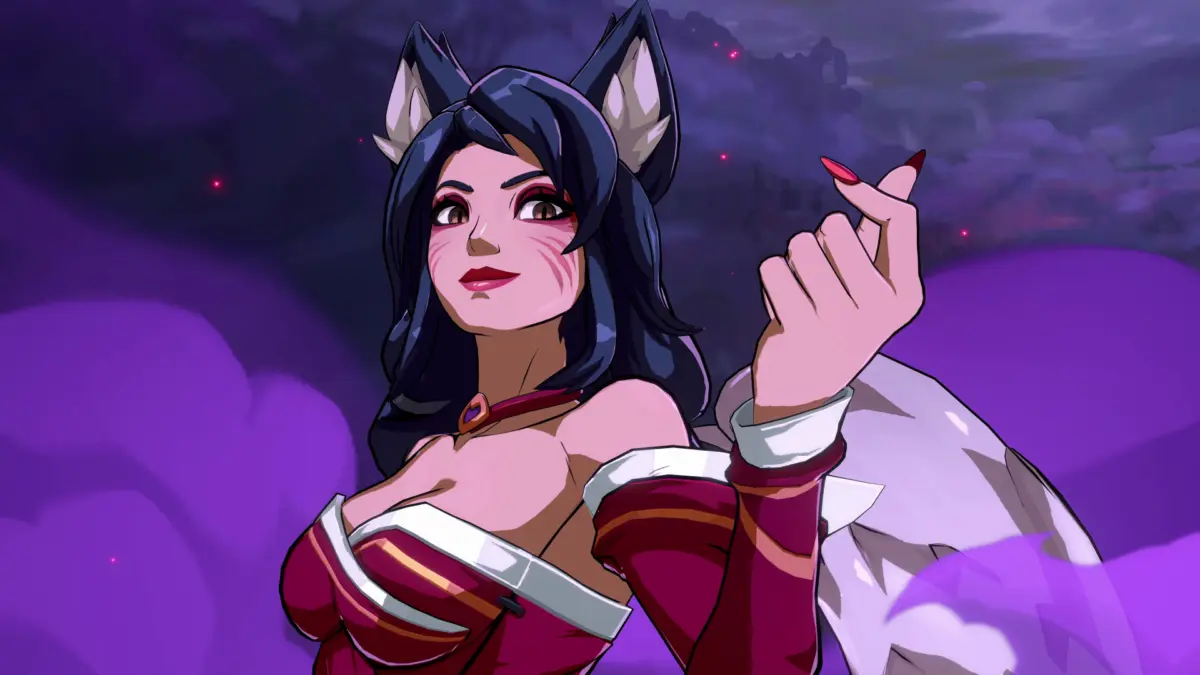
Executive Overview
In the fast-paced, high-stakes ecosystem of modern live-service gaming, few announcements carry the finality—or the shockwave—of a studio pulling the plug on a major, long-anticipated title shortly after its official launch. Riot Games, a titan in the multiplayer gaming sphere known for its ironclad stewardship of League of Legends, Valorant, and Teamfight Tactics, has officially announced that it is winding down active development for its tag-team fighting game, 2XKO.
Originally envisioned as a grand entry into the fiercely competitive fighting game community (FGC) and affectionately known for years by its working title Project L, 2XKO will officially cease active development in December 2026. Up until that milestone, Riot Games plans to maintain its production pipeline, introducing scheduled content updates, critical feature improvements, and two final playable champions, culminating in a comprehensive bug-fix patch designed to leave the game in a polished, stable state.
For a project that spent nearly a decade gestating in Riot’s research and development (R&D) pipeline—capturing the imaginations of fighting game enthusiasts and League of Legends lore buffs alike—the decision marks a sobering reality check. Despite enjoying a passionate and deeply engaged core community of diehard tag-fighter purists, 2XKO ultimately ran aground on the unforgiving shores of player retention and financial sustainability. In a free-to-play economy that demands constant, massive volume to offset astronomical operational costs, the game simply could not convert its initial curiosity-driven player influx into a sustainable, long-term audience.
This comprehensive post-mortem examines the trajectory of 2XKO, detailing the operational challenges that led to its sunsetting, the economic realities of the free-to-play fighting game market, the human cost of the pivot through prior structural layoffs, and what this pivotal moment means for Riot Games as it retreats to the R&D lab to plot its next genre-defining move.
Detailed Chronology: From Project L to the December 2026 Sunset
To understand the suddenness of 2XKO’s winding down, one must trace the winding, highly visible journey of the project from its earliest conceptual days under Radiant Entertainment to its official commercial rollout.
The Genesis: Project L and the Radiant Acquisition
The roots of 2XKO stretch back to 2016, when Riot Games acquired Radiant Entertainment, a studio founded by seasoned fighting game developers Tom and Tony Cannon. The Cannons, legendary figures in the FGC for creating GGPO (GoodGame Peace Officer)—the netcode standard that revolutionized online fighting games—were tasked with building a competitive fighting game set within the rich, expansive universe of League of Legends (Runeterra).
For years, the project existed under the shroud of the code name Project L. Snippets of gameplay, early mechanical breakdowns, and character reveals (such as Darius and Ekko) trickled out via developer diaries, generating intense anticipation. The fighting game community, often starved of high-budget, well-funded entries with top-tier network infrastructure, latched onto Project L as a potential watershed moment for the genre.
The Pivot to Free-to-Play and Public Playtests
As development matured, Riot Games made the strategic decision to adopt a free-to-play (F2P) business model. The goal was twofold: dismantle the notoriously high barrier to entry traditionally associated with fighting games and leverage Riot’s proven operational playbook of continuous live-service engagement.
Playtests scaled up significantly through 2023 and 2024, culminating in the official renaming of the project to 2XKO. The game finally saw its long-awaited official commercial launch in January 2025. Early reception across various FGC sub-communities was encouraging; players praised the fluid tag-team mechanics, the stylish aesthetic, and the promise of dedicated developer support.
The Turning Point: Early 2025 and Structural Reductions
Despite the celebratory atmosphere surrounding the launch, cracks began to show almost immediately beneath the hood. The financial and operational strain of running a high-fidelity tag-team fighter became glaringly apparent within weeks of release.
In February 2025, barely a month after the game’s official debut, Riot Games executed a painful round of layoffs, letting go of roughly 80 employees from the 2XKO development team. This internal contraction was compounded by external pressures; co-developers such as Demiurge Studios (noted for their work on Marvel SNAP and 2XKO) also faced significant staff reductions, signaling a broader industry-wide contraction hitting mid-to-high-tier support studios.
The Final Roadmap: Now to December 2026
Recognizing that the trajectory was not aligning with internal projections, Riot leadership closely monitored the data over the subsequent months. Last week, the studio made the difficult announcement that active development would officially conclude in December 2026.
The roadmap leading up to the final shutdown is structured to honor the existing player base:
- Content Rollout: The development team will continue releasing planned content updates, quality-of-life feature enhancements, and two brand-new champions over the coming months.
- The Final Patch: A definitive bug-fix patch will be deployed in December 2026 to stabilize the build.
- Server Longevity: Online matchmaking servers will remain operational for the foreseeable future, ensuring that the community can continue to play unhindered. Offline functionality remains entirely unaffected.
- Complete Monetization Reversal: In an unprecedented move to compensate players who invested in the ecosystem, Riot is unlocking all champions for free, bundling the vast majority of cosmetic items, and issuing full refunds for all real-money purchases made in 2XKO on or before August 20.
Supporting Context & Metrics: The Economics of the Firing Line
Why did a game backed by Riot Games—a company with seemingly bottomless financial resources and marketing muscle—fail to reach sustainability? The answer lies in the unforgiving intersection of genre economics, player psychology, and live-service overhead.
The Free-to-Play Conundrum in Fighting Games
Free-to-play business models rely heavily on volume: massive numbers of casual and core players who funnel into the ecosystem, a percentage of whom convert into paying customers via microtransactions, battle passes, or cosmetic purchases.
While Riot hoped that eliminating the upfront purchase price would make 2XKO radically accessible and discoverable, the free-to-play model simultaneously imposes a punishingly high baseline player requirement. If the daily active user (DAU) count dips below a critical threshold, the matchmaker degrades, queue times spike, and the casual player base evaporates.
According to Riot’s post-mortem analysis, this was precisely the trap 2XKO fell into:
.png?disable=upscale&width=1200&height=630&fit=crop)
"While a lot of you jumped in to try the game and there’s an incredible community that plays every day, we haven’t seen enough players stick with the game to get to a path toward sustainability."
The Chasm Between Diehards and Casuals
The fighting game genre has historically struggled with a massive chasm between elite, hyper-dedicated competitors and casual onlookers. 2XKO managed to bridge this divide superficially during its launch window, drawing in waves of curious players. However, the retention curve proved brutally steep.
As Riot explicitly noted:
"Diehard tag fighter players loved 2XKO, but most other fighting game players struggled to find reasons to stick with the game."
Tag-team fighters—demanding complex team synergy, execution precision, and deep mechanical knowledge—are notoriously punishing for newcomers. Once the initial novelty of playing with Riot’s iconic champions wore off, casual and mid-tier fighting game fans drifted away. The hardcore base remained utterly devoted, but a dedicated niche of purists cannot subsidize the colossal development and operational costs of a modern AAA-style live-service game.
Operational Costs vs. Revenue Generation
The financial reality became untenable. Operating 2XKO—with its high-end netcode, ongoing character balancing, server infrastructure, and content pipelines—cost the studio "substantially more to operate than it brings in."
Faced with this deficit, Riot evaluated several aggressive restructuring scenarios:
- Radically reducing team size to a skeleton crew.
- Slowing down patch schedules and content cadences.
- Pivoting the business model to monetize remaining users more aggressively.
Ultimately, Riot concluded that none of these half-measures would solve the core problem. Rather than keeping a zombie project on life support with diminished quality, the studio opted to cleanly wind down active development while preserving the game’s servers and rewarding its faithful players.
Official Statements: Transparency and Accountability
Riot Games has historically prided itself on community communication, and the announcement regarding 2XKO was handled with a notable degree of raw corporate candor. Rather than masking the closure behind corporate boilerplate, leadership addressed the economic realities head-on.
Doing Right by Players and Staff
In their official communications, Riot emphasized two primary moral imperatives moving forward:
- Honoring the Players: Ensuring that those who invested their time, passion, and money into 2XKO are treated fairly. By unlocking the entire roster, bundling cosmetics, and refunding purchases made on or before August 20, Riot is effectively wiping the financial slate clean for its supporters.
- Honoring the Developers: Acknowledging the immense emotional and physical labor expended by the development team. Bringing a fighting game from concept to launch requires staggering cross-disciplinary effort, and Riot’s leadership was careful to praise the "Rioters who have poured everything into delivering on this dream."
The R&D Philosophy
Riot’s corporate DNA has always been rooted in calculated risk-taking within the R&D lab—incubating projects for years before greenlighting them for global release. While 2XKO represents a high-profile commercial stumble, the company views the venture as a profound learning experience rather than an outright systemic failure.
Future Outlook: Back to the R&D Lab
The wind-down of 2XKO marks the end of an era for Riot Games’ expansion outside of its core pillars (League of Legends and Valorant). However, it does not signal a retreat into conservatism.
Lessons Learned from the FGC Venture
Riot entered the fighting game space with noble intentions: to modernize the genre, introduce robust netcode standards, and expand accessibility. While the market rejected the long-term viability of 2XKO’s economic model, the technical foundations, networking insights, and design philosophies forged during the game’s development will undoubtedly ripple across the industry. The team proved that a major studio could build a visually stunning, deeply mechanically satisfying tag-fighter with Netcode that rivals the best in the business.
What Lies Ahead for Riot Games?
As the countdown to December 2026 ticks away, Riot’s immediate operational focus remains locked on landing 2XKO safely—ensuring the community can enjoy the final content drops, stability patches, and unrestricted roster access.
Once that chapter closes, the institutional knowledge gained from 2XKO will be funneled back into Riot’s secretive R&D division. As the studio’s exit statement aptly summarizes:
"Looking to the future, you can count on Riot to keep exploring new genres and ways to bring players together. For now, we’re focused on leaving 2XKO in a great spot. Then, we’ll head back into the R&D lab, where we’ll take time to learn and work on how we come back stronger for the next swing at the next genre."
For the fighting game community, the loss of 2XKO’s active development is a bitter pill to swallow. Yet, for the broader gaming industry, it stands as a stark reminder of the brutal economic gravity governing live-service games—where artistic triumph and critical praise must ultimately bow to the immutable laws of player retention and sustainable scale.