









Executive Overview
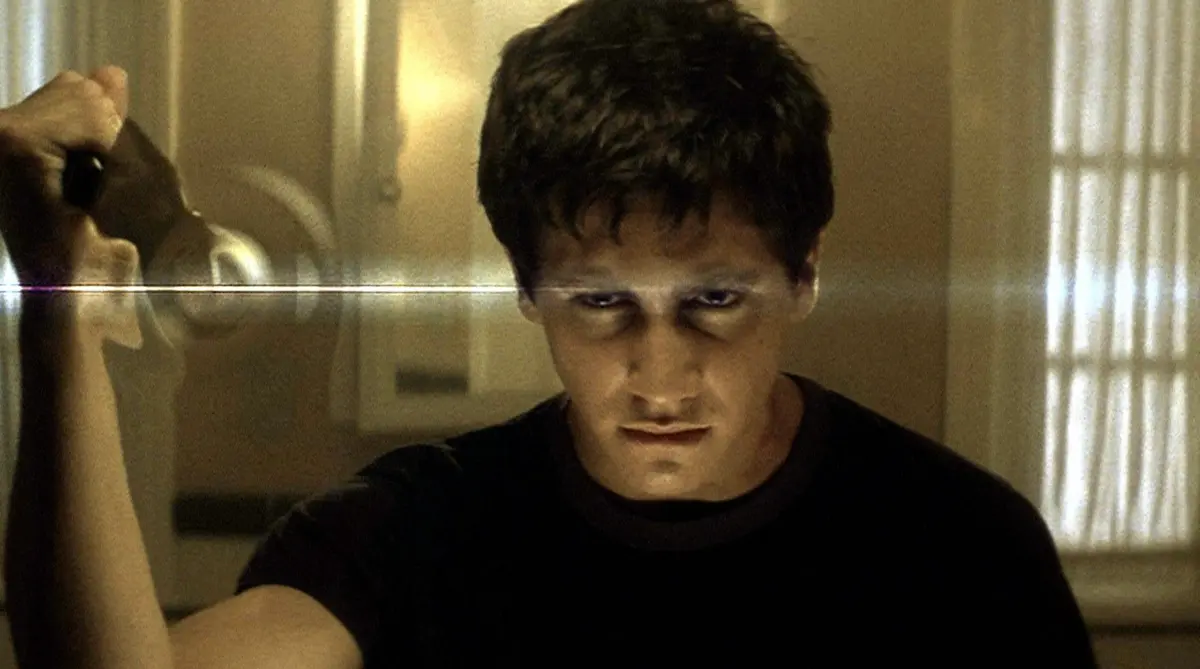
Twenty-five years after a falling jet engine tore through the fabric of suburban Southern California and cemented itself in cinematic lore, the haunting, existential world of Donnie Darko is finally expanding. Filmmaker Richard Kelly, working in tandem with the newly established Range Literary Publishing, is set to release an 800-page narrative continuation titled The Philosophy of Time Travel. Arriving in the fourth quarter of this year—precisely coinciding with the silver anniversary of the original 2001 cult classic on October 26—the sprawling novel picks up in 1988 in the immediate, grief-stricken aftermath of the titular protagonist’s death.
What began as a decades-long struggle with studio rights, corporate fragmentation, and the notoriously complex logistics of mounting a high-concept sci-fi franchise has transformed into an ambitious multi-media strategy. Kelly’s grand vision does not stop at the printed page. The Philosophy of Time Travel serves as the foundational first brick in a meticulously mapped cinematic blueprint. The author-director intends for this massive novel to launch an animated or motion-capture film adaptation, which will eventually pave the way for a live-action feature jumping nearly three decades into the future.
For a generation of cinephiles who spent the better part of two decades dissecting the mechanics of tangent universes, Frank the Rabbit, and prophetic rabbit-hole logic, this announcement marks a monumental turning point. Rather than guarding the enigmatic parameters of his breakout film, Kelly is flinging open the doors to a deeply expanded mythology, one designed to vindicate the original ensemble cast, reframe perceived villains, and answer long-standing questions about the collective dream that haunted 28 days of suburban life.
Detailed Chronology: The Road to the Sequel and the "Found Documents" of 1988
To understand the magnitude of The Philosophy of Time Travel, one must retrace a trajectory that spans over twenty years of development hell. Following the modest theatrical release of Donnie Darko by Newmarket Films in late 2001—after its buzzy premiere at the Sundance Film Festival—the movie transitioned from a box-office sleeper into a foundational text of modern midnight-movie culture. Produced by Flower Films and featuring an eclectic ensemble that included Jake Gyllenhaal, Jena Malone, Drew Barrymore, Maggie Gyllenhaal, Mary McDonnell, Holmes Osborne, Katharine Ross, Patrick Swayze, Noah Wyle, and Seth Rogen, the film left audiences hungry for answers regarding its dense temporal mechanics.
Yet, despite Kelly’s persistent desire to return to the sandbox, a proper follow-up remained elusive. Over the past twenty-plus years, the filmmaker navigated a labyrinth of shifting parent companies, evolving corporate ownership, and intricate legal hurdles.
"There have been all sorts of permutations and there have been multiple parent companies and studios that have been involved in the whole process amid rights issues," Kelly reflects. "My caveat with doing a real sequel was that I want to reunite the original cast, and I want to take it onto a gigantic scale and that takes time and it has a price tag and it’s hard to pull this off because it’s multiple movies."
Realizing that the narrative scope had swelled far beyond the boundaries of a standard screenplay, Kelly opted for a strategic pivot. Over the past decade, he quietly dedicated himself to writing an 800-page manuscript that dives straight into the 14 months following Donnie’s death. By isolating this immediate aftermath, Kelly discovered the crucial bridge needed to anchor his broader cinematic ambitions.
Structured using a "found-documents" style, The Philosophy of Time Travel is largely driven by alternating perspectives from Donnie’s grieving parents, Rose (played on screen by Mary McDonnell) and Eddie (Holmes Osborne). The text captures their frantic, paranoid efforts to document the unexplained phenomena surrounding their son’s demise, launching their own independent detective missions to decipher why the tragedy occurred.
Furthermore, the book pulls back the curtain on the surviving members of the Southern California community. Far from moving on easily, these characters find themselves drawn together by the lingering psychological fallout of the 28-day tangent universe. They form an intimate support group that slowly warps into something resembling a cult, as they attempt to reconcile the horrific actions they committed within the dream-state with their waking realities. In Kelly’s universe, even the seemingly villainous figures from the original film are granted profound redemptive arcs, forced to confront the subconscious malice of a shared temporal aberration.
Supporting Context & Metrics: A Publishing Milestone and Transmedia Strategy
The release of The Philosophy of Time Travel is not merely a nostalgic literary exercise; it represents the flagship launch for Range Literary Publishing (RLP), the boutique, author-forward imprint of Range Media Partners. Celebrating its one-year anniversary, RLP has positioned itself as an incubator for distinct narrative voices with high potential for cross-platform adaptation—making Kelly’s multi-layered property an ideal cornerstone for the fledgling publisher.
The logistical framework surrounding the book’s rollout reflects its anticipated cultural impact:

- Release Window: Q4, intentionally aligned with the 25th anniversary of Donnie Darko‘s October 26 release date.
- Page Count: Approximately 800 pages of dense, narrative world-building.
- Availability: Pre-orders are currently live across major platforms including Barnes & Noble and Amazon, with a specific street date forthcoming.
- Format & Style: A found-documents epistolary narrative focusing heavily on parental grief, investigative paranoia, and communal processing of a supernatural event.
Jeff Speich, chief of Range Literary Publishing, emphasized the historical weight of the collaboration:
"Richard is an extraordinary storyteller who created a universe far ahead of its time, and the film has rightfully achieved iconic cult status. Audiences have been eagerly awaiting a follow-up story to his original work for over twenty-five years. It is a true privilege for this title to be the first book released by Range Literary Publishing."
For RLP, The Philosophy of Time Travel kicks off a diverse upcoming catalogue that highlights the imprint’s dedication to multimedia synergy. The publisher’s roster features high-profile literary projects, graphic novels, and children’s literature, including Kenan and Kel Meet Zombie (the first in a new graphic novel series), Burnout (a debut novel by Range founding partner Michael Cooper, already in early film development at Range Studios), works by Gabe Basso, Bhavna Shyamalan, and Akilah Releford Gould, alongside a special limited-edition release of the graphic novel HYDE by Jesse Negron, Johnny Depp, and Ridley Scott.
Official Statements and Creative Vision
Richard Kelly has been remarkably transparent about the challenges and motivations driving this monumental project. Recognizing that fans and actors alike hold a sacred reverence for the 2001 original, the filmmaker refused to rush a sequel into production without proper narrative justification.
When discussing the expansive architecture of the sequel strategy, Kelly outlines a deliberate three-phase transition:
- The Literary Foundation: The release of the 800-page novel to establish the immediate 14-month post-tragedy fallout and map character psychological recoveries.
- The Animated/Motion-Capture Adaptation: Translating the dense, surreal world-building of the novel into an animated format capable of handling the story’s heightened visual demands.
- The Live-Action Time Jump: A massive 28-year narrative leap forward into 2015/2016 and beyond, utilizing modern technology and offering the original cast members the opportunity to reprise their roles "live and in the flesh."
Kelly notes that while he has kept informal lines of communication open with the original ensemble over the years, he has deliberately avoided putting pressure on them to commit before reading the new material.
"I love my cast. I would love to reunite with all these wonderful actors, and now it’s just sort of up for the marketplace to decide," Kelly shares. "That marketplace includes a global fan base and our wonderful cast of actors, a whole bunch of new characters who are new to the story, who can be played by new actors, and we have all this wonderful technology that didn’t exist five years ago."
By allowing the book to serve as his primary pitch document, Kelly ensures that every actor will have a deeply realized, mathematically detailed roadmap of what happened to their character in the wake of Donnie Darko’s sacrifice.
Future Outlook: What Lies Ahead for the Cult Franchise
As the literary world prepares for the arrival of The Philosophy of Time Travel, the implications for the broader entertainment landscape are profound. Kelly has effectively bypassed traditional studio gatekeeping by establishing a literary anchor point, allowing the marketplace to dictate the commercial viability of his broader cinematic ambitions.
Should the novel perform up to expectations—fueled by the ravenous global appetite of a quarter-century-old fandom—the path toward an animated adaptation and subsequent live-action time-jump feature will gain significant momentum. The convergence of Range Literary Publishing’s dedicated adaptation pipeline with Kelly’s uncompromising artistic vision creates a rare alignment in modern Hollywood: a cult auteur regaining complete creative sovereignty over his masterwork.
For now, the countdown has begun. As October approaches, the tangent universe is preparing to breach the surface once more, inviting old believers and new disciples alike to leaf through the tragic, beautiful, and endlessly mysterious archives of a mad, mad world.