








Executive Overview
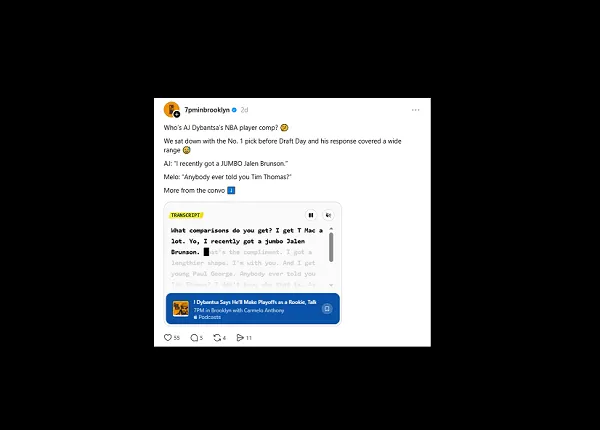
Meta’s text-based conversational platform, Threads, is aggressively positioning itself as a central hub for audio discovery and digital discourse. In an initiative designed to bridge the gap between long-form audio storytelling and fast-paced social media feeds, Threads is currently testing a pioneering display format for podcasts. This new feature embeds playable podcast episodes directly into the in-stream user experience, accompanied by real-time, auto-synced transcripts.
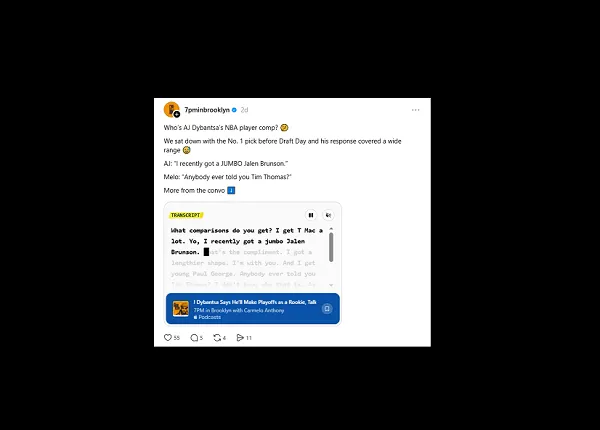
By syncing text with audio playback, the platform enables users to follow along dynamically, even when browsing in silent environments. Early previews spotted on the platform—such as a test shared by the popular sports and culture show 7PM in Brooklyn—demonstrate seamless integration with Apple Podcasts and other major listening platforms. This feature goes beyond basic media embedding by transforming passive listening into an interactive, read-along social experience.
This strategic move comes at a critical time in the digital media landscape. Recent industry data from Edison Research indicates that 58% of Americans listen to podcasts. More importantly, video podcast consumption has officially surpassed audio-only formats, signaling a profound shift toward visual, text-accompanied audio experiences. By marrying synchronized transcripts with in-stream audio clips, Threads is tapping directly into this behavioral shift.
Led by insights from Threads Chief Connor Hayes, who confirmed that multiple display formats are currently under evaluation, the platform is carving out a niche as the premier social destination for podcasters, creators, and engaged communities. This comprehensive report explores the mechanics of the new feature, its broader implications for the creator economy, the data driving Meta’s strategy, and what the future holds for audio integration on social media.
Detailed Chronology of the Feature Rollout
The integration of audio media onto Threads has been a deliberate, step-by-step evolution rather than an overnight pivot. To understand where the platform is heading with synced transcripts, it is essential to examine the sequence of product updates that laid the groundwork for this latest audio experiment.
The Foundation: Profile Integrations and Previews
Months prior to testing interactive transcripts, Threads laid the infrastructural groundwork for podcast promotion by rolling out dedicated podcast details and integration tools on creator profiles. This initial release allowed podcasters to display their latest episodes directly on their profile pages, creating a persistent touchpoint for followers and casual visitors alike.
While effective for driving profile-to-podcast conversions, this early feature operated much like a traditional link-in-bio tool. It lacked the dynamic, native engagement loop necessary to keep users inside the app while consuming audio content. Creators could showcase their catalogs, but the actual listening experience remained fragmented, requiring users to jump out of Threads and into a separate podcast application.
The Shift to In-Stream Engagement
Recognizing that friction kills conversion and engagement, the product team at Meta began exploring ways to bring the listening experience directly into the main algorithmic and chronological feeds. The goal was simple: reduce the number of taps required to experience audio content while simultaneously giving users a reason to stay on the page and discuss what they were hearing.
This led to the current trial phase, where embedded podcast players are placed directly within a Threads post. As demonstrated by early adopters like 7PM in Brooklyn, the player interfaces smoothly with Apple Podcasts. When a user hits play, an integrated transcript block highlights the spoken words in real time, moving line by line in synchronization with the audio track.
The Multi-Format Testing Phase
Threads Chief Connor Hayes recently acknowledged that the platform is not putting all its eggs in one basket. In addition to the synced transcript test, Threads is evaluating a suite of alternative podcast display formats. These diverse layouts are intended to give creators maximum flexibility in how they present audio snippets, interview highlights, and full-episode teasers.
By experimenting with multiple UI options, Meta aims to discover which format yields the highest retention, the most robust comment sections, and the strongest click-through rates to full-length audio files. This iterative, testing-heavy approach underscores Meta’s commitment to building a sustainable ecosystem for audio creators before rolling out a universal release.
The Mechanics of Synced Transcripts: How It Works for Users and Creators
To truly appreciate the value proposition of Threads’ new podcast display, one must examine how the technology functions from the dual perspectives of the consumer and the content producer.
Overcoming the "Sound-Off" Barrier
The modern social media user consumes content across diverse, often unpredictable environments—commuting on crowded subways, sitting in open-plan offices, or relaxing in quiet living rooms late at night. In all of these scenarios, audio defaults to "off." Historically, this has been a major hurdle for podcast creators trying to promote their shows on visual or text-centric platforms like Instagram, X (formerly Twitter), and early versions of Threads. Traditional audio clips or static cover art accompanied by a wave-form graphic often fail to capture attention in a silent feed.
Synced transcripts completely bypass this barrier. By reading along with the highlighted text while the audio plays silently in the background, users can instantly grasp the context, humor, or gravity of a conversation without waking up their headphones or disturbing those around them. If a particular sentence or quote catches their eye, they can tap to unmute and hear the exact moment delivered with full vocal inflection.
Driving In-Stream Community Discussions
Beyond accessibility, the integration of transcripts transforms how a community reacts to an episode. On platforms like Apple Podcasts or Spotify, reviews and comments are often isolated or non-existent, leaving listening as a largely solitary experience. Threads changes this dynamic by embedding the media directly into a social feed designed for conversation.
When a listener sees a profound, humorous, or controversial quote highlighted in the live transcript, they can immediately reply to that specific post, timestamp, or idea. This fosters rich, segmented discussions among fans who can debate the episode’s talking points right underneath the original post. For podcasters, this represents a goldmine of community engagement and algorithmic visibility, as active comment sections push the content further up the recommendation ladder.
Streamlining the Conversion Funnel
While keeping users on the platform is a primary objective for Meta, the ultimate goal for podcasters is driving downloads, streams, and long-form listenership. The new Threads format balances these competing incentives gracefully.
By offering a clean, intuitive click-through option directly tied to the embedded player, listeners can easily migrate from the short-form snippet on Threads to the full episode on Apple Podcasts, Spotify, or other supported players. The transcript serves as an appetizer—a persuasive teaser that proves the value of the episode before the user commits to a 45-minute or two-hour download.
Supporting Context & Metrics: The State of Audio and Video Podcasts in 2026
To understand why Meta is dedicating engineering resources to podcast integration on Threads, one must look at the macro-level data shaping the modern audio-visual landscape. The consumption habits of digital media consumers have shifted dramatically over the past few years.
Edison Research Data: The 58% Milestone
According to comprehensive industry data from Edison Research, podcast consumption has reached an all-time high, with 58% of all Americans listening to podcasts in 2026. This mainstream saturation means that podcasts are no longer a niche medium for early adopters; they are a dominant form of mass media, rivaling traditional broadcasting and streaming television in total hours consumed.
For a social media platform like Threads, capturing a fraction of this massive audience is essential for long-term user acquisition and daily active user (DAU) retention. By positioning itself as the social companion app for the podcasting world, Threads integrates itself into the daily media habits of more than half the U.S. population.
The Infinite Dial Phenomenon: Video Overtakes Audio-Only
Perhaps an even more revealing data point buried within Edison Research’s latest Infinite Dial report is the fundamental shift in how people consume podcasts. Historically dominated by pure audio feeds, the industry has crossed a significant threshold: video podcast consumption has now officially overtaken audio-only consumption.

Podcast Consumption Breakdown (Edison Research Data):
[██████████████████████████████████] Video Podcasts (Dominant Share)
[████████████████████████████]      Audio-Only Podcasts
This trend explains why static image cards and basic waveform animations are no longer sufficient for podcast marketing. Modern consumers expect visual engagement—whether that is video footage of the hosts in a studio or dynamic, synced text elements moving across a screen. Threads’ new transcript display directly mirrors this consumer preference for visually supported, text-rich audio content. It bridges the gap between text, audio, and visual pacing, making it a natural spiritual successor to the video podcast boom.
Official Statements and Industry Insights
The strategic vision behind these product updates has been articulated by key leadership figures at Meta, alongside reactions from the independent creator community.
Insights from Threads Chief Connor Hayes
Connor Hayes and the Threads product team have been remarkably transparent about their iterative approach to creator monetization and promotional tooling. Addressing the recent tests, Hayes emphasized that the primary objective is to equip podcasters with "more ways to share their episodes and get people talking on Threads."
This philosophy highlights a core pillar of Meta’s current multi-app strategy: building utility for professional creators and publishers. By providing specialized features tailored to the unique workflows of audio producers, Threads differentiates itself from competitors by becoming an indispensable distribution partner rather than just another destination to dump promotional links.
The Creator and Publisher Response
Early tests involving high-profile shows like 7PM in Brooklyn have generated immediate positive feedback from digital media strategists. Independent creators and major network producers alike have noted that embedding full listening experiences with contextual text helps solve the perennial problem of social media discoverability.
When a podcast clip is posted on X or Instagram, viewers often have to navigate away from the app, open a search bar, type in the show name, find the episode, and scrub to the right moment. The friction of that process causes massive drop-offs in audience conversion. By embedding the player and the transcript directly into the user’s feed, Threads removes every friction point between curiosity and consumption.
Future Outlook: What This Means for the Creator Economy and Social Media
As Threads continues to refine its podcast display options and rolls out synced transcripts to a wider audience, the implications for the broader social media and podcasting landscapes are profound.
1. A New Standard for Social Audio Promotion
Just as vertical video transformed short-form content across TikTok, Instagram Reels, and YouTube Shorts, interactive transcripts could become the baseline expectation for audio promotion on social media. Platforms that fail to offer native, accessible ways to preview and read audio content may find themselves struggling to attract top-tier podcasters and media networks.
2. Deepening the Creator-Fan Feedback Loop
The ability to comment directly on specific segments of a podcast via synced text opens up unprecedented opportunities for community engagement. Creators will likely begin using Threads as a primary town hall for their fanbases—hosting live reactions, reading listener theories posted in response to specific transcript lines, and building interactive communities around their audio output.
3. Monetization and Advertising Opportunities
While the current testing phase focuses on organic discovery and user engagement, the long-term commercial potential of in-stream audio integration is immense. As Threads scales its monetization tools, embedded podcast players could feature dynamic ad insertion, sponsored transcription snippets, or exclusive bonus content unlocked for platform subscribers. For brands and advertisers, this creates an entirely new surface area for contextual audio advertising that pairs spoken endorsement with targeted textual display.
Conclusion
Meta’s decision to test synced podcast transcripts on Threads is a masterclass in reading current media consumption trends. By acknowledging that modern audiences frequently browse in sound-off environments—and that video and text-supported audio have overtaken pure audio-only formats—Threads is building a product that respects user behavior while supercharging creator distribution. Backed by booming industry metrics and guided by an active product team under Connor Hayes, Threads is well-positioned to become the digital living room where the world’s favorite podcasts are discussed, dissected, and discovered.