








Executive Overview
As the global artificial intelligence boom accelerates, the infrastructure powering it is being pushed to its absolute limits. Data centers have rapidly evolved into the single largest driver of surging electricity demand across the United States, placing unprecedented stress on aging utility grids. Yet, buried within this energy crisis lies an unexpected silver lining: a profound technological renaissance. For the first time in nearly a century and a half, the foundational architecture of the electrical power grid is facing a revolutionary overhaul.
At the heart of this transformation is the solid-state transformer (SST). While traditional power grids still rely on manual, 1880s-era electromagnetic technology that requires custom-building and years of waiting, modern power electronics are stepping in to bridge the gap. Driven largely by the massive capital investments of tech giants building out direct current (DC)-hungry AI data centers, solid-state transformers are transitioning from academic theory into commercial reality.
Companies across the United States have collectively poured hundreds of millions of dollars into commercializing these devices. Beyond alleviating data center bottlenecks, successful adoption of solid-state transformers promises to streamline electric vehicle (EV) fast-charging infrastructure, decentralize power distribution, and eventually modernize residential energy consumption. This comprehensive report explores the mechanics behind the crisis, the engineering breakthroughs making solid-state transformers possible, and what this silicon revolution means for the future of global energy.
1. Detailed Chronology: From 1880s Copper Coils to 21st-Century Semiconductors
To understand the magnitude of the current crisis, one must look back at the origins of modern electrical distribution. The fundamental architecture of the power transformer dates back to the War of the Currents in the 1880s. Ever since, conventional transformers have relied on a remarkably unchanged blueprint: two copper wire coils manually wound around a massive steel core.
These devices generate electromagnetic fields to step up alternating current (AC) voltage for long-distance transmission or step it down for safe use in homes and businesses. Despite their ubiquity, these traditional transformers cannot be mass-produced in automated factories. Instead, they are painstakingly custom-built by hand for specific utility company substations.
[Traditional AC Grid] ──> [Manual Copper/Steel Transformer] ──> [Substation] ──> [Custom Installation]
                                  (Years-Long Wait Times)
For decades, this artisan manufacturing model was adequate. However, the modern confluence of rapidly aging infrastructure, extreme weather events, and an unprecedented explosion in electricity demand has completely broken the supply chain. Today, utility companies face crippling wait times of up to several years just to take delivery of a single new conventional power transformer. This bottleneck stalls not only the expansion of new grid infrastructure to support emerging industries, but also the routine replacement of aging, degradation-prone equipment.
Enter the solid-state transformer. Rather than relying on massive copper coils and low-frequency electromagnetic induction, SSTs utilize high-frequency semiconductor switching—often built using advanced materials like silicon carbide (SiC)—to perform voltage conversions. They are physically a fraction of the size and weight of their predecessors, feature modular architectures that allow for swift component swaps, and function as all-in-one power electronic hubs capable of managing multiple electrical conversions simultaneously.
[Local AC Grid] ──> [Solid-State Transformer (SiC Switches)] ──> [High-Frequency Isolation] ──> [Direct DC/AC Output]
                          (Modular, Mass-Producible, All-in-One)
The pivot toward these devices transitioned from a theoretical engineering pursuit to an urgent commercial race over the past several years, catalyzed by the explosive energy footprints of generative AI and hyperscale cloud computing.
2. Supporting Context and Metrics: The AI "Killer Application" and Grid Strain
Data centers have officially become the "killer application" for solid-state transformers. Modern server racks, packed densely with power-hungry AI accelerators and graphics processing units (GPUs), operate primarily on direct current (DC) power. Major technology enterprises constructing the latest generation of AI factories are actively embracing direct current (DC) power architectures to maximize efficiency and minimize energy losses associated with multiple conversion steps.
In a conventional infrastructure setup, alternating current (AC) from the local utility grid must pass through a transformer, travel into a facility, and then undergo a series of secondary conversions into DC power to feed server racks—often resulting in efficiency drops and heavy thermal management requirements. Solid-state transformers bypass this friction entirely. They can directly ingest AC power from a local distribution network and seamlessly convert it into the precise DC power required by hyperscale data centers, all within a single, unified footprint.
The financial backing reflecting this technological shift is substantial. Over the past year alone, specialized startups and power tech firms—including Amperesand, Heron Power, and DG Matrix—have collectively raised more than $280 million in venture capital and strategic funding specifically targeted at commercializing solid-state transformer technology.
Furthermore, the environmental and material benefits are profound. Solid-state transformers drastically reduce the physical volume of copper and other finite industrial commodities required for massive data center projects. Their compact footprints also liberate valuable real estate within urban and suburban tech hubs, allowing developers to optimize available land for other operational needs.
Crucially, experts believe that scaling the manufacturing of solid-state transformers for data centers will create a rising tide that lifts all boats. Because SSTs are fabricated much like advanced semiconductor electronics rather than handcrafted industrial machinery, their production can be scaled up rapidly in standard electronics manufacturing facilities. This diversification promises to break the longstanding supply chain bottlenecks plaguing traditional grid components, eventually making transformers far more accessible for broader grid modernization efforts.
3. Official Statements and Expert Insights
The operational advantages of transitioning from heavy industrial iron to agile silicon extend far beyond efficiency metrics. Industry leaders and academic pioneers emphasize that the integration of solid-state systems solves major logistical and interoperability headaches.
"It’s kind of this one magic box that eliminates a lot of the infrastructure and also provides one control location that eliminates a lot of the interoperability challenges that you may see in a traditional data center, where various components within the data center are trying to regulate the same thing," explains Srdjan Lukic, a professor of electrical and computer engineering at North Carolina State University (NC State).
Lukic notes the structural elegance of the approach: "Now you have one conversion stage outside the data hall and then you just go straight to the rack."
Traditional Data Center Setup:
[Grid] ──> [Custom Transformer] ──> [Switchgear] ──> [Multiple AC/DC Converters] ──> [Server Racks]
  (High Interoperability Friction & Multiple Control Points)

Solid-State Transformer Setup:
[Grid] ──> [Single SST "Magic Box"] ──> [Direct to Server Racks]
  (Unified Control, Reduced Footprint, Minimized Trenching)
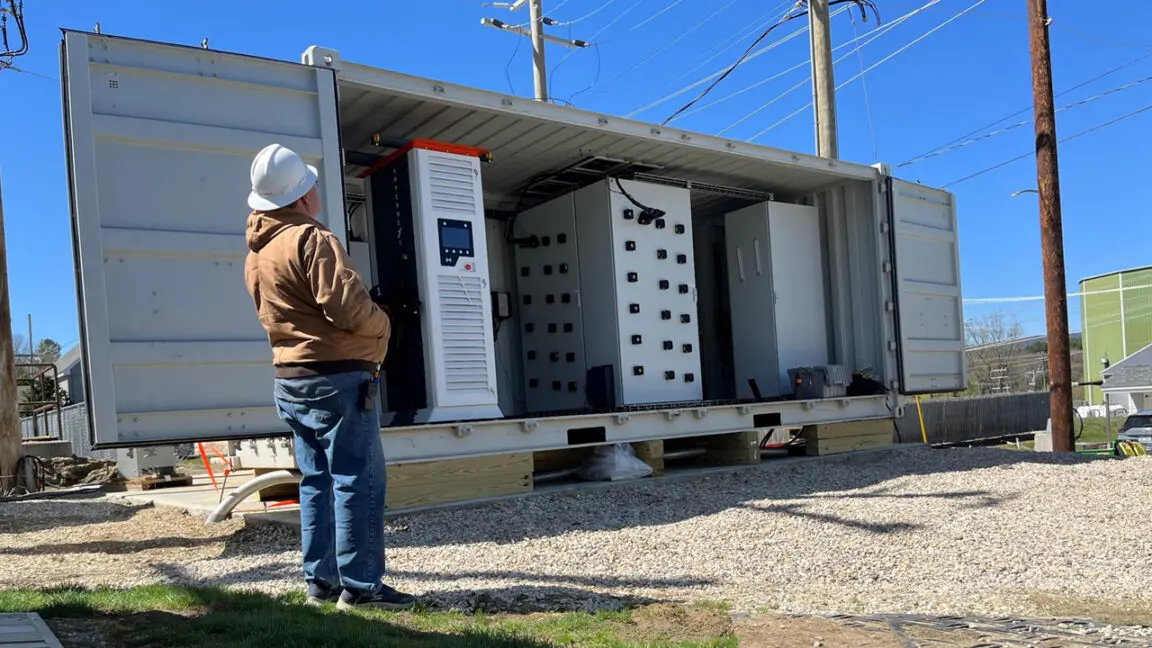
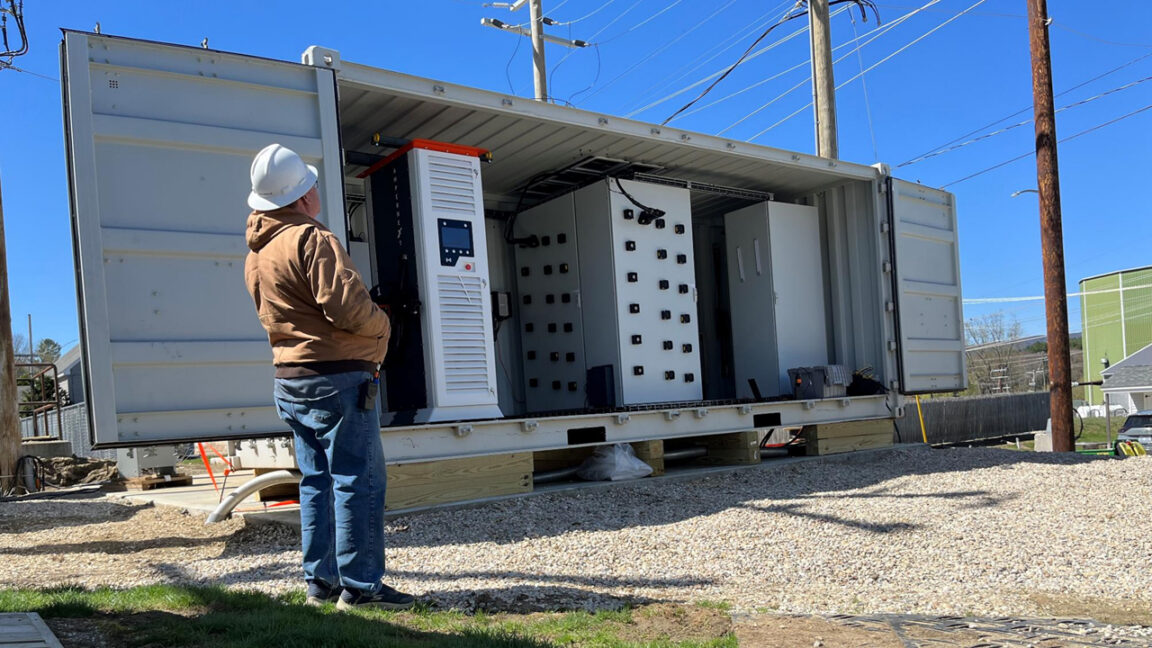
The validation of this technology is not merely theoretical; it is currently undergoing rigorous field testing in real-world environments. An NC State research team recently deployed a massive 1-megawatt (MW) solid-state transformer system for live field testing on an active distribution feeder at the Electric Power Research Institute’s (EPRI) specialized test site in Lenox, Massachusetts.

Culminating a collaborative initiative with the New York Power Authority that began in 2018, the 1 MW SST unit—measuring roughly 1 meter by 1.5 meters by 2 meters—has been housed inside a specialized shipping container since May 2026. Designed to handle high-stress operational conditions, the unit demonstrates the capability to step down high distribution voltages while simultaneously performing heavy-duty AC-to-DC power conversions to support high-capacity electric vehicle charging loads.
"It looks like a big transformer box with a slightly different form factor, a big blob of what looks like steel," Lukic remarks, describing the external housing. "It replaces three blobs of steel with one blob of steel and removes a lot of the wiring and trenching that you would typically have to do for an electric vehicle application."
The engineering triumph behind the system lies in its custom-engineered isolation component. This specialized high-frequency module is capable of enduring the complete electrical stress and full distribution voltage of a live grid across a remarkably compact footprint—a feat that previous generations of power electronics struggled to achieve reliably.
4. Future Outlook: Beyond Data Centers to EVs and Modern Homes
While engineering hurdles and commercial scaling challenges remain, the roadmap for solid-state transformers extends far beyond the immediate demands of the tech sector. Researchers and commercial partners view the rapid buildout of AI data centers as an indispensable economic and technical catalyst—a way to "derisk" and validate the technology through high-capital adoption before it rolls out to broader public infrastructure.
The secondary frontier for solid-state transformers is electric vehicle charging. As urban centers densify and demand for ultra-fast, megawatt-scale EV charging stations skyrockets, conventional grid infrastructure struggles to keep pace without massive, disruptive civil engineering projects. Solid-state transformers can sit compactly beside charging plazas, taking high-voltage AC from the street and instantly delivering high-amperage DC power directly to vehicles with minimal energy loss and a fraction of the physical footprint.
Looking further ahead, the long-term vision encompasses the residential sector.
"Beyond data centers, we can think about electric vehicle charging in densely populated areas," Lukic notes. "A lot of loads within our homes are now DC, so having that ability to distribute DC in modern homes will have some significant benefits."
From smartphones and laptops to LED lighting, solar panels, and home battery storage systems, an increasing share of household appliances and energy technologies natively operate on direct current. Traditional homes convert AC to DC at every individual appliance plug, creating cumulative inefficiencies. A future powered by decentralized solid-state distribution could introduce low-voltage DC microgrids directly into residential neighborhoods, drastically simplifying home energy management and improving overall efficiency.
As tech giants continue their unprecedented infrastructure buildout to fuel the artificial intelligence era, the pressure they exert on the electrical grid may ultimately force a long-overdue industrial revolution. By dragging power distribution out of the 19th century and into the silicon age, solid-state transformers are poised to reshape not just how we power AI, but how we power the modern world.